WHO REALLY KILLED FIRST BRANDS Pt 5: Two Executives Have Confessed
Part 1 examined the destruction of First Brands, the indictment of its founder Patrick James.
Part 2 examined the federal prosecution and the cooperators on whom the government's case rests.
Part 3 examined Apollo Global Management, a trillion-dollar Wall Street firm with annual revenue, in recent years, of between $26 billion and $33 billion
Part 4 examined Apollo's bet against First Brands, its competing auto-parts holdings, and the conflict of its former chairman now prosecuting the case.
This is Part 5

First Brands made auto parts. FRAM oil filters. Raybestos brakes. Autolite spark plugs. Trico wiper blades. It owned two dozen American brands and employed six thousand Americans and nineteen thousand more around the world.
Last fall, First Brands collapsed seemingly overnight. It had $12 million in cash. It owed almost $11 billion. A cash-to-debt ratio of this size is among the largest corporate gaps. That would be like a family with $1,200 in the bank, owing $1.1 million.
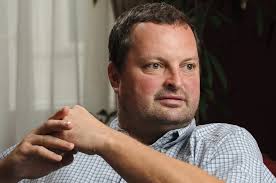
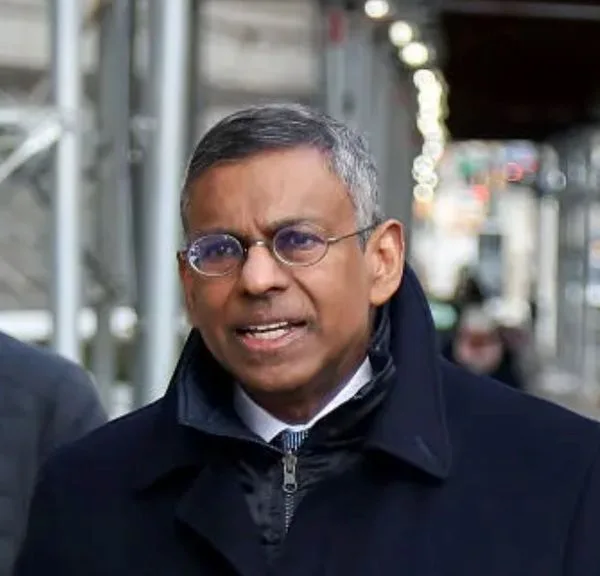 Patrick James, founder of First Brands
Patrick James founded First Brands in 2013. Twelve years later, in September 2025, First Brands filed for bankruptcy.
Once a company enters bankruptcy, its founder no longer runs it. Control passes to the lawyers and financial advisers. They are paid by the hour. Before it was over, they would bill close to a quarter of a billion dollars.
What happened to First Brands? That was the question a bankruptcy court appointed an investigator to answer.
The Invoices That Never Were
Here is the fraud the bankruptcy records appear to prove. It was simple. It had everything to do with borrowing money.
First Brands borrowed against invoices that didn't exist. No customer placed an order. No parts were shipped. Someone in the company simply typed up a phony invoice — a customer's name, an amount, an invoice number — for a sale that never happened, and sold that fraudulent piece of paper to a factor for money. The examiner found $1.4 billion in such invoices: bills the company's records showed no sign of, because the sales were not real.
To understand how that worked, start with what factoring is. Factoring is selling money you're owed today for slightly less than it's worth. For instance, say First Brands ships $1 million in brake parts to Walmart. Walmart will pay in 90 days. First Brands needs cash now. So it sells the unpaid bill to a third company, called a factor. The factor pays First Brands $970,000 today, then waits and collects the full $1 million from Walmart later. That $30,000 is the factor's fee for the three-month wait — about 3 percent per quarter, which works out to roughly 12 percent per year. First Brands' real factoring ran far steeper than that: the examiner found rates of 20 to 30 percent. On money out for only a few months, that is a high return, which is part of why so many lenders kept loaning money against invoices to First Brands.
First Brands was, in part, a company that borrowed too much, too fast, at too high a price. It grew by buying other companies by borrowing money, piling up interest, and repayment obligations.
The examiner found the high rates were not just the cost of fast growth. They reflected, in his words, the company's "desperate liquidity needs" — a business so starved for cash that it would pay almost any price to keep money coming in. The expensive borrowing was both a cause of the collapse and a symptom of a company that had to keep borrowing to hide the fraud.
The Same Bill, Sold Twice
 Steve Graham and Andy Brumbergs, two confessed fraudsters.
Sometimes First Brands sold the same bill to two different factors. In its case, the factors weren't collecting from Walmart.
First Brands had kept itself in the middle. Walmart paid First Brands. First Brands paid the factors. So no factor was watching for a customer payment that never came. They were watching for First Brands to pay them. First Brands always did, but with money from the next round of fraud.
New factoring paid off old factoring.
As long as First Brands could keep fabricating and selling fresh invoices, it could keep paying everyone it owed. The examiner found that the money repaying the factors often came not from real customer collections but from new financing. For five years, every payment arrived on time.
A system like that only runs while new cash flows in faster than old bills come due. When it stopped — when the factoring stopped because of the bankruptcy in September 2025 — there was nothing left to pay anyone. The $11 billion in obligations met $12 million in cash. The collapse arrived at once.
First Brands also inflated invoices — taking a genuine invoice and fraudulently padding the amount. A $5,000 sale was sold to a factor as $9,000, pulling out cash on money that no customer was obligated to pay.
The Hidden Loans
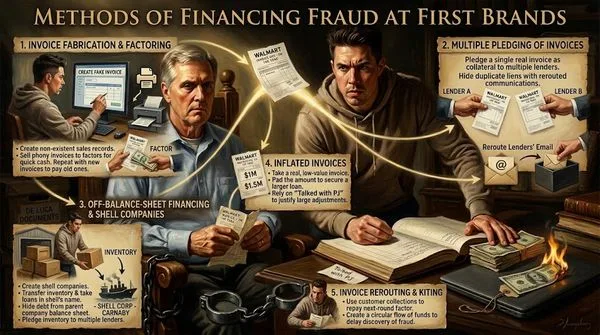
Another method was off-balance-sheet financing — borrowing money in a way that doesn't appear on the balance sheet as a loan. A company's financial statements list what it owns and what it owes. Lenders read those statements before they lend. If a company owes too much, no one wants to lend it more.
First Brands set up separate companies — shell companies it controlled but kept off its books. Carnaby, Broad Street, and others, set up to hold inventory and take loans without the debt appearing on First Brands' books.
These were built with real credit agreements, real lenders, and opinion letters from a major law firm. The shells "owned" piles of inventory: brake pads, filters, parts sitting in warehouses. Lenders gave the shells money, secured by that inventory. If a shell couldn't pay, the lender could seize the parts.
Two things went wrong, according to the examiner. The inventory pledged to one lender was sometimes pledged to another, or wasn't there at all.
The fake invoices, the bills sold twice, the hidden loans — is the method the investigators found.
The question was who did it.
The Examiner's Verdict
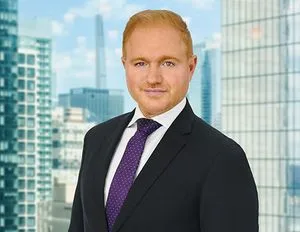 The examiner, Martin DeLuca
Shortly after the bankruptcy was filed, the U.S. Attorney for the Southern District of New York indicted Patrick James, the company's founder. The charge is that he ran a criminal enterprise of financial fraud out of his company.
James faces trial in February 2027.
The question the trial must answer is whether James directed the fraud or presided over a company in deep financial trouble, in which others committed fraud.
On April 27, 2026, the bankruptcy-court-appointed examiner, Martin De Luca, a partner at Boies Schiller Flexner, answered a narrower question: whether fraud occurred. The answer was yes.
Two executives took part in it. Both were charged criminally and have pleaded guilty. Their names are Stephen Graham, First Brands' chief financial officer, and Peter Andrew Brumbergs, its vice president of finance.
The one question the bankruptcy investigator could not answer: Was James involved in the fraud? Or was this a scheme, desperate and self-serving, run by two top executives and kept hidden from James?
An Investigator Close to the Prosecutors
De Luca worked with the U.S. Attorney, he said, to avoid stepping on a criminal case, but ran his own investigation.
James's lawyers argue he worked too closely with them. The examiner had regular calls with the U.S. Attorney's office and the FBI and cleared his witnesses with them. He called it deconfliction — keeping his civil investigation from colliding with the criminal case.
James called it a court officer helping a prosecution.
An examiner aligned with the government had every reason to deliver the finding the government wanted: that Patrick James personally ran the fraud.
De Luca couldn't.
He reviewed 14 terabytes of data. His forensic accountants came from Guidepost Solutions. He subpoenaed correspondent banks. Thirteen and a half million documents. Seventy-five witnesses. On the question of whether James directed the fabrication of invoices, the examiner ended without proof that James was involved in any fraud.
What He Found, and What He Couldn't
De Luca found First Brands receivables that were "fabricated, repeatedly pledged, or never transferred as represented." He found a company that, in his words, "did not merely become insolvent." He found that it "was used as a financial engine for generating and extracting liquidity through structures that concealed the enterprise's true perimeter and depleted value otherwise available to creditors."
None of this proves James did it. Three serious findings. Only one — the fabricated invoices — is plainly a crime on its face. The report shows that Brumbergs committed the crime, not James.
The examiner found a company "used as a financial engine" to extract value, but used by whom is the question. Not one of the three places where the wrongdoing was committed was through actions taken by James.
The examiner said as much himself. He called his findings colorable — plausible enough to investigate, not proven.
The investigation was paused in mid-February because the court-approved $7 million budget had run out, with substantial work remaining. He asked for 90 more days and more money to confirm what he had found. On June 18, the court denied the budget increase. The investigation stopped.
The examiner studied one kind of fraud: the lies First Brands told its lenders and factors.
The fraud was real. The company's chief financial officer has pleaded guilty to it.
The report named the operators — and did not name James, the man on trial.
Who those operators are — Graham and Brumbergs — is the next part of this story.
Picture the man the government has to convict.
Patrick James built First Brands from nothing into one of the largest auto-parts companies in the world —25 brands, 26,000 employees, factories on five continents.
Running a company that size is not a desk job. It is product lines, labor contracts, plant closings, and acquisitions in a dozen countries and as many currencies.
No chief executive of a company that large reads the invoices.
That is precisely why a company of that size has a chief financial officer and a vice president of finance. Their job is the numbers. His job is everything else.
So here is the first question the government cannot dodge: in a company of that scale, who actually committed the fraud?
The government's evidence answers it. The answer is not Patrick James.
The court's independent examiner reviewed 13.5 million documents and named the men at the controls: Brumbergs at the keyboard, making the entries, modifying the invoices; Brumbergs built a system that rerouted the lenders' emails so that no one else in the company would see them.
The man running the scheme built a wall to keep James and other employees from finding out.
The chief financial officer and the vice president of finance have pleaded guilty.
They have admitted, under oath, that they made false statements, misrepresented the company's condition, and processed fraudulent invoices. The men whose literal job was the company's books have confessed to corrupting them.
And Patrick James?
A bankruptcy judge looked at the company's best evidence against him in November and said it from the bench: "There's nothing showing that James, himself, was manipulating invoices."
Five months later, the examiner — an investigator working hand in glove with the prosecutors, with every incentive to deliver the man at the top — could not get there either.
He did not find James's hand in the fraud.
If the judge could not see it, and the prosecutor-friendly expert examiner could not prove it after 13.5 million documents, what, exactly, is left?
What is left is the word of two confessed criminals who have not yet been sentenced.
That is the case.
To convict James of directing this fraud, the government must put on the stand the very men who built it — men who pleaded guilty to running the scheme, whose punishment has been postponed until after they testify, and who understand, as any person in the cooperator’s chair would understand, that the prosecutors holding the keys to their sentence are the prosecutors who want a conviction.
The jury will be told to weigh such testimony with caution. It should. These are not bystanders who happened to see something. They are the architects of the fraud, testifying for their freedom, against the one man whose conviction buys it for them.
The Note, and the Money
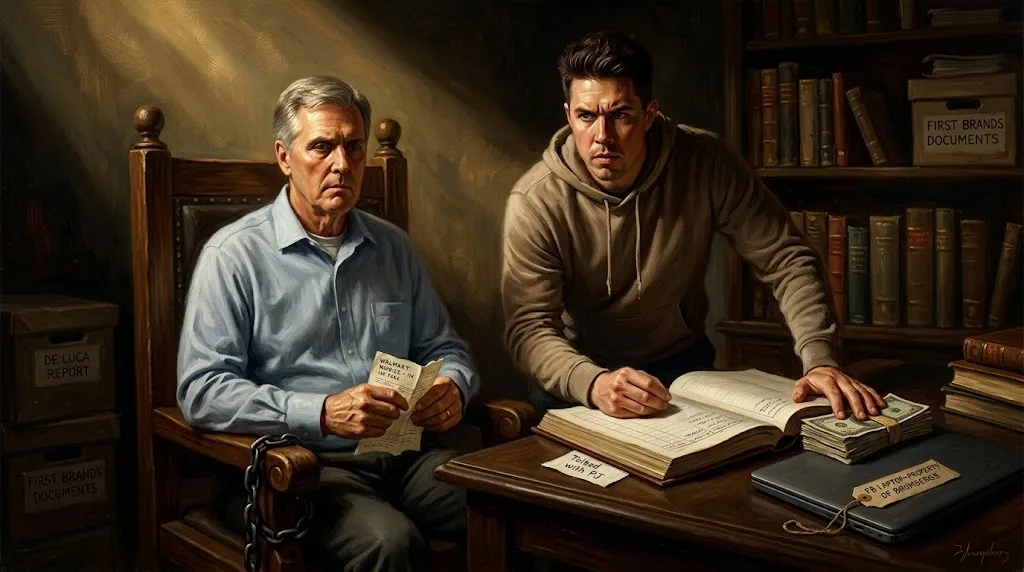
The government will wave a single note — "Talked with PJ" — written not by James but by the CFO, Graham, describing a conversation, listing accounting adjustments.
The jury will be asked to read Graham’s note as proof that James ordered a crime.
But a CEO who wants restructuring costs presented one way rather than another is doing what CEOs do. The note does not say "fabricate an invoice."
It does not say "lie to a lender."
To make it mean that, the government needs Graham, the man who wrote it — a man pleading for his sentence — to stand up and tell the jury it meant that. The note is not proof. It is an invitation to trust a cooperator.
The money. Yes, money flowed to Patrick James. He owned the company. Owners take distributions. They pay themselves dividends.
With a company structured as his was, they must pull cash simply to pay the taxes the company runs up in their name.
The government calls it "siphoning." But it has not shown the company was insolvent on the day of any transfer, which is what would turn a lawful distribution into a crime.
It has not subtracted the hundreds of millions James put back in. It counted the money going out and stopped counting. A number by itself is not theft.
So this is the question the jury will be asked. It is not the question the headlines asked, not the question the bankruptcy made easy, but the actual question the law puts to 12 citizens:
Did the government prove, beyond a reasonable doubt, that Patrick James — not his finance chiefs, but James himself — knew the cash was the product of fraud and chose to direct it?
Or did it prove only what everyone already concedes: that a fraud occurred, that two confessed criminals ran it, that a company drowning in debt finally went under, and that the owner, like every owner, took money out of the business he built?
If the honest answer to the first question is "we cannot be sure" — if the case for James's guilt rests on a note he did not write and the testimony of two men buying their freedom — then there is only one verdict the law allows.
He is presumed innocent. The government must erase all reasonable doubt.
On the question that matters — not whether First Brands was a fraud, but whether Patrick James directed it — the doubt is not at the edges of this case. It is the center of it.