Who Really Killed First Brands? Part 3: Apollo Global Management
Part 3: Who Apollo Is
Part 1 and Part 2 introduced First Brands, once one of America's largest aftermarket auto parts manufacturers, and its founder, Patrick James.
Today, the company is bankrupt, and its founder stands indicted in federal court.
To understand what happened to First Brands, one must first understand the institution that stood to benefit from its failure.
That firm was Apollo Global Management.
Men of Apollo

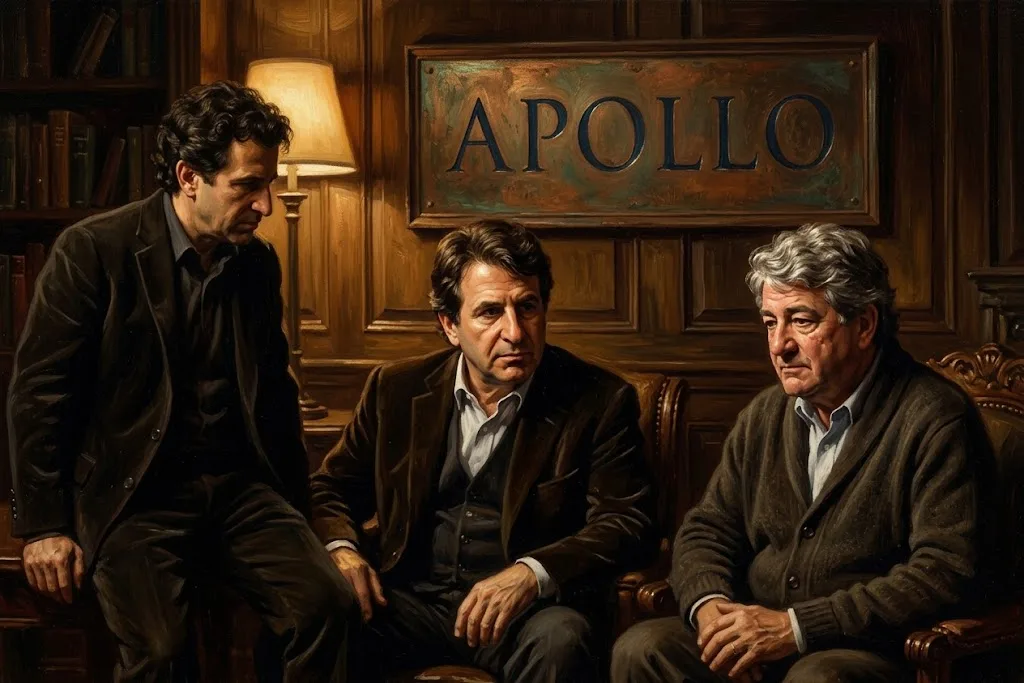
Harris, Black and Rowan
Apollo was founded in 1990 by Joshua Harris, Leon Black, and Marc Rowan.
Within a generation, they would build a firm managing nearly a trillion dollars and become three of the wealthiest men in America.
Its origins trace back to one of the most notorious episodes in Wall Street history.
All three founders came from Drexel Burnham Lambert, the investment bank that transformed the high-yield bond market in the 1980s.
Drexel collapsed in 1989 amid criminal investigations and fraud charges. Michael Milken went to prison.
A year later, Black, Harris, and Rowan founded Apollo.
Black served as chairman and CEO of Apollo for 30 years.
In 2021, he stepped down after The New York Times reported that Black had paid Jeffrey Epstein $158 million between 2012 and 2017. Black maintained that the payments were for estate planning and tax advice.
The figure was extraordinary. Few tax advisers in history have ever been paid anything remotely comparable.
Since 2021, at least three women have filed civil lawsuits, and the Manhattan District Attorney's office investigated claims from at least four additional women alleging that Epstein arranged sexual encounters for Black.
Black has denied the allegations.
In March 2026, investors filed a securities class action against Apollo in the Southern District of New York, alleging that Apollo's public filings understated the extent of senior leadership's dealings with Epstein.
Black Took the Fall
In 2021, Apollo's position was that the Epstein relationship was Black's problem, not Apollo's.
Black was gone. The issue was closed.
The Emails
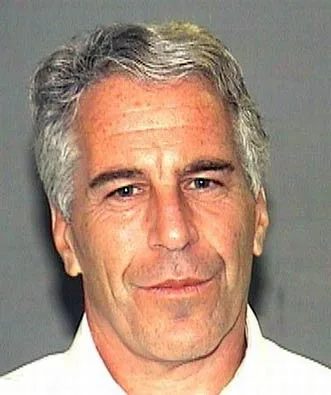
In January 2026, the Justice Department released millions of pages from the Epstein investigation.
Among them were hundreds of documents referencing Apollo CEO Marc Rowan. The disclosures did not, by themselves, establish wrongdoing.
Among the documents was a February 2016 email exchange between Rowan and Epstein concerning a potential Apollo corporate inversion involving the investment bank Rothschild.
Epstein wrote:
"i can join the call if you think appropriate. using rothschild for the inversion allows interesting structures."
Rowan replied:
"Agreed."
A March 2016 email showed Rowan sharing what appeared to be internal Apollo correspondence concerning the valuation of a tax asset with Epstein.
In a September 2016 email, an executive affiliated with Apollo instructed staff to keep Epstein copied on certain tax matters because of his "substantive expertise."
Neither email proves wrongdoing.
But Epstein appears to have participated in discussions about matters important to Apollo's business.
In March 2026, shareholders filed a securities class action in the Southern District of New York alleging that Apollo's public filings had understated or misrepresented the extent of senior leadership's continuing dealings with Epstein between May 2021 and February 2026.
The complaint challenged the accuracy of Apollo's statements to investors.
Apollo pushed back, maintaining that neither Rowan nor anyone else at Apollo other than Black had a business or personal relationship with Epstein.
Black had taken the public fall. The firm's other senior leaders kept their positions, their titles.
Black retains his ownership stake in Apollo, valued at more than $10 billion.
Rowan succeeded Black as Apollo's chief executive in 2021.
Like many leaders of major financial institutions, Rowan's influence extends beyond business. He has become one of Wall Street's most politically active figures and a significant participant in the funding of American politics.
Joshua Harris, Apollo's third co-founder, expanded his influence into sports, becoming a major owner of professional sports franchises, serving as principal owner of the Washington Commanders, and holding ownership interests in the Philadelphia 76ers and the New Jersey Devils.
The Fee Engine

Apollo's power derives from scale. The firm manages nearly a trillion dollars belonging to pension funds, insurance companies, sovereign wealth funds, universities, and wealthy individuals who hire Apollo to put their capital to work.
Apollo's business is not manufacturing products or building companies. Its business is controlling where enormous pools of other people's money go.
The firm earns money from buying assets, selling assets, making loans, trading debt, and taking positions that rise or fall with the fortunes of companies built by others.
Its product is capital itself.
In recent years, Apollo has generated between $20 billion and $30 billion in annual revenue, placing it among the largest and most profitable financial institutions in the world.
Black, Rowan, and Harris have each accumulated personal fortunes exceeding $10 billion.
The three men who started Apollo in the aftermath of Drexel's collapse now rank among the world's richest individuals.
The fortunes were built by mastering the movement of capital and taking a share of the gains generated by trillions of dollars flowing through the financial system.
The Money Has No Country
Apollo's growth was financed not only by Wall Street.
In November 2007, the Abu Dhabi Investment Authority, the sovereign wealth fund of the United Arab Emirates, invested $1.2 billion for a 9 percent ownership stake in the firm.
The capital helped finance Apollo's expansion in the years leading to its 2011 public offering.
A company often described as an American financial success story was, from an early stage, financed not solely by American capital but also by sovereign wealth from abroad.
Its investors have included sovereign wealth funds from the Gulf, government-linked capital from Asia, pension systems from Europe, and institutional investors from virtually every corner of the global financial system.
All are looking for the same thing. A higher return.
Apollo's approach to capital is straightforward.
National borders matter far less than financial opportunity.
Where the Work Goes
Apollo's portfolio companies have moved their American operations to Mexico, China, and Eastern Europe, wherever labor is cheaper and regulatory costs are lower.
The gains appear in earnings reports, shareholder returns, and rising valuations. The losses show up on Main Streets, in empty parking lots, and at factory gates that no longer open before dawn and jobs that aren't coming back.
Apollo is not anti-American. Apollo simply has no national loyalty. Its loyalty is to the transaction.
The executives stay in New York. The capital comes from everywhere. The factories go to China and Mexico.
The Establishment
The men who run Apollo occupy positions of prestige within American society.
They are welcomed into political circles, courted by universities, consulted by policymakers, and treated as respected participants in public life.
Joshua Harris owns the Washington Commanders.
Marc Rowan was discussed as a potential Treasury Secretary.
The lawyers who represent major financial institutions and the judges who hear their cases are often drawn from the same elite law schools, prestigious clerkships, and large corporate law firms.
Everyone knows the language. Everyone understands the culture. It dominates the upper reaches of American finance and law.
Apollo's founders are billionaires. Its executives advise policymakers. Its capital reaches across continents. Its leaders move comfortably through the highest levels of business and public life.
Apollo is not an outsider fighting the establishment.
Apollo is the establishment.
The Director Who Became the Prosecutor
The overlap between Apollo and the institutions of government does not end with campaign donations or political influence.

The United States Attorney for the Southern District of New York is Jay Clayton, the former chairman of the Securities and Exchange Commission and a longtime partner at Sullivan & Cromwell, one of Wall Street's most influential law firms.
And from 2021 until April 2025, he served as chairman of Apollo's board of directors.
He left that position only when President Trump appointed him interim U.S. Attorney.
And this brings us back to the indicted Patrick James and his now bankrupt auto parts company, First Brands.
The same office that indicted Patrick James is now led by a man who, until the previous year, sat at the head of Apollo's boardroom table.
That fact does not prove anything about the prosecution.
It does place Apollo and the prosecution closer together than many readers may find comfortable.
The connection is not entirely a matter of past-tense employment.
According to federal ethics disclosures reported by The Lever in March 2026, Clayton continued to hold between $1.5 million and $6 million worth of Apollo stock.
For readers trying to understand the network of relationships surrounding this case, that fact belongs on the table.
Whether that fact is meaningful or merely coincidental is for the reader, or perhaps a jury, to decide.
A Single Fact
The office that indicted James is now led by a man who, until the previous year, served as chairman of Apollo — the firm that had positioned itself to profit from First Brands' collapse.
If this detail appeared in a legal thriller, an editor might ask the author to make it less obvious.
The company collapses.
A Wall Street firm profits from betting against it.
The founder is indicted.
And the prosecutor leading the office that brought the case previously chaired the board of that same Wall Street firm.
Sometimes a single fact captures an entire system.
What Apollo did to First Brands in the year before the bankruptcy is the subject of Part 4.
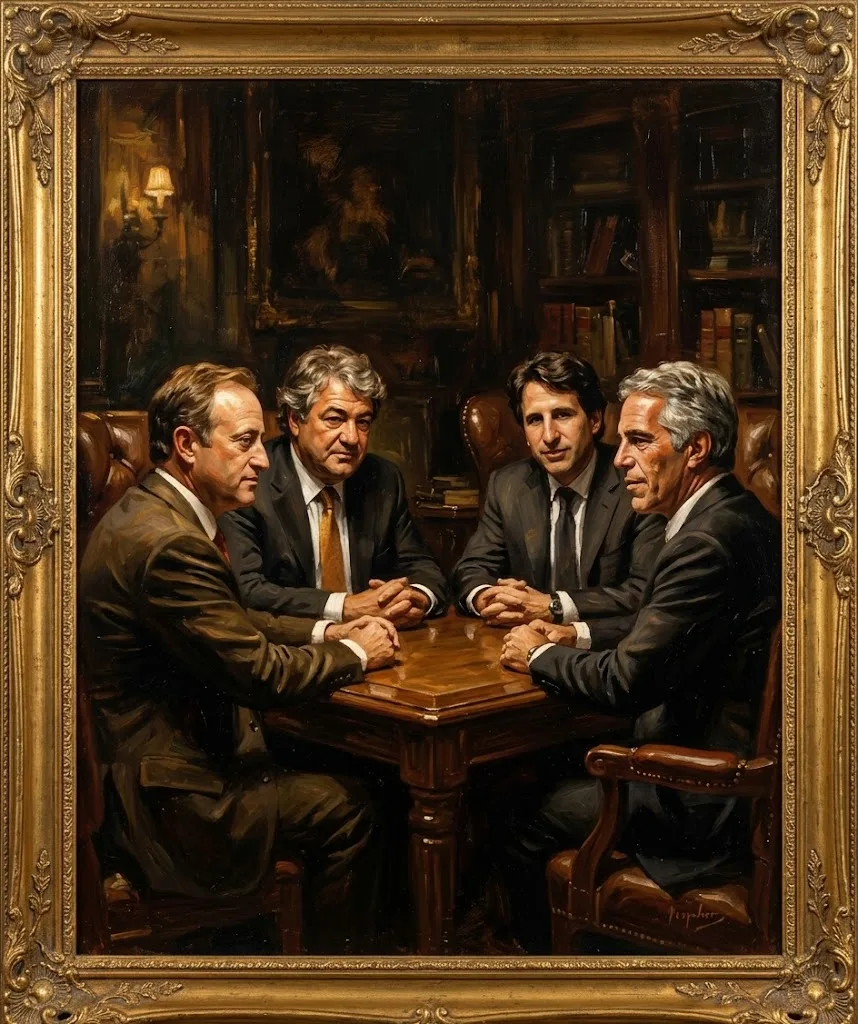
Did Epstein have a unique place at the table?