OIL IN THE FAMILY: Grynberg Heirs Stiff Dad's Right-Hand Man

Part 4 explained how Jack Grynberg built a billion-dollar gas and oil fortune and how his three adult children took it from him.
A Holocaust survivor who came to Denver with $27, Grynberg spent 60 years as a wildcatter.
His great strike was the Karachaganak field in Kazakhstan, which pays the family between $100 and $250 million a year.
In 1993, to shield the fortune from creditors, taxes, and his litigious style, he put his companies in the names of his wife and three children. He meant to run the companies until he died.
Between 2015 and 2016, the children, then in middle age, voted their father off the board, took his signature off the bank accounts, and removed him as president.
Jack Grynberg died in 2021, living on a Social Security check, while his children kept the billions he had made.
Well has it been said, “Whoso robbeth his father or his mother, and saith, It is no transgression; the same is the companion of a destroyer.” - Proverbs 28:24
The pattern is one of, one might argue, elder abuse.
Part 5 is about what the children Rachel, Miriam and Stephen did to one of their father's loyal executives who helped build the company.
Gene Webb was vice president of business development for Jack Grynberg.
When the Grynberg family fired Webb, he said they owed him $110,000 for unpaid vacation pay he had earned over several years, and $13,000 in business expenses.
The children, led by Rachel, who became the CEO after she took control from her father, decided not to pay.
Webb worked for Jack Grynberg from 2004 until his family ousted him in 2016. Webb stayed on, working for Rachel, until 2020.
Webb's role was varied in the company. In the early days, he found investors and lenders who would finance drilling. Later, he negotiated oil and gas contracts, monitored the African concessions, inspected wells in Wyoming, Colorado, and North Dakota, and when technical employees departed and were not replaced, assumed their responsibilities.
He also taught the company lawyers the oil and gas business in support of Jack's numerous litigations.
The $90 Million Recovery
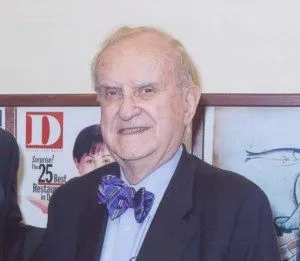
Jack Grynberg (above)
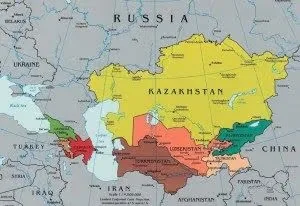
The bulk of the Grynberg fortune came from Jack's 1990s discovery of the Karachaganak gas-condensate field.
British Gas (later Shell) paid him, or rather the companies he controlled and put in his family's name, 15 percent of its net profit under the July 1993 settlement of Grynberg's breach-of-contract suit against British Gas.
Since net profits can be greater or smaller depending on the amount of expenses a company might choose to claim, someone had to fly annually to the remote Kazakh steppe, sit across a table from British Gas and go through the ledgers line by line.
Webb audited every invoice, charge, and deduction.
The first year, Webb spent 12 weeks in Kazakhstan. After that, he went for three to six weeks each year.
Rachel Grynberg, whose title before she ousted her father was Vice President of Audits, sometimes sat beside Webb during the audits.
Over the years, Webb recovered $90 million for the Grynbergs through identifying and successfully establishing overcharges.
The $200 Million
Around 2014, while the children were building the case that their father could no longer be trusted with the business, the IRS sought more than $200 million in taxes from the Kazakhstan income.
The Grynberg family's accountant told the children to settle, pay the IRS around $200 million and make the problem disappear.
The wells would continue paying the family approximately $250 million a year. Settling would cost less than one year's income and end the dispute.
Webb disagreed with the recommendation to settle. He brought in company lawyer Roger Jatco, and together they challenged the tax assessment.
Webb approached the IRS dispute with the same tenacity he had used to challenge the Karachaganak accounting.
He went line by line, deduction by deduction, and showed the IRS that intercompany transfers were legitimate deductions. He reconstructed records and brought in a former IRS official from a Washington firm to help.
Webb said the accountants were prepared to concede the assessment. "We said, no, we don't think that. We think we're entitled to calculate it and we have a right to take these expenses from our net profits."
The company won the case against the IRS. Helped saved them a lot of money."
That is not an understatement.
The final tax bill was less than $20 million, Webb said. Almost $200 million remained with the family and not the government.
What They Owed Him
The flow of benefits under Rachel's management traveled one way.
Webb did not take vacations. He had traveled for Jack Grynberg, who preferred to pay for unused vacation time rather than lose the work.
Webb had accrued about $110,000 in vacation time. During the turmoil and the ousting of a father who had become, in their eyes, irrelevant, Webb did not get paid.
Webb said the company also owed him $13,000 for 2019 business expenses. The expenses covered approved trips he took for the company. The company first promised payment, then said the trips had not been authorized.
Webb further said he was entitled to severance comparable to that paid to other employees. The company withheld that payment as well. The severance claim is separate from, and in addition to, the $123,000.
The Accusation
To justify paying a man nothing, it helps to come up with a reason.
In a lawsuit with Victoria Oil and Gas Plc., Rachel's lawyers accused Webb of accepting bribes from the other side.
Years earlier, Jack had won a concession in the Douala region in Cameroon, and to develop it he partnered with Victoria.
Victoria drilled the wells, built the infrastructure, and brought the gas to market. The Grynberg company held a 40 percent stake.
Webb had helped negotiate and oversee the arrangement for years.
Under Rachel's control, the company disputed the bills, questioned the expenditures, and then it sued.
During litigation, Rachel's lawyers sought a way to dispute the auditing Webb had done.
An Approach
How? Discredit the man who said the books were honest, the man who had helped to make and monitor the deal.
Webb said that during the Cameroon arbitration, lawyers for Rachel Grynberg's RSM Production Corporation accused him of accepting bribes from executives at Victoria Oil & Gas, and questioned him about it in three separate depositions. He denied it each time.
The arbitration was confidential, and its record is not public. Victoria Oil & Gas, asked about the accusation, denied it on the record. No evidence of any bribe has been made public, and no criminal charge or judicial finding has followed.
The accusation of bribery became something smaller.
They called it "beer bribes." As best anyone could tell, the accusation had shrunk to the suggestion that Victoria executives had bought Webb a few beers they drank together.
A claim of commercial bribery had become the suggestion that ordinary hospitality had purchased an executive's loyalty.
Victoria Oil and Gas issued this statement:
"Ms Grynberg's allegations that Erik Friend, CEO of Victoria Oil and Gas, or any executive of the company, bribed Gene Webb are false and libelous.
"Gene Webb represented RSM in meetings in Cameroon and London concerning the Logbaba gas project, and once or twice a year he would come to London en route to Cameroon for meetings on the project and VOG (as a group) would take him out for a beer and dinner. Gene liked the ambience of London pubs and we paid for the dinner. NOTHING MORE!"
Erik Friend, CEO, said, "I have built a successful career in resources for over 50 years and not once have I approved or paid any bribes to anyone. It's bad business, as you know!
"Gene Webb has built a career on his operating and technical skills and business common sense and he was very loyal to Jack Grynberg but would always tell the situation as it was. Sometimes this led to some great debates, but they were always professional."
Why They Came for Him
To understand why Webb became a target, one must distinguish between Jack Grynberg, the man who built and ran the company and the children whose names appeared on its shares.
The company belonged to the children on paper. Jack had placed the shares in their names in 1993, when paper still seemed weaker than blood.
After the takeover, his children controlled the board, the money, and every man drawing a paycheck.
Webb could never understand the hatred. "It baffled all of us," he said.
Asked whether loyalty to the father had cost him and others their jobs, Webb said only, "I would think that would be one of the reasons."
The man who had saved or made the family $290 million could not collect $123,000.
What They Wouldn't Give Back
There was one more thing.
When the offices closed in 2020, Webb asked to retrieve his career files and antique books about oil and gas leases. He had brought the books from home years before and had used them to teach Jack's young lawyers.
The family said no. No reason. They packed them in boxes and placed them in storage with everything else, and the man who owned them never saw them again.
The Other Employees
A single employee's account might be dismissed as a personal grievance. Others described similar treatment.
Bob Bollard worked for Jack for 30 years. When he left around 2014, the children eventually offered him a mere $50,000. Jack gave Bollard an additional $60,000 from his own money, because his children would not.
Another man dismissed in the purge had grown up alongside the Grynberg children. His family and Jack's had been close for decades. He and his brother were in and out of the Grynberg house as boys. He went to work for Jack and stayed for years. He was let go with the others deemed loyal to the father.
"He just can't understand why Rachel had this huge, all of a sudden huge dislike for the employees," Webb said. "I have no idea."
The company first laid off 18 of Jack's employees and paid severance. It later dismissed another 10, including Webb, without severance.
They Had the Money
The litigation showed that Rachel and Miriam each held approximately $40 million. The companies had more than $200 million in their bank accounts.
The family collected as much as $250 million per year from the gas field their father had discovered.

Refusing to pay the employees they fired saved perhaps $1 million, against more than $200 million in the bank.
After taking the billion-dollar fortune their father created, roughly $1 million claimed by his longtime employees was small enough to pay and small enough, in their judgment, to keep.
The Pattern
As for their treatment of Webb, it might be described by some as obscene.
They took $90 million in recoveries and $200 million in tax savings from his work, stiffed him on vacation pay and expenses and gave him a bribery accusation in return.
That was a small change compared to what they did to their father. They took control of his billion-dollar empire. He ended his life on Social Security.
"He didn't have hardly any money," Webb said.
They let him keep the house. He died in the big place he owned in Cherry Hills, but "what they didn't give him was money to defend himself."
Today, the children have the fortune. Their father is deceased. The old, faithful employee, Webb, now in his 80s, works in a delicatessen making sandwiches to make ends meet, while the children of Jack Grynberg, who never had to work, eat very well.
“Woe unto him (or her) that buildeth his house by unrighteousness, and his chambers by wrong; that useth his neighbour's service without wages, and giveth him not for his work “— Jeremiah 22:13
Rachel Grynberg would, however, have you think generously of her.
The biography portrays her as an accomplished business executive, although her wealth originated in the enterprise her father created with the help of men such as Gene Webb.
Self-Acclamation With Omission

On her LinkedIn, Rachel writes:
"I serve as Chief Executive Officer of privately held energy companies with international interests in oil and gas development, asset management, and complex commercial matters involving multinational partners.
"Over the past two decades, I have overseen the management of significant corporate assets and investment strategies while being closely involved in complex audits, negotiations, and dispute processes relating to international energy agreements and investments. My work frequently involves coordinating legal, financial, and technical teams in high-stakes matters involving multinational companies and sovereign governments."
She never mentions how she took the company from her father, who created the "energy companies with its international interests." Nor does she mention Gene Webb, who helped her in those "complex audits, negotiations, and dispute processes."
Philanthropy

Instead, she wants you to know she is a philanthropist. She gives to the Colorado Ballet and no doubt they put her name in programs.
Programs are more gracious than payroll records.
Jewish Family Service of Colorado, a Jewish charity built to help people in want, have also honored her for her philanthropy and community involvement.
She left her own father in want on a Social Security check and refused a dozen loyal employees the wages they said they were owed.
And Rachel sits on the board of the nonprofit Healthier Colorado where her father's taken wealth drips from her every utterance of care for the community.
She took from her Holocaust-survivor father's final years every dime he had made in his life, along with his dignity.
Call that whatever the banquet program permits.
He survived the Nazis, came to America, and made the fortune. In his final years, his children had the money. He had Social Security.
She kept the wages, trifling as it must seem to her, owed to faithful employees, including one man who put millions in her pocket, forcing him to work into his eighties, making sandwiches for people far less affluent than her, but who paid for what they ordered.
At the ballet they leap and pirouette in her honor, thrilling the audience. Her too, no doubt.
"Live fully while you may, and reckon not the cost. Deny yourself nothing—flame and blaze like a torch, and toss the fire about you!" -Omar Khayam
Rachel Grynberg had learned that a cost paid by someone else was not a cost at all. She had apparently always understood that distinction.
See also