OneTaste Precedent Provides Government with the Power to Criminalize Teachings
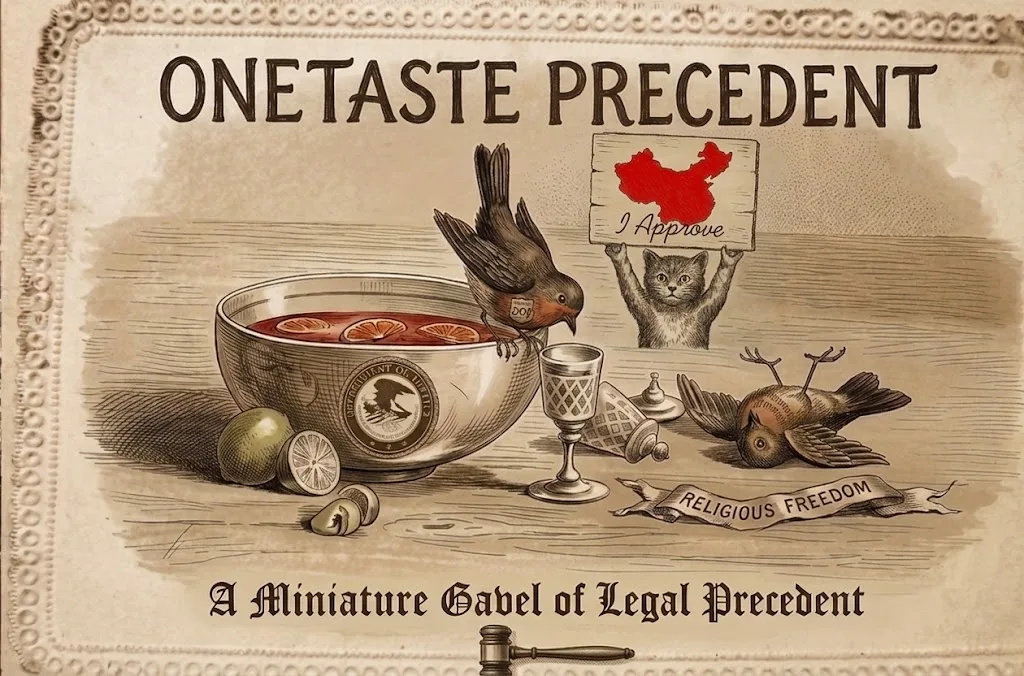
"If thought corrupts language, language can also corrupt thought." — George Orwell
The U.S. Attorney for the Eastern District of New York presented a forced-labor conspiracy case.
A Brooklyn jury convicted Nicole Daedone and Rachel Cherwitz on that single count. The case did not depend on physical force, restraint, or even a demonstrated demand for labor.
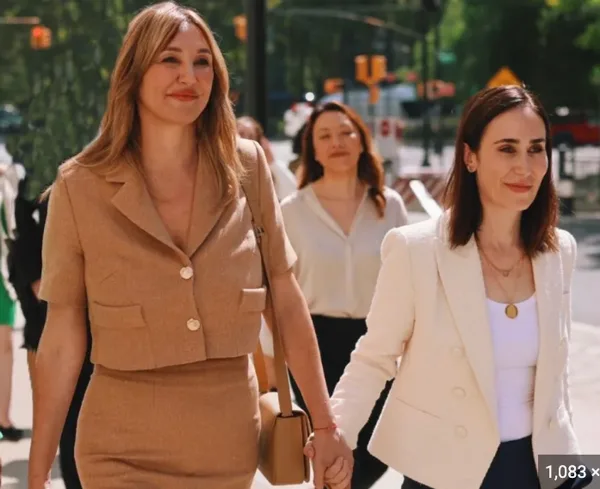
The prosecution's theory was not that the defendants controlled bodies. It was that they controlled minds.
AUSA Kayla Bensing put the harm element on the record in her closing on June 5, 2025: "It's not about whether these victims actually suffered serious harm and whether (Daedone and Cherwitz) actually caused them to work. That is absolutely not the question of this trial."
The government advanced the question of whether nine adult, college-educated, middle-class or affluent women were victims of coercion because they had been brainwashed.
The fear ran the other way
Traditionally, forced labor involves the fear of being unable to leave. Leaving will be met with force, restraint, or some equivalent compulsion through fear of serious harm if they stop working.
In this case, the fear ran the other way.
The witnesses described the fear of not working, something they were free to do.
But if they stopped, they feared being kicked out. Exclusion, social isolation from the company of Daedone and Cherwitz, and their company OneTaste, a sexual wellness company, with classes and practices.
The loss of community became the new model for serious harm.
This is categorically different from captivity. A person who fears exclusion is not claiming an inability to leave.
The excluded person fears losing membership. The captive person fears being denied freedom to leave. That difference is where the OneTaste precedent changes American law.
The witch testimony
One government witness, Michal Neria, testified to something more sinister - the supernatural.
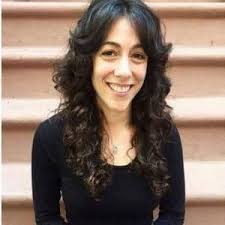 Michal Neria went to Columbia. She believed she was brainwashed by witches.
She said Daedone and Cherwitz believed themselves to be witches.
On cross-examination, she reaffirmed it: "a hundred percent, I don't think it, I know it."
The defense argued her testimony was absurd. Its implausibility - that two women who taught thousands of students on human sexuality believed themselves literally to be broomstick flying witches undermined the reliability of Neria as a witness.
But the assumption rested on a traditional understanding of evidence.
The prosecution spun it.
AUSA Kayla Bensing told the jury the witness's belief - though it was absurd - that they are cauldron-boiling, spell-casting witches - was evidence of the defendants' guilt: "the defendants made her believe that. They targeted somebody who would believe that."
If the witness believes something absurd, that is evidence of the defendants' influence. The more irrational the belief, the stronger the proof of its hold.
The argument has a degree of elegance and a troubling quality: it cannot be refuted by pointing to its own implausibility, because implausibility is the evidence.
The teaching became a crime
Nine witnesses testified to not physical coercion but a form of mental coercion. Brainwashing. Mind control. Witchcraft.
Fear of being shunned if they left.
The government's case depended not on what confined the body, but on how Daedone and Cherwitz had captured the nine women’s minds.
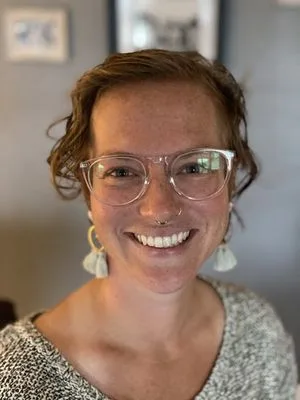 Pastor Dana Gill Port got her Masters in Divinity and Ministry. She claimed she was brainwashed at OneTaste.
AUSA Kaitlin Farrell explained the theory in court.
The defendants "put some of the testifying witnesses, our victims, in psychological distress and also taught them concepts that taught them basically to consent to everything and to be willing to engage in certain sexual activities that even at the time they would have viewed as something they wouldn't consent to, but they did so because they were taught this was a philosophy or a religious practice that was good for them."
The wrongdoing was what the defendants taught, and the effect those teachings had on the nine college-educated women’s minds.
The lesson had become the crime.
 Dr. Margaret Pixley went to Medical School at Brown. But she too, was susceptible to brainwashing at OneTaste.
Several witnesses called the teachings "brainwashing."
Rebecca Halpern testified she "had been, you know, carefully, gently brainwashed over time."
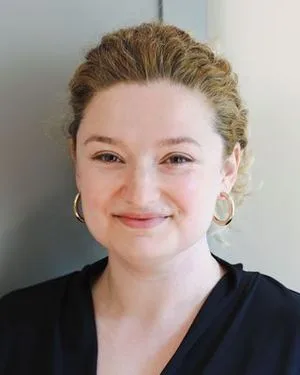 Rebecca Halpern, LCSW is a college-educated therapist. She testified she was "carefully, gently" brainwashed at OneTaste.
Christina Berkley was asked what the trauma was; she answered, "the brainwashing."
 Christina Berkley is a life coach with a degree in microbiology and immunology from McGill University. Yet she, too, was susceptible to brainwashing.
The word appeared throughout the trial, not as a clinical diagnosis but as a description the nine women used to reinterpret their experiences.
It became shorthand for the government's theory — a single word to explain how consent could later be classified as coercion.
The inversion
AUSA Farrell told the jury, "they were grown women, these were adults. And they were educated, they were smart… that just shows how powerful the coercion was."
The witnesses were vulnerable because they were educated.
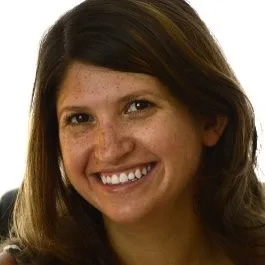 Lianna Lifson went to Smith College and got her Masters at NYU. She is a high school teacher. One of the brainwashed.
The prosecutors offered proof of how powerful Daedone and Cherwitz’s alleged mental coercion must have been. The smarter the witness, the more dangerous the teaching.
The inversion ran through every category of proof.
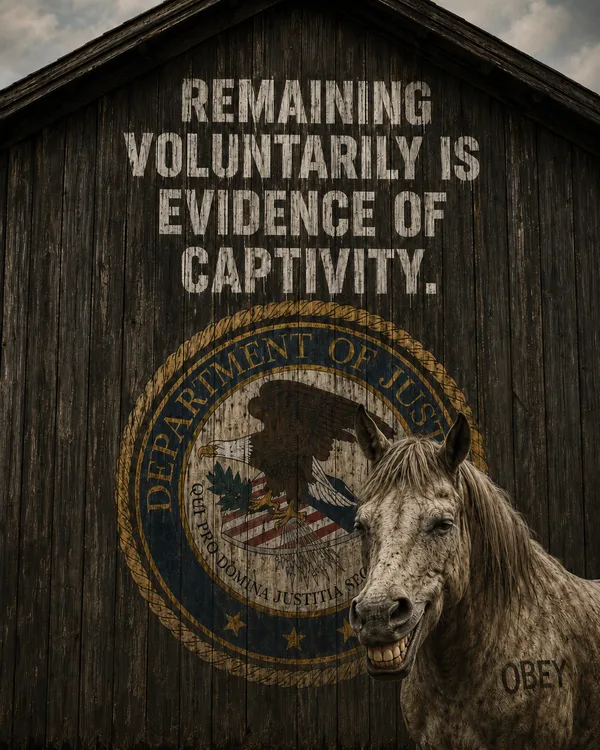
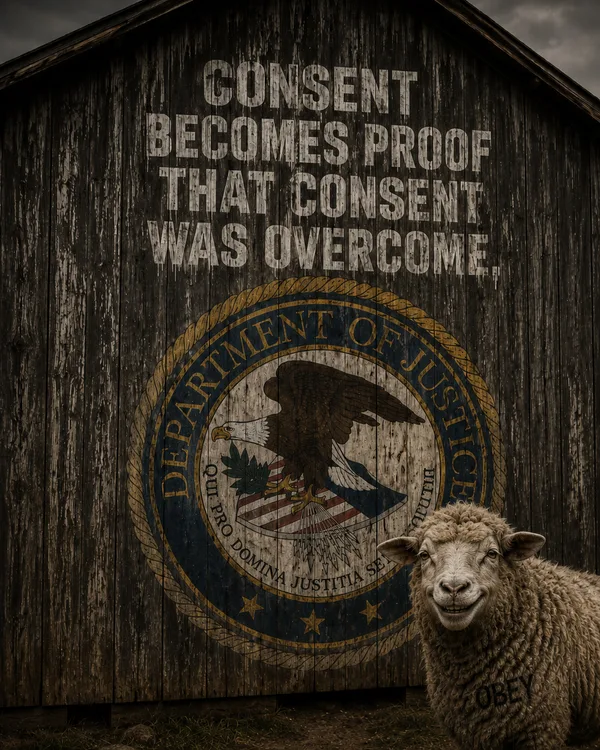
Consent becomes proof that consent was overcome. Speaking clearly is evidence of conditioning. Remaining voluntarily is evidence of captivity.
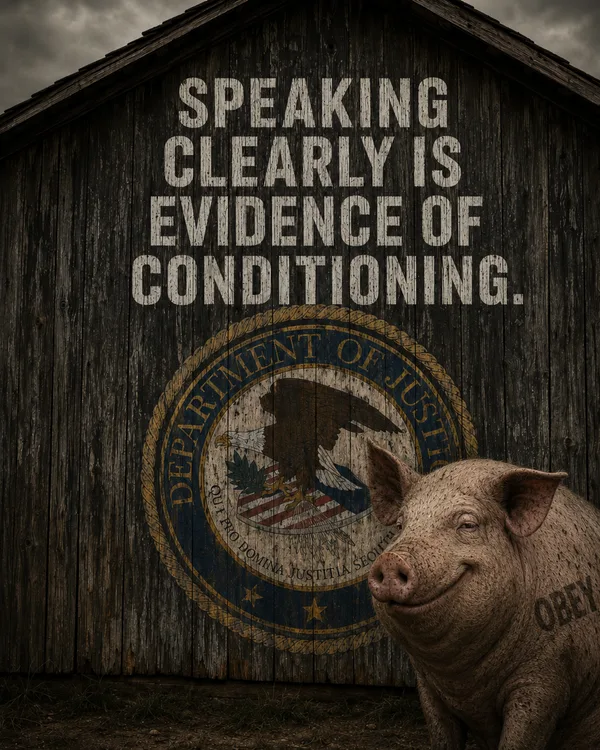
Orwell had arrived.
The absence of force is no defense, because force was no longer the point of this forced labor case.
A theory extraordinarily difficult to defend, which is quite good for the government prosecutors.
 Anthia Gillick aka Brooke Sheffer is a professional actress, educated at Skidmore. She said Nicole and Rachel brainwashed her.
Regret as evidence
Nine female witnesses, out of 35,000 participants, testified that they regretted what they had agreed to years earlier when they took classes or worked at OneTaste.
The significance was not that regret existed. It was that regret had become the means through which the government reclassified consent.
 Lyndsi Keves is an Intuitive Eating & Body Image Coach who studied at Michigan state. An easy target for brainwashing.
Ordinarily, the law concerns itself with what happened when it happened.
In the OneTaste prosecution, prior consent does not preclude victim status.
In one sense, that is unobjectionable. People may consent under circumstances that later prove exploitative.
But the challenge is, is that consent is no longer what an adult chooses at the time. It is whether a later observer concludes the choice should count.
That is a considerable transfer of authority — from the individual who acted to the government that evaluates the act afterward.
If an educated adult can repeatedly consent, affirm that consent, and later the government deems her incapable of meaningful consent because of the ideas a defendant taught her, then adult consent ceases to function as a legal boundary.
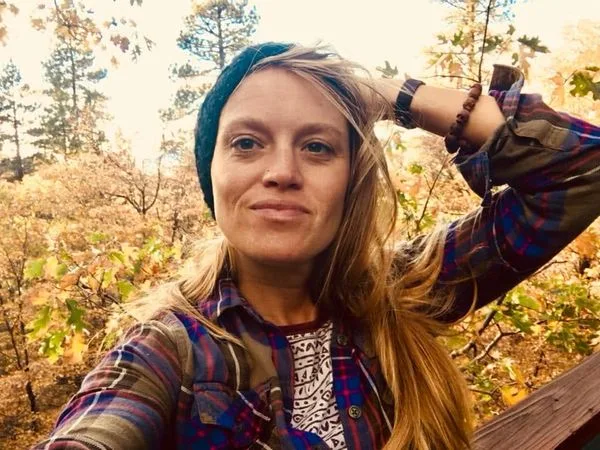 Michelle Wright studied at University of Rhode Island. She, too, was brainwashed.
The verdict
The prosecution in the OneTaste case made its case not on the experience of the many but on the exception. Many participants reported finding the practices and the teachings beneficial.
They came and left with favorable memories and continued friendships. They did not regard themselves as victims. The government asked the jury to look at the exception to prove the rule.
Nine women out of tens of thousands who participated.
The conviction rested on 18 U.S.C. § 1594 — conspiracy to commit forced labor. But not the actual charge of forced labor itself.
The legal achievement for the government was to take conduct that appeared consensual on its face and place it within a statute (forced labor conspiracy) the lawmakers designed to combat physical coercion.
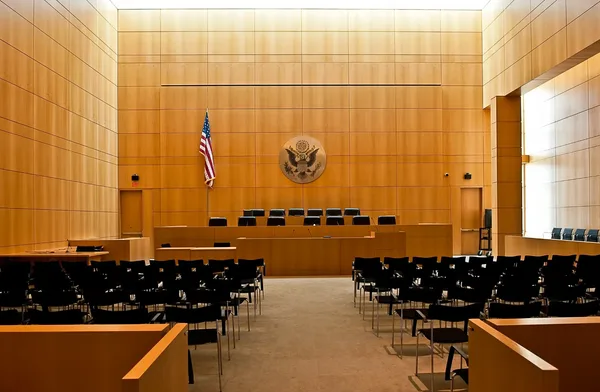 The inside of E.D.N.Y. Courtroom
On June 9, 2025, after a five-week trial, the jury returned guilty verdicts. Judge Diane Gujaratii sentenced Nicole Daedone to nine years, and Rachel Cherwitz received six and a half.
The theory of mental coercion without any physical force or threat of force, as forced labor, had moved from argument to precedent.
Who is next is the most important remaining question.
The next question is whether President Donald Trump will, to some extent, hold back the precedent by issuing a pardon to Daedone and Cherwitz – not out of mercy but for the sake of thwarting the precedent that the government can convict people on forced labor conspiracy without a single person being forced to work in the traditional sense, but only through the most intangible thing in the world – brainwashing. Or to say it more precisely, to give the power to government to decide when a person is brainwashed into losing their adult power to consent.
Those who fail to see how government can abuse this ought to read 1984, or Brave New World, or A Clockwork Orange.
It will be a brave new world indeed if this precedent stands.



Read more about the story:
- Trump to USA: Pardon Is Justice, Not Mercy
- How the OneTaste Prosecution Rewrote Federal Sentencing
- PART 2 The Dangerous OneTaste Precedent
- The Unlocked Door: A Series on the OneTaste Precedent
- The OneTaste Trial: They Got Their Witch
- They Convicted OneTaste. Trump's Communities Are Next
- Brooklyn Just Made It Legal to Prosecute Donald Trump for Brainwashing His Followers
- OneTaste Verdict: How Forced Labor Conspiracy Theory Redefined Consent and Coercion
- The Corrupt Judge on Trial: How Diane Gujarati Set A New Dangerous Precedent During The OneTaste Case
- OneTaste Founder Gets Prison in First Brainwashing Conviction in US History
- Can OneTaste Case Be Used Against Trump?
- OneTaste and the FBI's Scorecard
- What the FBI Told Itself About OneTaste
- FROM NETFLIX TO LOCKUP: The Brainwashing Case That Could Jail a Philosophy
- The State v. The Clitoris: What the Witnesses Said