She Was Fine in the Book. On the Stand, E. Jean Carroll Was Ruined
The Book
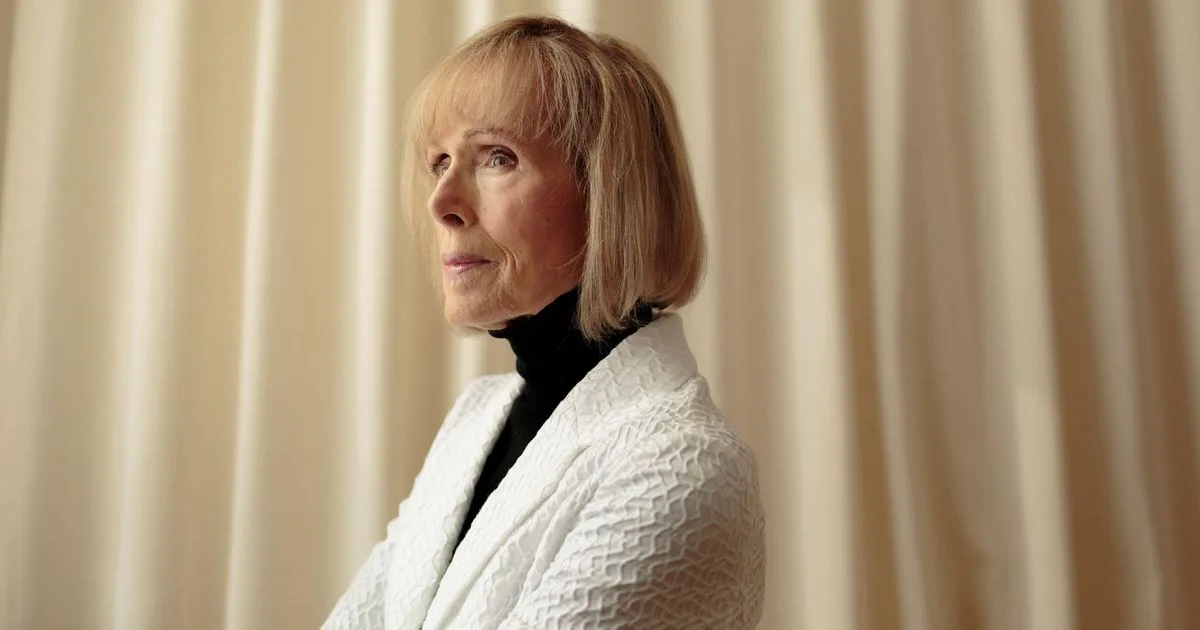
E. Jean Carroll was a creature of the magazine age. The longtime sex columnist for Elle was paid handsomely as a writer when print magazines could still afford it.
A sharp woman with a clever voice, she advised other women about sex and relationships. She could be funny about sex and wise about men.
She had begun her column, Ask E. Jean, in 1993.
By the 2010s, glossy magazines were shrinking, and print advertising disappearing. The cause was the internet, as readers and advertisers moved online.
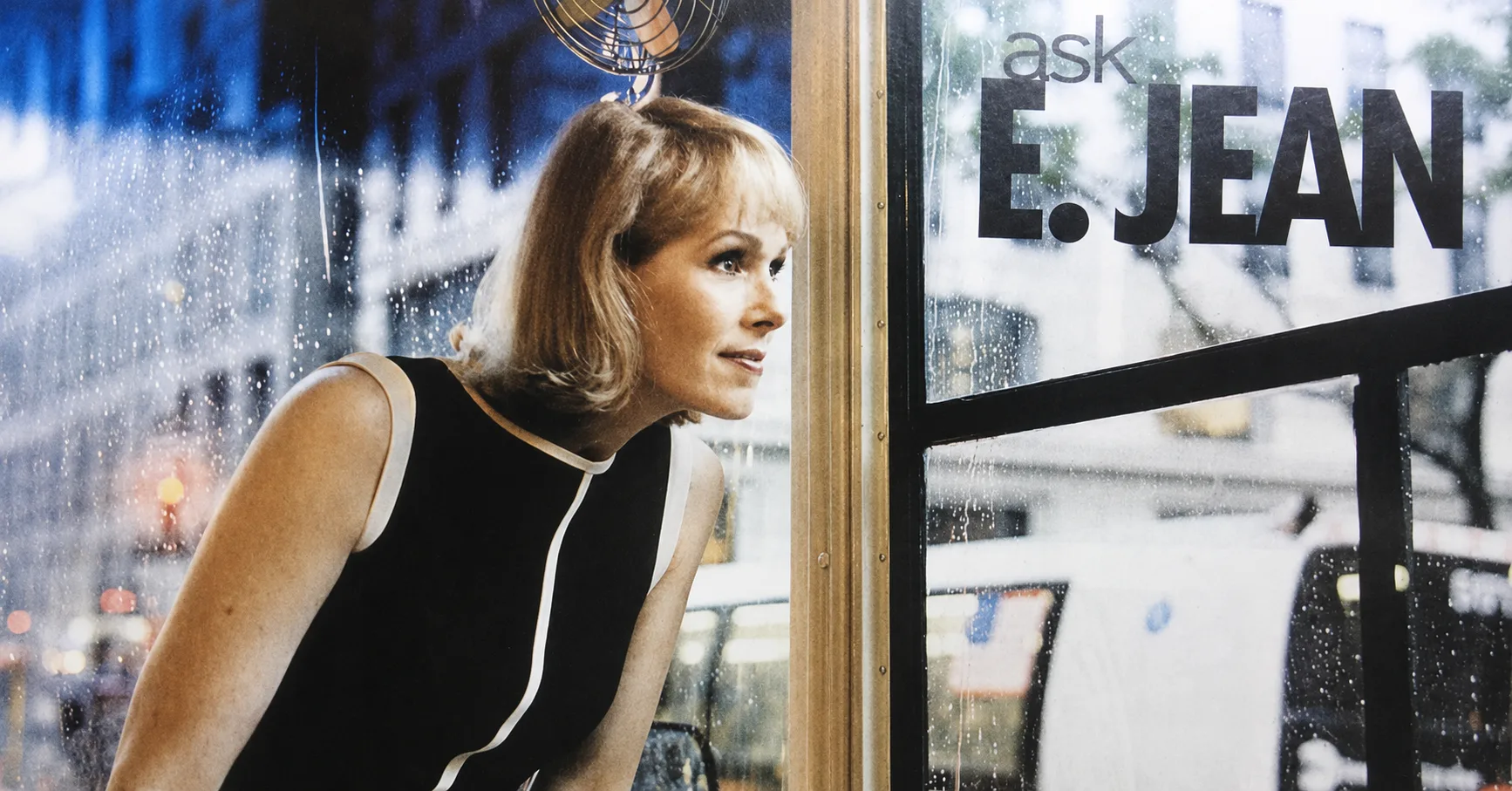
In the fall of 2017, Elle's new editor-in-chief, Nina Garcia, cut Carroll's column in half. Carroll's annual pay went from approximately $120,000 to $60,000.
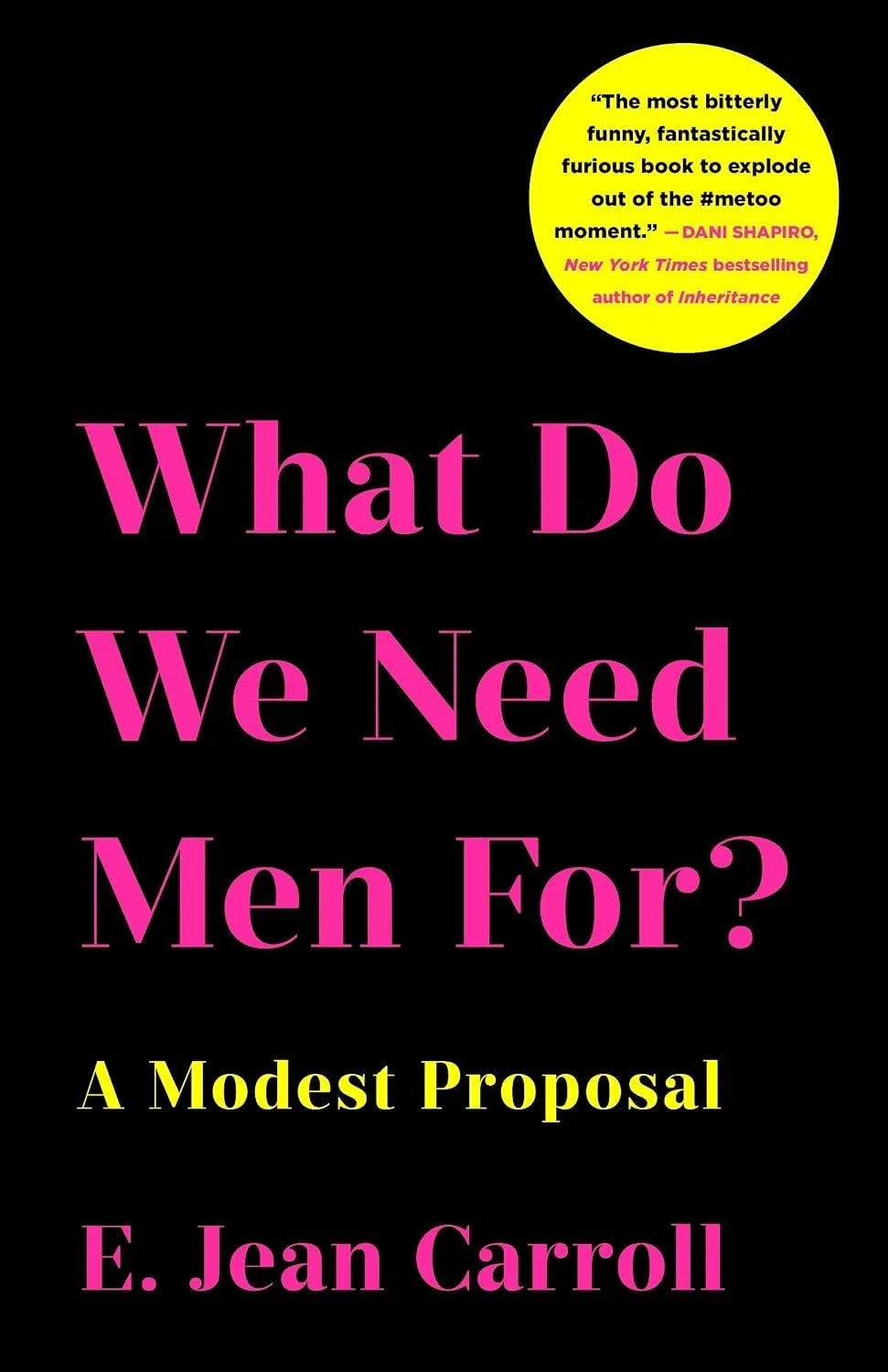
She decided to write a book: What Do We Need Men For? A Modest Proposal. The book was about Carroll, in her seventies, driving from her rural cabin in New York, to various towns named after women, and asking, in her brassy comic voice, whether men were necessary at all.
From Eden, Vermont, to Tallulah, Louisiana, with Elnora, Cynthiana, Anita (Indiana), Bonnie, Ina, (Illinois), and Blytheville, (Arkansas), in between, she traveled with her blue-haired poodle, Lewis Carroll.
Her cat, Vagina T. Fireball, stayed home.
The Most Hideous Men
Running through the book was a dark comedic device: a countdown she called "The Most Hideous Men of My Life List" — the men who, through the years, she said had mistreated, harassed, or assaulted her.
A camp waterfront director who put his hands inside her clothes when she was twelve. A babysitter's boyfriend. A college boy who drove her to the woods, pulled a knife, and tried to rape her.
A Chicago boss. A passport officer who wanted her on his lap. A network chief who mauled her in a hotel elevator. A publicist who attacked her in her car the same week. A lover who nearly choked her to death. A money manager who lost her savings and blamed her for it. Hunter S. Thompson and his knife at the hot tub.
On and on — at camp, at college, at work, in love, in middle age, through every chamber of life, until misfortune no longer appeared episodic but structural, as though every road available to a woman led eventually to another dangerous man.
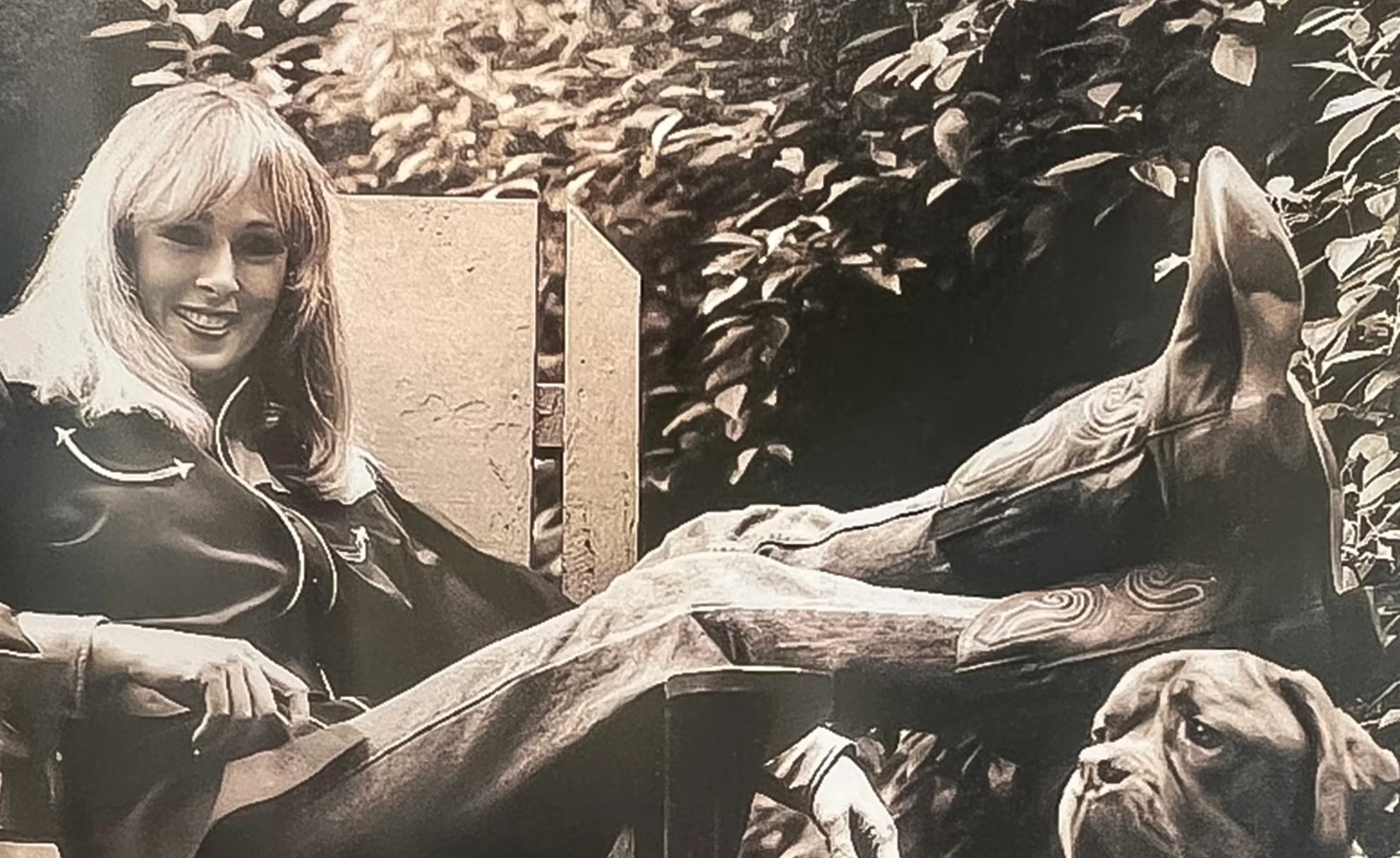
"I've withstood encounters with Roger Ailes, Les Moonves, and President Trump," she wrote. "I was attacked by a military cadet, molested by a camp counselor, raped by an eight-year-old boy, chased by my boss, propositioned by a mob guy, strangled by a husband, and avoided a serial killer."
She was even "raped by an eight-year-old boy," a distinct and unusual claim.
At number twenty on her list: Donald Trump, the most famous man in the world. After him, she closed the list.
"And that was my last hideous man."
It is, by any measure, an extraordinary accumulation. Whether one reads it as the unluckiest life imaginable or as something else, the structure is unmistakable: a lifetime of villains, mounting decade by decade, crowned at last by the biggest name she could name or imagine.

The Dressing Room
Her account of Trump comes at the end: a rape she says Trump committed twenty-three years earlier, in a Bergdorf Goodman dressing room — a normally crowded luxury Fifth Avenue department store gone strangely empty, its lingerie department unattended, its dressing-room door unlocked and ajar.
In the book, she wrote of the incident almost lightly.
Trump talks about himself, she writes, "like he's Alexander the Great ready to loot the city of Babylon."
He makes a face "like he's balancing a spoon under his nose."
He handles a fur hat, she writes, and "coddles the fur hat like it's a baby otter."
When he asks her age, he studies her "like Louis Leakey carbon-dating a thighbone he's found in Olduvai Gorge."
She calls him, for her readers' benefit, their "favorite Walking Phallus."
The jokes run right up to the dressing-room door, and even past it, where she says she "kept laughing."
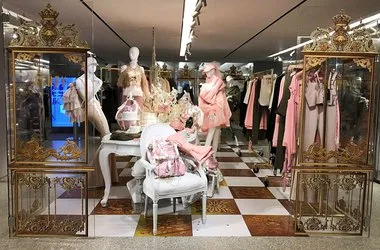
Then, as if a funny dream turns into a nightmare, comes the serious rape scene:
"The moment the dressing room door is closed, he lunges at me, pushes me against the wall, bumping my head quite badly, and puts his mouth against my lips. I am so shocked, I shove him back and start laughing again. He seizes both my arms and pushes me up against the wall a second time, bumping my head, and, as I become aware of how large he is, he holds me against the wall with his shoulder and jams his hand under my coatdress and pulls down my tights.
"I am astonished by what I am about to write: I keep laughing.
"The next moment, still wearing correct business attire, shirt, tie, suit jacket, overcoat, he opens the overcoat, unzips his pants, and, forcing his fingers around my private area, then thrusts his penis halfway‚ or completely, I am not certain‚ inside me.
"It turns into a colossal struggle. I am too frightened to panic. I am wearing a pair of sturdy, black patent-leather, four-inch Barneys high heels. I try to stomp his foot. I try to push him off with my one free hand‚ for some reason I keep holding my purse with the other‚ and I finally get a knee up high enough to push him out and off, and I turn, open the door, and run out of the dressing room.
"The whole episode lasts no more than two or three minutes. I don't remember if any person or attendant is now in the lingerie department. I don't remember if I run for the elevator or if I take the slow ride down on the escalator. As soon as I land on the main floor, I run through the store and out the door‚ I don't recall which door‚ and find myself outside on Fifth Avenue. And that‚ is it. I have never had sex with anybody ever again."
As for its after effects, Carroll says in her book,
"Have I suffered mental anguish, depression, anxiety, RTS (rape trauma syndrome), etc., due to the attack? Very little. It was a big event in my life, and very frightening, but the incident has left me strangely untouched. I was slightly disordered immediately after, yes. But I have always been blessed with resilience throughout my seven decades… In fact, I have continued to shop at Bergdorf…. And (when at the store) the attack never entered my head. Indeed, before 2015, when the man began appearing in the papers and on TV daily, I rarely thought of it…. If I feel any agony at all, it is when I think that what he did to me in that dressing room is what he is doing today to the country."
The Excerpt
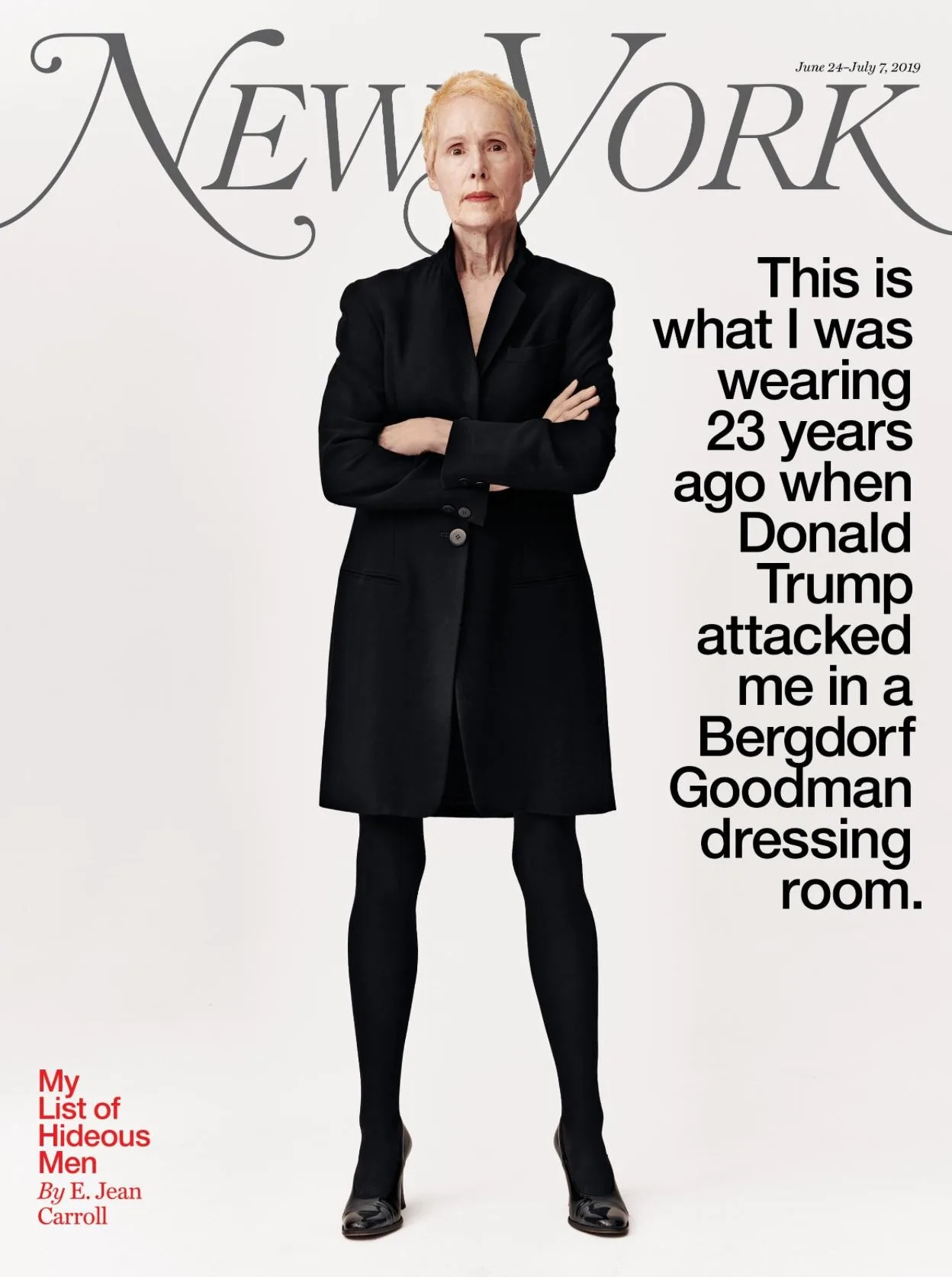
In June 2019, just before the book was published, New York magazine published a cover story excerpted the above Trump scene from the book, What Do We Need Men For?
Within hours, it was the lead story on network and cable channels, in newspapers, and across the internet: A magazine advice columnist had accused the sitting president of rape, allegedly occurring 23 years earlier.
Carroll spent the following days on television, telling the story again and again to interviewers. The publicity was greater than most writers ever receive for any book. Reviewers hostile to Trump praised the book. The New Yorker called the book "comic genius."

Most books perish because no one sees them. Carroll's book was seen everywhere and remained largely unread, an outcome more humiliating than obscurity because it suggested a public decision rather than public ignorance.
Roger Friedman of Showbiz411 reported the disappointing sales and proposed two explanations: "Either people don't believe her story or don't care."
The book carried a list price of $27. By the 2024 trial, used copies were available for $3.51.
In a curious inversion that Trump would understand as economics and marketing, the accusation did not sell the book. It killed it.
The audience drawn by hatred of Trump did not want the comic loneliness of an aging woman asking whether men were unnecessary because they had so often proved unavailable, dangerous or indifferent.
People who might have wanted her comedy were, perhaps, staying away from a book introduced to them as the vessel of a rape accusation.
Woes
On June 21, 2019, the day the excerpt appeared in New York magazine, Trump denied it. He said he had never met Carroll and that she had fabricated the story to promote her book.
Several days later, in the Oval Office, he added that she was "not my type."
Instead of making her book a best seller, and reigniting her declining advice columnist career, the publicity backfired. Her column tanked faster.
She said in her lawsuit that letters from readers asking for advice fell by half after her allegations against Trump and his denial of its veracity.
The Elle staff had another reason to like her less. Carroll did not give the Trump story to Elle. She gave the excerpt, the biggest story of her career, whether imagined, real, or deliberate fiction, to New York magazine.
Staffers and management reportedly saw the choice as a breach of loyalty.
With her career in cinders, in November 2019, Carroll got her second wave of publicity. She filed a defamation suit against Trump for denying the encounter.
Three Versions
The lawsuit revealed something different than the book.
She had admitted in the book, that she had not touched a man since Trump, since 1996.
In the book she writes,
"As soon as I land on the main floor, I run through the store and out the door—I don't recall which door—and find myself outside on Fifth Avenue. And that's it. I've never had sex with anybody ever again."
She gives no motive for the end of her sexual encounters.
In the New York magazine version (June 2019 excerpt), she adds some hedging:
"Whether it's my age, the fact that I haven't met anyone fascinating enough over the past couple of decades to feel 'the sap rising,' as Tom Wolfe put it, or if it's the blot of the real-estate tycoon, I can't say. But I have never had sex with anybody ever again."
In the lawsuit, she took out the possibility that she lost interest, or could not find a man and blamed it all on the incident that she once said she barely thought about. Her resilience was gone in timing with her lawsuit.
Now she could not "show a man that I liked him."
Now, she admitted, the confidence she displayed in her column (and book) had always been fake.
"Ask E. Jean" was brash, comic, and sure of itself. Carroll was a woman dispensing advice on relationships with men and how to have great sex, never asking for sympathy.
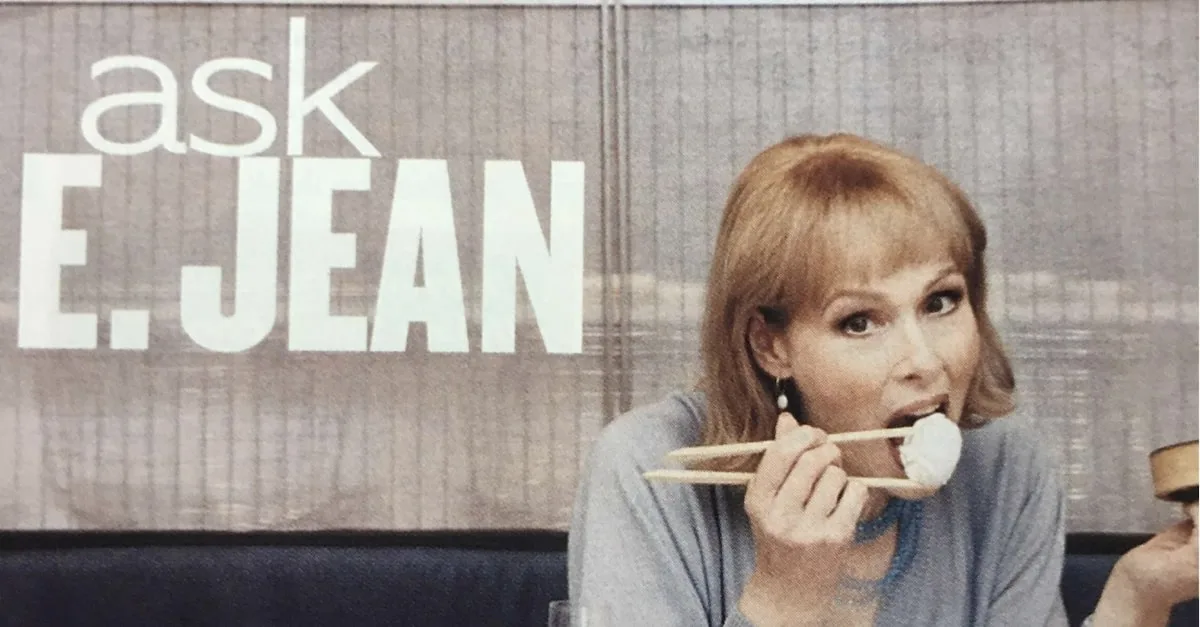
In the lawsuit, she transformed into a person unable to have sex because of the event underlying the suit.
To some, she smelt of a hypocrite. To others, she had jumped the shark.
To Trump haters, she was a brave survivor, and they, in their anti-Trumpian way, were willing to forgive the inconsistencies, or better still chose not to notice them.
To everyone, she became known as the woman who said Trump raped her, who kept silent for 23 years, and was now a deeply distressed victim.

At Trial
At trial she was asked: Have you had a romantic relationship since the assault?
She answered no.
Q. Why not?
A. I — the short answer is because Donald Trump raped me.
Q. How did that affect you in a way — can you describe for the jurors why that assault left you unable to form a romantic connection?
A. What I did was I flirted with Donald Trump. I laughed with him. I tried to be — tried to engage him. I laughed at his jokes. I found him charming. And what happened to me when I was flirting? I got into serious trouble. And so I, after that event, I found it's impossible for me — if I meet a man who is a possibility, it's impossible for me to even — well, to even look at him and smile.
Married and divorced twice before, she said that her love and sex life had ended in a Bergdorf Goodman dressing room.

Sex stopped. Romance stopped. Even the smile indicating the possibility was prohibited.
When asked why the book sounded so different from the testimony, she had an explanation.
'I don't want anybody to know that I suffer,' she testified. 'I would be ashamed to let people know what is actually going on.'"
In December, Elle declined to renew her contract, ending the "Ask E. Jean" column after 26 years.
Carroll placed the blame on Trump.
"Because Trump ridiculed my reputation, laughed at my looks, & dragged me through the mud, after 26 years, ELLE fired me," she wrote. "I don't blame Elle… I blame @realdonaldtrump."
Elle's parent company, Hearst Media, said the decision was a business matter unrelated to politics.
After her column ended, the case became her full-time work.
Between the book and the witness stand, the column was gone. The book had bombed. The comic public voice that had said "I'm fine" had no platform left.
A Voice That No Longer Fit
She was a woman who had written a sex column for 26 years. The last 23 years, during which she said she could not have sex.
She never told her readers that, in private, she had become incapable of the life she prescribed.
Her expert, clinical psychologist Dr. Leslie Lebowitz, explained to the jury:
"The process by which she avoids engaging with men is automatic. And it illustrates how her traumatic fear triggers involuntary behaviors intended to maintain safety."
She had written an account of a rape to entertain, the assault folded into a comedy, the jokes and the horror sharing a single story that she had brushed off.
Then after career failure, she blamed it on Trump and magnified her injury.
The Third Possibility
There is a third possibility. She offered it herself: That she created a fiction and then possibly wrote it so well that she now believes it.
She testified that as the Trump rape encounter unfolded, she was composing it — running it, in her mind, as a comedy.
"I sort of saw it as a Saturday Night Live sketch," she said. "I had written a sketch that was similar to this very scene I was entering."
Comedic flirting; the talented writer, the handsome tycoon, turns not to romance and love but rape and the end of sex.
"That's how my mind works," she testified. "That's how comedy is born. You take two opposite things, you put them together, and it makes a new scene."
If that is so, then the comedy in the writing is how the incident was built- a sketch her mind built in real time.

It raises the question: where did the sketch end and the event begin?
A mind that fuses opposites into new scenes, that can picture Trump vividly in lingerie "over his pants" — a thing that never happened — is a mind whose comedy and whose memory may not distinguish clearly what was real and what was that she imagined to make her scene complete, to explain why she never met a man from age 52 onward, who could make the sap rise, for her or perchance for him, also, or even ever in her life, at any age, who did not, by her telling, abuse her - from Trump, down to even an eight year old boy who "raped" her.
The Book's Version
It is too easy to dismiss her as a liar.
In her 2019 book, she described a recent afternoon in Bergdorf Goodman with her friend Lisa Birnbach — the two of them, she wrote, drinking champagne and whooping over wedding dresses as her niece tried them on — and "the attack never entered my head."
In her book, before 2015, when Trump began appearing in the news each day, she "rarely thought of it."
When he "forced himself on the notice of the entire nation," she wrote, she "tweeted jokes about him" like everyone else. If she felt "any agony at all," she added, it was in thinking that what he did to me in that dressing room "is what he is doing today to the country."
That was her account of the harm: a political metaphor. Not a wound to her, but to the nation.
On the Stand
On the stand, four years later, the same woman described a life destroyed.
But she also revealed a mental disturbance that is as suggestive of false memory as it is of lying or overwhelming trauma.
The visions "would wash over me," she testified — "over and over and over in my mind."
A quarter century in which she said she never again went to bed with a man.
She testified to pulling to the side of the road, closing her eyes, and waking to feel Trump "on top of me," certain "I was going to die because I couldn't breathe."
The intrusive visions: The onset: "that very night the visions would wash over me... it happened over and over and over in my mind because I did not have the ability to... get the visions out of my head." The persistence: "I've had them ever since the attack... I would be walking the dog, I would be hiking, and suddenly up would come the vision... they would absolutely take over my brain." The everyday intrusion: "I would be cooking pasta... and in would slide just a picture of him going... into the dressing room or hitting my head or feeling his fingers jammed up inside of me."
The physical horror: "His fingers went into my vagina, which was extremely painful, extremely painful... he put his hand inside of me and curved his finger. As I'm sitting here today, I can still feel it."
Twelve Million Minutes
In 2019, she wrote that she never suffered. Under oath in 2023, seeking damages, she testified that she suffered beyond repair.
Either way, the old, wisecracking E. Jean had nowhere left to perform.
What remained was the lawsuit. And in it, the woman who gave advice to women about men, about how not to let them hurt you, was ruined by those three minutes of life.
Between the three minutes in the dressing room and the day she first wrote about them lay some twelve million minutes — twenty-three years — during which, by her own account in the book, she 'never suffered' and was 'fine.'
Then, in the roughly four years between the book and the witness stand, 'fine' became a ruined life.
Two Lawsuits
In 2022, she brought a second lawsuit. The second action added a direct sexual-assault claim.
What made the second lawsuit possible was New York's Adult Survivors Act. The law suspended for one year the statute of limitations in which sexual assault claims could be brought back to court, no matter how old they were.
Carroll filed her lawsuit on the first day.
She filed the first lawsuit in 2019, the second in 2022. She went to trial in 2023 on the second lawsuit and in 2024 on the first.
She was 52 at the time of the alleged encounter, 75 when she filed the 2019 defamation suit, 79 at the 2023 trial, and 80 at the 2024 trial.
In June 2025, she published a second book, Not My Type: One Woman vs. a President, about her five years of litigation. It debuted at number two on the New York Times bestseller list. It lasted for one week, then flopped.

Which Story Is the Lie?
She won both cases, however, for reasons we will examine in our next in this series, and won awards in the millions.
As a public figure, Elizabeth Jean Carroll revealed she lived a lifetime of deception.
Did she deceive, as the aging struggling writer whose books had flopped and whose column had died, deliberately to make millions.
Compare what she said in the book to what she said on the witness stand, four years later.
The same fact. Trump, then no sex, no intimacy since 1996.
On the page of her book, a throwaway.
On the stand, the wound of a lifetime, the devastating center of a ruined life, described through tears.
One can easily argue that one of these narratives is a lie. She says now the lie was in the book.
Perhaps the casualness of her book in 2019 and the devastation of her trial in 2023 are not necessarily a contradiction but two stages of false memory construction — a memory still forming when she wrote the book lightly, and hardened, by the time she testified, into the settled center of a ruined life.
Maybe she was not hiding pain in the book or creating it in court. Maybe the memory grew as she looked at it, and each time it grew she believed that was how it had always been.
More Merciful, More Terrible
To say she lied for money is almost comforting, because greed is simple.
The truth may be more merciful and more terrible: she may believe what is not true.
Perhaps there was an initial encounter: recognition, joking, flirtation. Trump may have forgotten it almost immediately. Carroll may have kept that small moment until her mind built something larger around it.
Carroll, who had come to see her life as a long procession of injuries from hideous men, may have returned to her scene of opposites again and again in dreams and visions, each time feeling the pain more clearly, until the story she rehearsed became the thing she remembered.
Maybe she needed more than money. Maybe she needed a reason for the life she had lived and the life she had missed.
The reality may have been the need rather than the event. The memory could have become necessary as Carroll measured an unsatisfactory life against a man who represented extraordinary worldly success.
She may be truthful. She may be a liar. Or she may be both innocent of deceit and profoundly deceived by her own memory.
If it is the last, then we must not scoff at her, despite her millions. The tragedy would not be the rape that a fair observer is entitled to doubt.
Money does not make that kind of sadness disappear.
The sad thing would be that she came to believe in a wound she was never given and spent the last years of her life living inside its memory.
Part Three turns from the accuser to the trial itself and to Federal Rule of Evidence 415, the rule that let two other unproven accusations be placed before the jury as proof of a third, and that, for sexual cases alone, suspended a protection the law has guarded for centuries, the rule against the oldest and most dangerous argument there is — he is bad, so he did it.
Epilogue: The Same Machine, in a Colder Court
E. Jean Carroll’s case was civil. The punishment was money, and the defendant had wealth, lawyers and a public platform.
He also had more power than almost anyone else sued in a court.
Change one fact: make the case criminal. Remove the defendant’s power and wealth. Keep the old accusation, the evolving account and the witnesses whose later beliefs may no longer be separable from their original experiences.
That is the case of Nicole Daedone and Rachel Cherwitz of OneTaste.
They were convicted not on physical evidence of a crime, but on the testimony of witnesses describing coercion they say they felt — years later, after leaving, after reframing, after others helped them understand their own memories.
The prosecution did not have to prove force in the ordinary sense. It had to persuade a jury that consent given at the time was not really consent, that experiences these witnesses once described as chosen were, in memory, something else.
By then the memories had passed through departure, grievance, interpretation and the careful hands of lawyers.
It is the same method used for Donald Trump, turned to a harder purpose.
Where Carroll's sincerity produced a verdict for money, theirs produced prison. And the two women who are serving those sentences had none of Trump's power to resist it.

If sincerity is permitted to stand in for accuracy, and if a memory shaped over time can carry the force of proof, the danger is not confined to one famous civil trial.
It will prevail in every proceeding in which retrospective conviction is allowed to replace evidence of the original act.
Future parts of this series will turn to OneTaste — and to why a presidential pardon of Daedone and Cherwitz would do more than free two women. It would challenge the method by which their convictions were obtained.
It would repudiate a prosecution theory that converted consent into coercion and retrospective belief into proof.
Read more:
Truth, Lie, or False Memory: The E. Jean Carroll Question
Believe the Accuser: The Legal Weapon That Hit Trump in the Carroll Case and OneTaste in Brooklyn