The Framing of Honduran President Juan Orlando Hernandez Part 9; The Show Trial
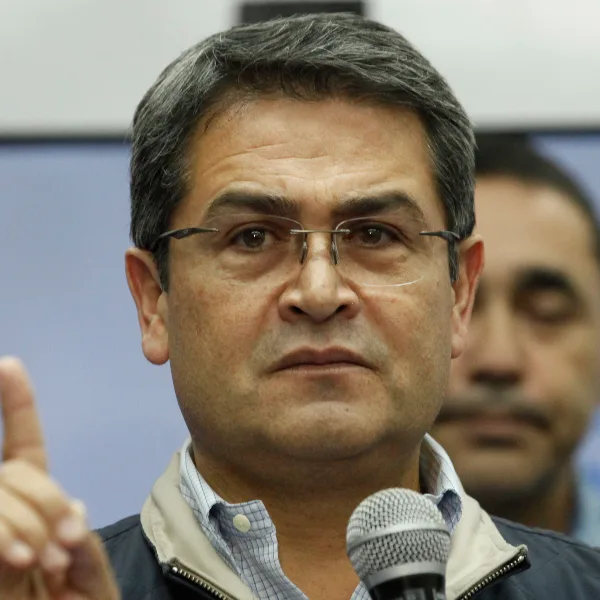
Part 1 made the geopolitical argument for Trump's pardon of former Honduran President Juan Orlando Hernandez.
Part 2 examined the case the Biden Department of Justice put on.
Part 3 examined how the prosecutors lied to secure the trial before a biased judge and an uninformed jury.
Part 4 showed how the prosecutors coached cooperators to lie about ledgers and radar that did not exist.
Part 5 examined the four cooperators — 134 murders between them, 700 tons of cocaine trafficked — whose uncorroborated testimony was the basis for Hernández's 45-year sentence.
Part 6 documented the eight years of U.S. government praise for Hernández as a counter-narcotics partner that the jury was not allowed to see.
Part 7 documented the false venue stipulation the prosecution used to keep the case in Manhattan before Judge P. Kevin Castel.
Part 8 documented how Castel ensured Hernández had no functional defense lawyer at trial.
This is Part 9.
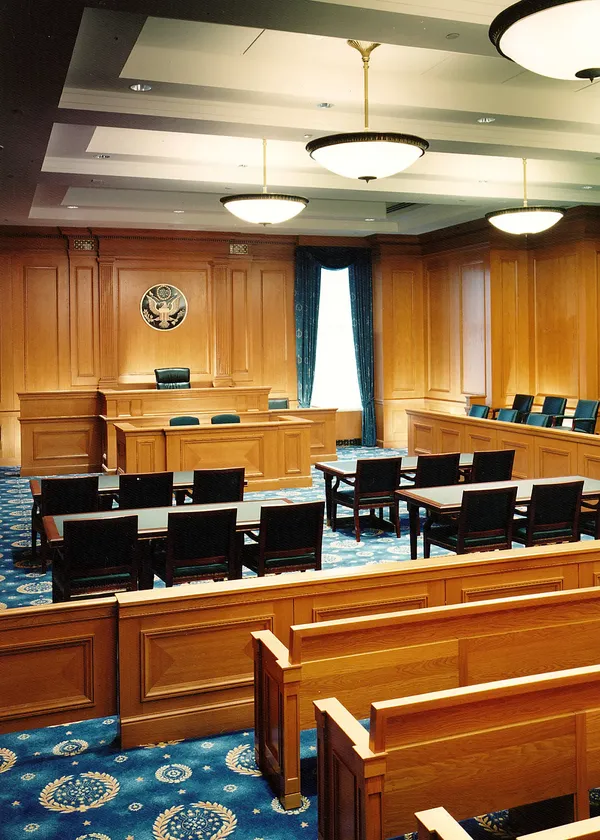
The United States’ drug trafficking case against former Honduran President Juan Orlando Hernández was called a trial. It had the forms of a trial. There was a judge. P. Kevin Castel.
There was a jury. There were lawyers. There were witnesses. There was evidence, or what was allowed in as evidence. The trial was in the Daniel Patrick Moynihan U.S. Courthouse in Manhattan.
The case was prosecuted by Assistant United States Attorneys Jacob Gutwillig, David Robles, Elinor Tarlow, and Kyle Wirshba, under U.S. Attorney Damian Williams, Attorney General Merrick Garland, and Deputy Attorney General Lisa Monaco.
The Defense That Could Not Be
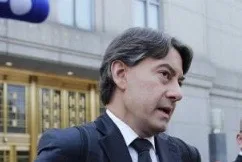 Attorney Rinaldo Stabile had only 28 days to prepare for trial.
Hernández’s defense was not, in any functional sense, ready to defend him.
His court-appointed counsel was Renato Stabile, a federal Criminal Justice Act lawyer. Stabile was appointed 28 days before the trial.
The defense said it needed at least six months of preparation, full access to the classified material, and the ability to investigate in Honduras and other foreign jurisdictions. Castel denied the defense's request for a continuance.
The Trial
The main government witnesses were murderers and drug traffickers.
Four men who had admitted to ordering 134 murders and to trafficking 700 tons of cocaine through Honduras to the United States.
The prosecutors had them testify to two things.
One. That they had personally paid bribes to Hernández, or had witnessed bribes being paid to him, or had received protection from him when he was president.
Two. That Hernández knew about and participated in the cocaine trafficking that was the basis of the federal charges.
Without these two assertions made by cooperators, the federal case against Hernández would not have existed. There was no recording. No financial documents.
The federal tool to incentivize cooperators’ testimony is the § 5K1.1 letter and the Rule 35 motion.
A prosecutor can file a § 5K1.1 letter asking the judge to sentence below the mandatory minimum. A Rule 35 motion does the same thing after sentencing. Both are at the prosecutor's discretion. Without one or the other, the cooperator faces the mandatory minimum.
The Four Cooperators
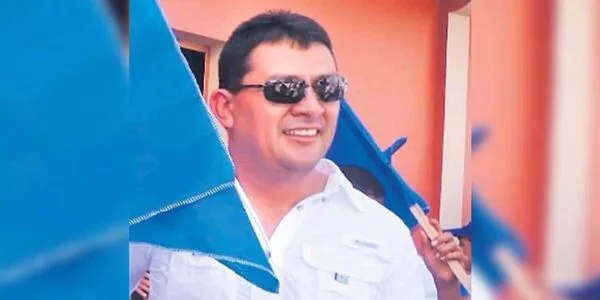 Ardon
ArdonAlexander Ardón. Former mayor of El Paraíso, Copán. Admitted to ordering 56 murders. Faced life plus 30 years. Served less than six years and was released.
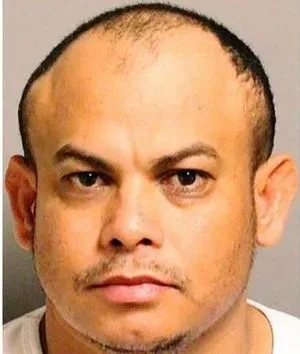 Maradiaga
Devis Leonel Rivera Maradiaga. Former leader of Los Cachiros. Admitted to ordering 78 murders. Faced life plus 30 years. Never sentenced. Has been a federal cooperator for eleven years.
His name does not appear in the federal prisoner database. This suggests he is free and living under an assumed name in the witness protection program.
Luis Pérez. Sinaloa Cartel member. Trafficked 200,000 kilograms of cocaine over seven years. Sentenced to 135 months. After his testimony, the prosecutor filed a motion under Rule 35. Pérez served 6 years and 3 months.
Fabio Lobo. Son of former Honduran president Pepe Lobo. Sentenced to 24 years. Lobo was released after seven years.
There was no recording of any of the alleged meetings between Hernandez and the murderer-trafficker witnesses.
No photographs, bank records, or surveillance footage.
No phone records, emails, or financial traces of the millions supposedly paid to Hernandez.
El Chapo and the Missing Wiretap
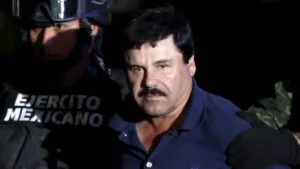 El Chapo
The El Chapo allegation should have been easy to corroborate. The DEA had real-time access to El Chapo's BlackBerry communications throughout 2013. The DEA was reading his texts.
The agent who led the operation that captured El Chapo, Andrew Hogan, has documented the surveillance. The wiretaps captured every other significant transaction in El Chapo's 2013 communications. The bribes to Mexican governors. The conversations with cartel lieutenants. The drug shipments. The negotiations with rival traffickers.
It did not capture anything related to Hernández.
The cooperator said it happened. The surveillance said it did not.
Ardón's Two Stories
The Valle Valle brothers were Honduran traffickers in Copán, who controlled a major piece of the cocaine route through western Honduras.
In 2014, within months of becoming president, Hernández extradited them to the United States. They were tried, convicted, and imprisoned in the federal system.
In 2019, at the trial of Tony Hernández, Ardón testified that El Chapo personally delivered the $1 million bribe to Juan Orlando Hernández at a property owned by the Valle Valle brothers.
The story had a problem.
If El Chapo had paid Hernández at a Valle Valle property to protect the trafficking network, why did Hernández extradite the Valle Valles to the United States the following year?
By the time of the trial in 2024, Ardón’s story had changed. He testified that the bribe was delivered at his mother's house.
The problem the Valle Valle property created was gone.
Castel was the judge in both trials. He let the contradictory testimony stand without addressing the inconsistency for the jury.
The Ledgers Castel Filtered
The government's evidence against Hernández included drug ledgers seized in 2018 from Honduran trafficker Magdaleno Meza.
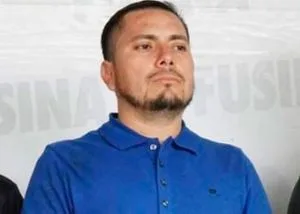 Meza was killed in US custody. The government used his ledger pothusmously.
There were nine ledgers. The government introduced two at the trial. The two contained the damning entry La JOH.
The government told the jury La JOH was Juan Orlando Hernández.
The defense wanted the jury to see the other seven ledgers. In the other seven ledgers there were entries that contradicted the government's theory.
Two of the entries read Payment to JOH for fumigation and Payment to JOH for weeding and cleaning of River.
The entries suggested that JOH was not Juan Orlando Hernandez but a Honduran agricultural business performing fumigation and field-clearing work.
In the ledgers the jury did not see, JOH sprayed fields. JOH cleared weeds. JOH cleaned a river.
The government objected to the introduction of the seven ledgers.
Castel sustained the objection.
DX 3519-04
The defense also wanted the jury to see a Honduran law enforcement report — labeled DX 3519-04 — produced in discovery by the government.
DX 3519-04 was a Honduran police investigation report dated October 18, 2018. It analyzed the names and aliases used in the ledgers.
The report identified an entity called P.S. Technologia, which appeared in one of the ledgers. The Honduran investigators traced P.S. Technologia to a woman named Sinia Janeth Hernandez Rivera and to her family.
The Honduran investigators documented that two relatives — Antonio Hernandez Sarmiento and Modesto Antonio Orellana Hernandez — used the alias Tony Hernandez. Another relative, Cristina Janeth Orellana Hernandez, was known as La JOH.
The prosecution had told the Manhattan jury that La JOH in the ledgers meant Juan Orlando Hernández, the former president of Honduras.
La is the feminine article in Spanish. La JOH in a Spanish-language ledger naturally refers to a female. The masculine form would be El JOH.
The prosecution told the jury that La JOH — a feminine construction — referred to Juan Orlando Hernández, a man.
The Honduran investigators had documented that La JOH referred to Cristina Janeth Orellana Hernandez, a woman.
Castel sustained the government's objection to the introduction of DX 3519-04.
The Video That Did Not Exist
The government called an accountant named Jose Sanchez, who worked at a Honduran rice company called Graneros Nacionales.
The prosecution's theory was that Geovanny Fuentes Ramírez, the convicted Honduran drug trafficker, used Graneros Nacionales as a financial vehicle to pay bribes to Hernández.
The rice company would issue checks. The checks would look like legitimate business payments. The actual source of the money was Fuentes Ramírez's drug trafficking.
Sanchez, as the company's accountant, was the prosecution's witness to the arrangement.
The bank records, if it were true, would have existed.
Sanchez said there were checks. But the prosecution did not produce the bank records.
The federal prosecutors had subpoena power. They had treaties with Honduras. They had the cooperation of the Castro government, which had extradited Hernández.
If the records existed, the prosecution would have introduced them.
The trial would have had documentary corroboration of Sanchez's testimony. The prosecution did not produce the bank records. They may not have existed.
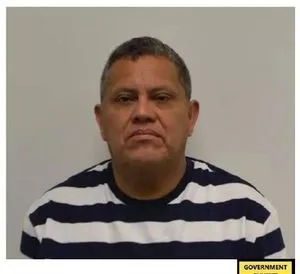 Geovanny Fuentes Ramírez
The prosecution's theory of Graneros Nacionales as Fuentes Ramírez's bribery conduit could have been confirmed or denied by one person. Geovanny Fuentes Ramírez was alive. He was in federal custody. He was reachable. The prosecution did not call him.
The defense, with 28 days, did not have time to interview him, confirm what he would say, and produce him at trial.
The man at the financial center of the Sanchez story never testified about it.
More Sanchez Evidence
Sanchez also told the jury he had a video of Hernández receiving cash from Geovanny Fuentes Ramírez.
If true, it was the smoking gun.
Sanchez said the three USB drives he stored it on were lost.
Sanchez named two people who had handled the video. A Honduran prosecutor named Marlen Vanegas. Sanchez said he had given her a copy. Sanchez said Vanegas had delivered the video to then-Honduran Attorney General Oscar Chinchilla.
The federal prosecutors did not call Vanegas or Chinchilla.
The government offered no explanation for what happened to the alleged recording. Only the accusation remained.
Castel let it in.
The Phone That Did Not Add Up
The government brought in a federal forensic agent who testified about how the cell phone of Geovanny Fuentes Ramírez had been seized and how the data had been extracted using federal forensic tools. How the chain of custody had been preserved. How the Waze app on the phone recorded location data over time.
The agent walked the jury through one entry. Geovanny Fuentes Ramírez had visited Casa Presidencial on May 29, 2019.
The government told the jury this was a meeting with Hernández.
The agent did not walk the jury through the other entries the same forensic extraction had produced.
The same forensic extraction showed Fuentes Ramírez’s phone contacts list, which had an entry for President Juan Orlando with the number 504-999-2677, a number Hernández had stopped using in 2012, seven years before the alleged meeting.
And Hernández's office was not at Casa Presidencial in 2019. He worked from a different government building. A 2019 visit to Casa Presidencial was not a meeting with Hernández.
The prosecution had access to all of this data. The exhibits the jury saw were the exhibits the prosecution chose to project on the screen.
The Witness Who Never Met Hernández
Four cooperators had testified about bribes.
Ardón said Hernández took money from El Chapo. Rivera Maradiaga said Hernández took money from the Cachiros. Pérez said Hernández took money from a Sinaloa Cartel intermediary. Lobo said Hernández took money through his sister Hilda.
There was no proof other than their good word.
The theory was that Hernández operated Honduras as a narco-state. That required more than bribes. That required a system of protection.
The prosecution needed a witness who could describe the system from the inside. The witness was Giovani Rodríguez, a Honduran former police officer.
Rodríguez testified that he was under the protection of Juan Orlando Hernández.
He testified that he had never met Hernandez. No meeting. No handshake. No conversation. No direct contact.
But he said he was protected by him.
Rodríguez admitted to ordering one murder while a Honduran police officer. He had admitted to trafficking 450 tons of cocaine into the United States. He had admitted to influencing Honduran judges to reverse his criminal conviction and lying under oath in prior proceedings.
He was a Honduran former police officer. He was also a cooperator in all but name. The testimony was what kept him from being indicted himself.
The Rule 33 Ruling
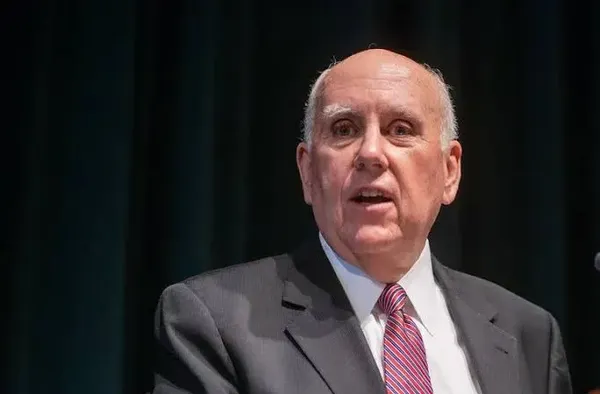 Judge P. Kevin Castel
After the conviction, the defense moved for a new trial under Federal Rule of Criminal Procedure 33.
One of the grounds the defense raised was that DEA Agent Jennifer Taul had testified falsely.
Taul had told the jury that cocaine trafficking through Honduras increased during the years of Hernández's presidency.
The State Department's reports said the opposite.
State Department reports documented that cocaine trafficking through Honduras decreased every year during Hernández's presidency.
The contradiction went to the government's central account of Hernández's presidency.
The defense said the jury had heard false testimony. In an earlier SDNY case, the same U.S. Attorney's Office had presented an expert who said trafficking through Honduras had decreased during Hernández's presidency.
Now, in Hernández's trial, the government had put on the opposite story.
Castel said it did not matter.
Castel's Logic
Castel acknowledged the conflict between Taul's testimony and the prior testimony.
Castel ruled that even if Taul's testimony had been false, the contradiction would not have altered the result.
Castel reasoned that if the State Department was right that cocaine trafficking through Honduras decreased during Hernández's presidency, the decrease proved Hernández was using anti-trafficking policies as cover for trafficking.
Evidence that the defendant publicly fought cocaine trafficking was evidence that he was secretly trafficking cocaine.
Castel's ruling revealed the structure of the case.
If trafficking increased, Hernández was guilty because he had allowed it.
If trafficking decreased, Hernández was guilty because the decrease proved his anti-trafficking policy was just a cover.
No statistic could help him. No official report could help him.
The case began with men who had confessed to murder. It survived because missing records were treated as irrelevant. Castel let the prosecution build the case it wanted. He kept out what hurt the government.
On June 26, 2024, Judge Castel sentenced Juan Orlando Hernández to 45 years in federal prison.
The next installment will examine what produced the verdict — the judge who was not free, the jury that was not free, and the political project the prosecution served.