Part 8. The Framing of Honduran President Juan Orlando Hernandez: No Lawyers for Hernández
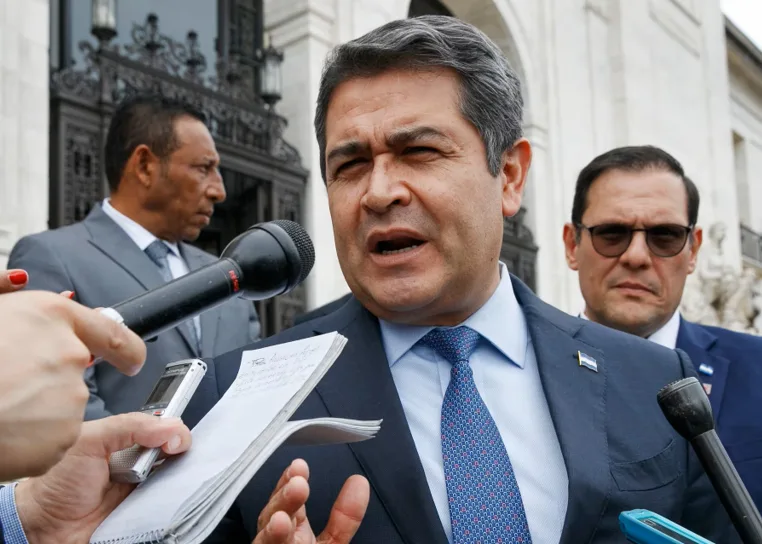
Part 1 made the geopolitical argument for Trump's pardon of former Honduran President Juan Orlando Hernandez.
Part 2 examined the case the Biden Department of Justice put on.
Part 3 examined how the prosecutors lied to secure the trial before a biased judge and an uninformed jury.
Part 4 showed how the prosecutors coached cooperators to lie about ledgers and radar that did not exist.
Part 5 examined the four cooperators — 134 murders between them, 700 tons of cocaine trafficked, whose uncorroborated testimony was the basis for Hernández's 45-year sentence.
Part 6 documented the eight years of U.S. government praise for Hernández as a counter-narcotics partner that the jury was not allowed to see.
Part 7 documented the false venue stipulation the prosecution used to keep the case in Manhattan before Judge P. Kevin Castel.
This is Part 8.
A federal jury in the Southern District of New York convicted Juan Orlando Hernández, the former president of Honduras, on March 8, 2024, on the testimony of four cooperating witnesses with 134 admitted murders between them, and without physical evidence connecting Hernández to the drug trafficking conspiracy.
On June 26, 2024, Senior United States District Judge P. Kevin Castel sentenced President Hernández to 45 years in federal prison.
Who Is P. Kevin Castel
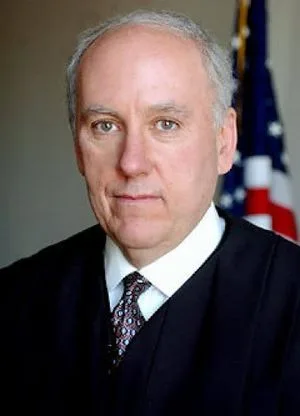 P. Kevin Castel -
President George W. Bush nominated Peter Kevin Castel to the United States District Court for the Southern District of New York in March 2003, and the Senate confirmed him that September.
Before he became a judge, Castel spent 26 years at Cahill Gordon & Reindel (20 of them as a partner) - one of the most profitable law firms in America.
The firm has consistently ranked in the top ten most profitable law firms in America by partner earnings.
He has served as president of the Federal Bar Council and as chair of the New York State-Federal Judicial Council.
According to his 2024 federal financial disclosure, he has investment assets of approximately $16 million, excluding his primary residence and federal pension. The portfolio is concentrated in New York and New Jersey municipal bonds and Fidelity mutual funds.
He is also a trustee of an unnamed family irrevocable trust. The assets of that trust are not subject to disclosure. Federal judicial ethics rules permit wealthy judges to hold significant family wealth in trust structures that do not appear in financial disclosures. The public has no way to know how much.
Castel is, in every measurable way, the Manhattan establishment federal judge — institutionally embedded, financially substantial, and culturally aligned with the prosecutors who appear before him.
He presided over the 2019 trial of Tony Hernández, Juan Orlando Hernández's brother. He presided over the 2021 trial of Honduran trafficker Geovanny Fuentes Ramírez.
The Prosecution Knew the Judge Well
The advantages of having Castel on the bench were significant.
Castel had already heard the prosecution's theory of the Honduran narcotics conspiracy and validated it through two convictions. He had already heard the mass murderer and cooperator, Rivera Maradiaga, testify, who was used by the prosecution as one of its key witnesses.
Judge Castel had ruled on motions that the defense would certainly raise again in the Hernandez trial.
He was a known quantity and a friendly one at that.
A judge new to the case might be different. A judge with a different background, such as a former criminal defense lawyer, or a judge with a contrarian reputation, or worse yet, a judge fair to both the proseuction and the defense, might have ruled on the same motions differently.
The prosecutors, arguably, did not want a new judge. They wanted Castel.
The Defense Hernández Could Not Afford
Juan Orlando Hernández had been president of Honduras for eight years. He had been one of the most prominent Latin American political figures of his era.
In February, 2022, three weeks after Hernández left office and one day after the U.S. formally requested his arrest and extradition, Honduran police arrested him.
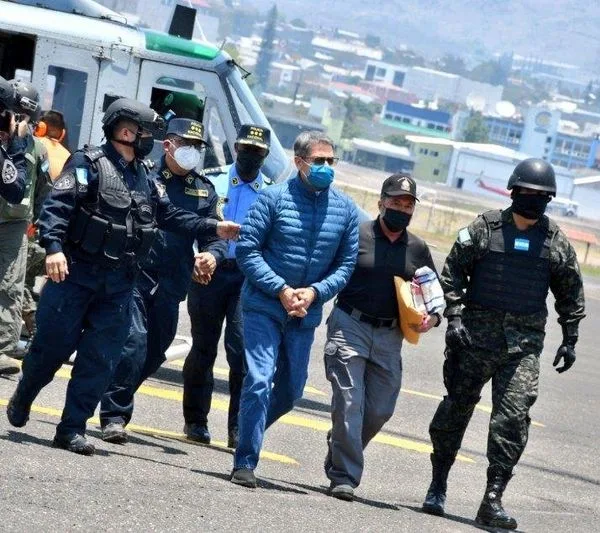
By the time of his trial in 2024, the new leftist government of Xiomara Castro in Honduras had seized Hernández's properties and assets.
The lawyer Hernández retained was Raymond Colon, a former public defender.
The man who introduced Hernández to Colon was Jorge Bar-Levy, a Florida resident who claimed to be an ordained rabbi.
Bar-Levy also appears to have been an informant for the DEA.
He met with the Hernandez family and shared what he learned with the DEA, the lead federal investigative agency in the prosecution against Hernández.
When Hernández was extradited to the United States in April 2022, Bar-Levy — still presenting himself as a rabbi and helping the family from his Florida home — referred them to attorney Colon.
Bar-Levy did not disclose his role as an informant to Hernandez.
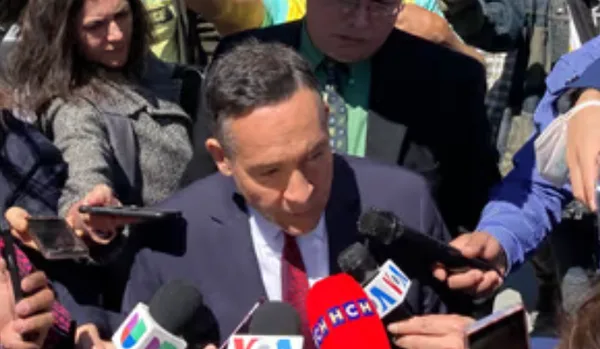
Attorney Raymond Colon speaks to reporters.
The Order That Locked Hernández Out of His Own Case
Judge Castel had entered an order restricting how Hernández could review his own discovery.
Under the order, Hernández could review the case file only when his retained attorney was present at the federal jail. He could not review it alone. He could not review it with anyone else.
Sometime in 2023, Colon developed an illness that prevented him from visiting Hernández at the federal jail. With his lawyer unable to come, Hernández could not defend his case at all.
For a defendant facing trial on a nine-year federal investigation involving four cooperating witnesses, the inability to review discovery was a serious obstacle to mounting a defense.
Hernández did not know what was in his own case file because he was not being shown it.
The Substitution Hernández Was Refused
In January 2024, three weeks before trial, Hernández asked Castel to remove Colon as his lawyer. He told the court he and his lawyer were no longer in communication.
Hernández told Castel the relationship had broken down. Colon, present at the hearing, confirmed on the record that it had.
The defense also placed before the court the documented Bar-Levy connection — that the informant-rabbi who had referred Hernández to his lawyer had been reporting to the DEA.
He added Renato Stabile as supporting counsel, alongside Colon, at public expense.
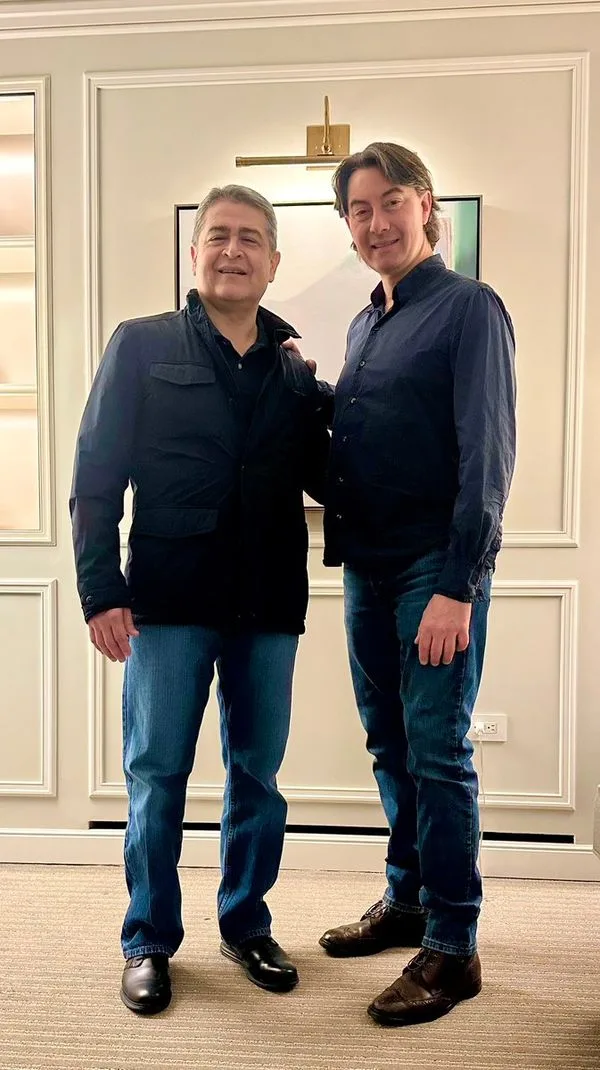
Hernandez with court-assigned attorney Stabile
The CIPA Fight: Hernandez's Memories Became Government Secrets
Another obstacle Castel imposed made it nearly impossible for Hernández to mount his core defense.
Hernández's defense was that his eight years of meetings with U.S. government officials proved he was not a narco-president but an anti-drug president who fought in partnership with the United States to stop illegal drugs, not profit from them.
His engagement with the U.S. government reached the highest levels of national security and law enforcement — commanders of U.S. Southern Command, Secretaries of Homeland Security, the Vice President of the United States, the President of the United States, senior DEA officials, State Department personnel, and Department of Justice personnel.
For Hernández, those meetings were proof of his cooperation with the United States and a documentary record of his role as the U.S. counter-narcotics partner the State Department had certified for eight consecutive years.
The U.S. Attorney's Office took the position that Hernández's memories of those meetings were classified national security information covered by the Classified Information Procedures Act.
In plainer English: the government said the defendant did not own his own memories. The government did.
Under CIPA, Hernández could not freely share those memories with his lawyers. He could not freely testify about them. Any defense use of his recollections required pre-trial review and, potentially, government substitution or summarization of his testimony.
Castel ruled the classification stands.
A Defense Divided
Hernandez's memories remained classified for the trial. The lawyers could not access them.
Hernández could not even share his recollections of how he fought drugs in partnership with the United States with his trial counsel.
The defense brought in Sabrina Shroff as cleared counsel to handle the classified information portion of the defense. Shroff held the Top Secret/SCI security clearance required to handle classified material in federal court. Colon and Stabile did not.
The defense was now divided. Shroff could see the classified material. The trial counsel could not. The trial counsel was preparing to defend a case in which the most important material — the record of Hernández's cooperation with the U.S. government — was classified and inaccessible to them.
No Delays
Castel appointed Renato Stabile to the case on January 23, 2024. Trial began February 20 — twenty-eight days later.
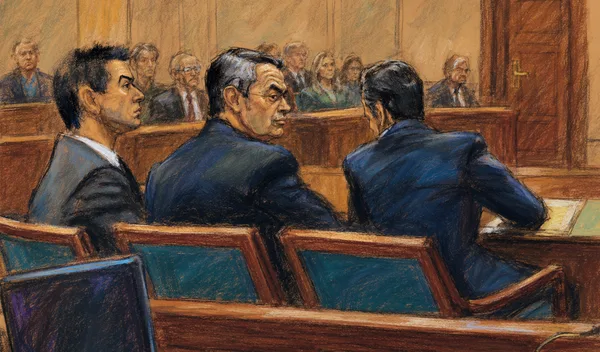 A courtroom sketch of former Honduran President Juan Orlando Hernández with his lawyers.
In those 28 days, Stabile was responsible for reviewing a nine-year federal investigation. Four cooperating witnesses who had been providing statements to the government since 2015. Classified materials covered by CIPA. Intercepted communications. Translation issues. A defendant who spoke through an interpreter.
Two days into his appointment, Stabile wrote to Castel. He told him he could not provide effective representation in the time remaining before trial.
The prosecution had spent nine years building the case. A delay of three or six months would have cost them little. The cooperators were locked into their cooperation agreements. The evidence was preserved. The witnesses were available.
Castel ruled the trial would proceed on schedule.
No Functional Lawyer
When the trial began on February 20, 2024, Hernández did not have a functional defense lawyer.
Colon was the lawyer of record. Colon, too ill to visit the jail, had not been preparing the defense. Stabile had been on the case for 28 days.
Shroff, as counsel cleared to handle the classified information portion of the defense, could not share the classified material with Colon or Stabile.
Hernández went to trial with three lawyers, none of whom was prepared to defend him.
The Government Lawyers
Six federal prosecutors helped to prosecute the case against Hernández.
Assistant U.S. Attorneys Jacob H. Gutwillig, David J. Robles, Elinor L. Tarlow, and Kyle A. Wirshba represented the Southern District of New York.
Trial Attorneys Andrea Broach and Jessica Fender represented the National Security Division's Counterterrorism Section of the Department of Justice.
The Three-Lawyer Affidavits
After the verdict, all three of Hernández's lawyers prepared affidavits stating that they had been unable to provide effective assistance of counsel.
Retained counsel Colon. Court-appointed counsel Stabile. Cleared counsel Shroff. All three signed.
The affidavits are the formal acknowledgment by Hernández's entire defense team that the judge before whom they appeared did not permit them to do their work.
The Sentence
On June 26, 2024, Castel sentenced Juan Orlando Hernández to 45 years in federal prison. The mandatory minimum sentence Castel was required to impose was 40 years. Castel added five years.
The defendant had no lawyer who had prepared the case. The judge proceeded anyway.
The next installment will examine a dozen rulings Castel made before and during the trial that favored the prosecution.


Ouch.