A Judge-Made Probation Deal in the Kessler Protest Killing
THOUSAND OAKS, CA -- On Nov. 5, 2023, at the corner of Thousand Oaks Boulevard and Westlake Boulevard, Loay Abdel Fattah Alnaji used a megaphone for something other than speech.
He struck Paul Kessler in the head.
Kessler fell backward. The pavement fractured his skull. There was a brain hemorrhage. By 1:10 the next morning, the incident at the corner had become a death.
Kessler was 69, a husband of 43 years, a father, and a medical-device salesman. He was carrying an Israeli flag.
 Kessler
After Hamas attacked Israel on Oct. 7, 2023, the intersection of Thousand Oaks and Westlake became a regular site for opposing pro-Israel and pro-Palestinian rallies.
They shouted and chanted at each other from opposite corners.

Alnaji, 53, pleaded guilty on May 5, 2026, to involuntary manslaughter and battery causing serious bodily injury.
As part of his plea, Alnaji admitted two sentencing factors that normally would increase his prison sentence. He used the megaphone as a weapon, and the victim was 69, nearly two decades older than Alnaji, and "particularly vulnerable."
Alnaji admitted the aggravating factors under rule 4.421(a)(2) (armed with and used a weapon) and 4.421(a)(3) (victim particularly vulnerable)
An aggravating factor is, by definition, a reason to sentence upwards.
The maximum is four years.
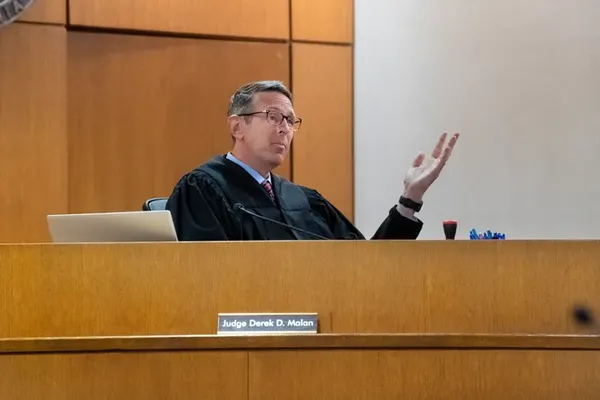 Judge Malan
Ventura County Superior Court Judge Derek Malan has indicated he intends to sentence Alnaji to what is technically called probation, but it includes up to a year in county jail.
Alnaji's attorney has said he expects a six-month jail term because inmates generally serve roughly half of their sentences in county jails.
When he's out, he will serve probation. California caps most felony probation at two years.
The Ventura County District Attorney's Office has objected to Judge Malan's presentencing disclosure, arguing it is too lenient.
Kessler's family also objected.
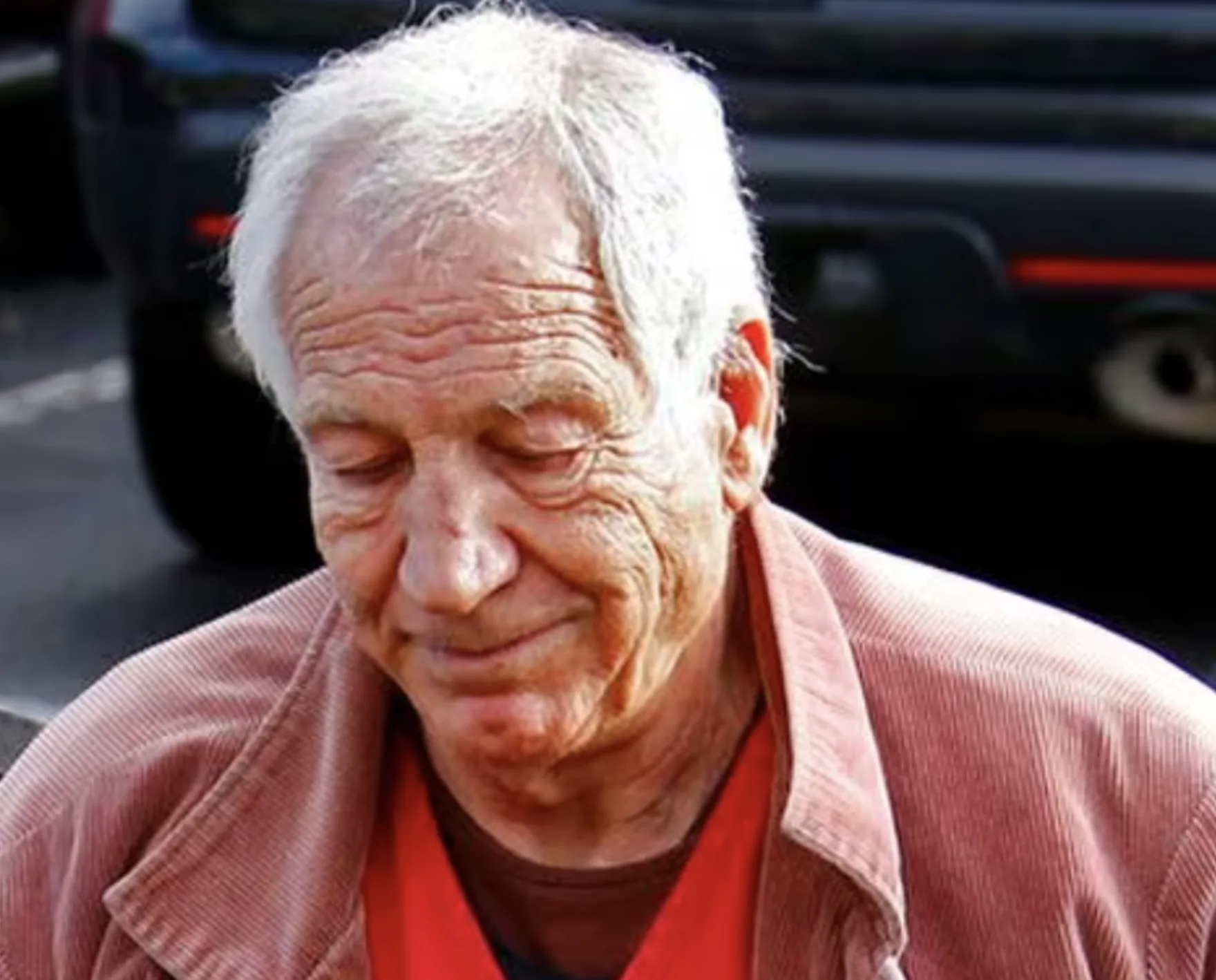
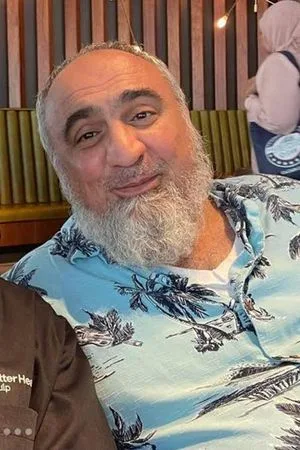 Alnaji
The Plea Deal From the Bench
On May 5, nine days before the trial was to begin, Judge Malan offered Alnaji probation if he pleaded guilty.
Defense attorney Ron Bamieh said the offer followed "several meetings" with the judge. The meetings were not in open court.
Bamieh has said Judge Malan characterized the case as one in which "two old guys had a dispute and an accident happened."
One of the old guys died.
The other old guy was 50.
In open court, Senior Deputy District Attorney David Russell told Judge Malan that the District Attorney's office and Kessler's family had asked for the maximum sentence of four years in state prison.
"This is over the people's objection," Russell said.
A Deal, or an Indicated Sentence?
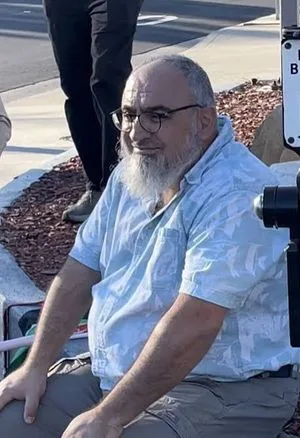 Alnaji moments after striking Kessler.
California law does not allow judges to negotiate plea bargains. That authority belongs to prosecutors.
In People v. Clancey, the California Supreme Court held that a court "has no authority to substitute itself as the representative of the People in the negotiation process" or agree to a disposition over a prosecutor's objection under the guise of plea bargaining.
The Supreme Court in the Clancey case, however, recognized a narrow lawful tool known as an indicated sentence.
A judge may tell a defendant what sentence the court would impose if the defendant pleads guilty to every charge, with no counts reduced, and no sentencing enhancements dropped.
The court does not need the prosecutor's consent.
Alnaji pleaded guilty to everything. On its face, the disposition qualifies as an indicated sentence.
However, an indicated sentence is lawful only if it reflects the punishment the judge believes is appropriate, regardless of whether the defendant pleads guilty to avoid a trial or is convicted by a jury.
The question, which is not necessarily answerable, is whether Judge Malan would have imposed the same sentence if a jury had heard testimony about the fractured skull, the homicide finding, the weapon, and returned the same guilty verdict as Alnaji pleaded to with his judge-guaranteed sentence.
If the judge offered six months or less in county jail with probation only because Alnaji gave up his right to trial, it would be a judicial plea bargain disguised as an indicated sentence.
Whether the offer was a lawful indicated sentence or an improper judicial plea bargain is a legal question. The private meetings make the issue more complicated. A legal indicated sentence is normally announced in open court and on the record.
Whether the offer was a lawful indicated sentence or an illegal judicial plea bargain is one that the prosecution can take to a higher court.
People v. Clancey reached the California Supreme Court because prosecutors appealed a judge-originated sentence as an improper plea bargain.
Senior Deputy DA Russell's objection on the record preserves the issue. Whether the District Attorney will pursue it is unknown.
The Probation Issue
The judge is calling it probation. That is the legal term, and it is the point: probation is what keeps Alnaji out of state prison. He will likely serve a few months in county jail — but that jail time is a condition of the probation, not a prison term.
The label is what spares him prison.
Alnaji admitted he personally inflicted great bodily injury.
California Penal Code section 1203(e)(3) says probation "shall not be granted" to a person who "willfully inflicted great bodily injury" during the crime, except in unusual cases in which the interests of justice would best be served.
A judge who grants probation over the statutory bar must put his reasons on the record. A higher court can scrutinize them if District Attorney Erik Nasarenko appeals the sentence.
Alnaji pleaded guilty to involuntary manslaughter, which involves an unintentional killing.
The defense is expected to argue that the probation bar does not apply because the death was not willful.
The counterargument is that Alnaji admitted using a weapon and inflicting great bodily injury, that swinging a megaphone into a man's face is a willful act, even if death was not intended.
If the judge overrides the probation bar, as is expected, he must make a specific, reviewable finding explaining why the case is unusual despite three admitted aggravating sentencing factors.
To grant probation over the bar, Malan must find an "unusual case."
The law gives him a list of ways to get there. The plea forecloses most of them.
He cannot call the injury minor: it was a fatal skull fracture.
He cannot lean on provocation, on the theory that Kessler was the aggressor: Alnaji admitted, as part of his plea, that his victim was particularly vulnerable — the opposite of an aggressor.
Alnaji has no prior record, which is a mitigating factor. It has never, by itself, been enough to make the fatal striking of a man with a weapon the kind of "unusual case" in which the interests of justice require that the killer avoid prison.
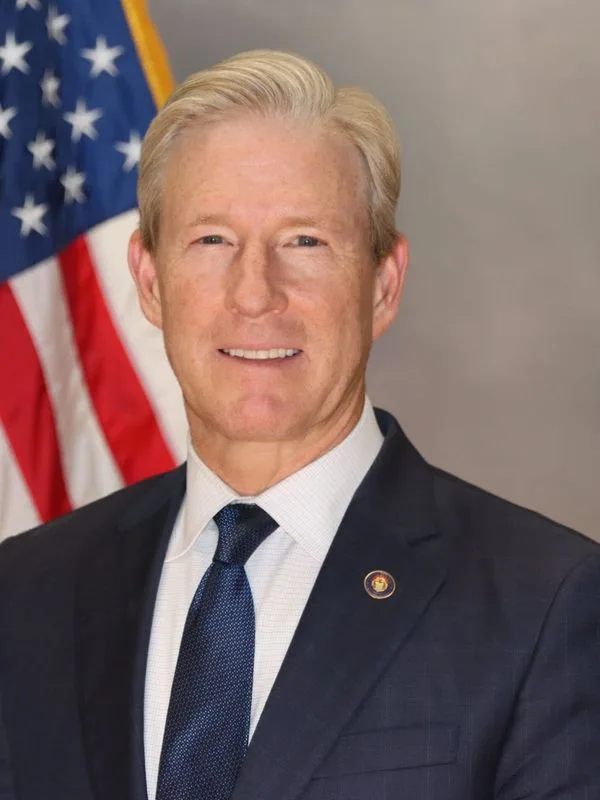 DA Erik Narasenko
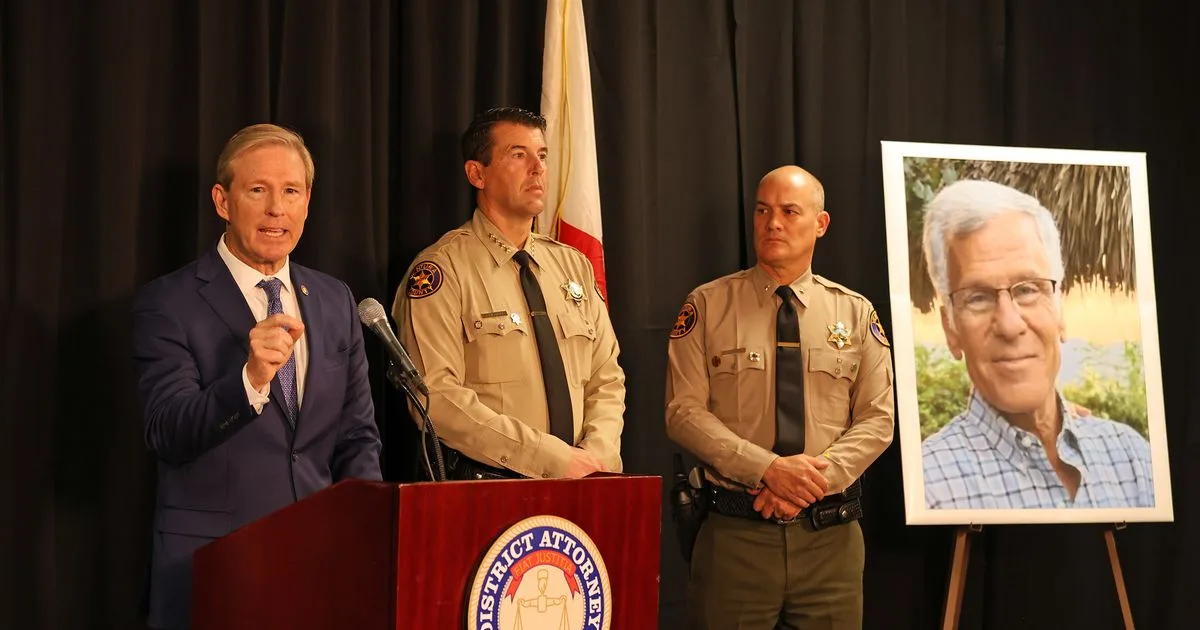
When District Attorney Erik Nasarenko announced the charges in November 2023, he said the great-bodily-injury allegation elevated the case to a strike under California's three-strikes law and made Alnaji eligible for prison.
Alnaji has now admitted that allegation, conceding the element prosecutors identified as making him eligible for prison.
The Family's Right to Be Heard
There is another factor.
California's Marsy's Law gives victims, including spouses, children, and siblings, the right "to be heard, upon request," at proceedings involving pleas, sentencing, or post-conviction release decisions.
The law also gives victims the right to provide sentencing input to the probation department before sentencing.
Kessler's wife, Cheryl; his son, Jordan; and his sister, Lynn, held that right.
If the disposition was effectively settled in private meetings before the family was heard, the court must reconcile that with the constitutional guarantee.
The Evidence
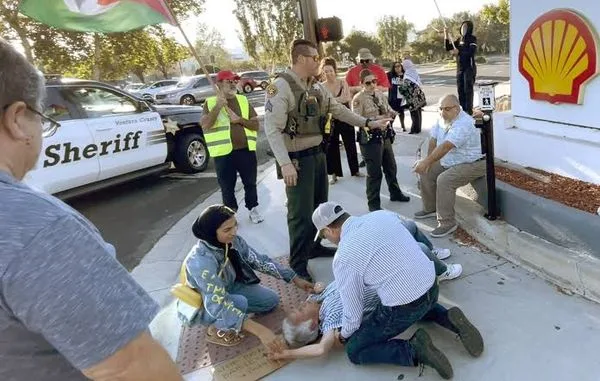
Authorities have not clearly established what happened in the seconds before Kessler hit the ground.
Sheriff's investigators said that witnesses gave conflicting accounts and that no clear video of the encounter existed.
Investigators interviewed more than 60 people. Witnesses disagreed about who started the encounter and what caused the fall.
Alnaji's attorney says Kessler was the aggressor, pushed a phone into Alnaji's face, and that Alnaji swatted it away before the megaphone struck Kessler by accident from several feet away.
Prosecutors say Alnaji crossed the street to confront Kessler and struck him in the head.
Kessler's blood was found on the rim of the megaphone Alnaji was holding.
Alnaji has, by pleading guilty, admitted that he personally inflicted the great bodily injury that killed Kessler and that he did it with a weapon.
Nasarenko said there was no evidence Alnaji intended to kill, which is why the charge was manslaughter, not murder.
Although antisemitic speech was heard at the rally, the District Attorney found no evidence that Alnaji uttered it. The killing did not meet the elements of a hate crime.
The Message Probation Sends
 Attorney James Blatt opposes the probation sentence.
The proposed sentence has drawn objections from prosecutors, a defense attorney, and Jewish community leaders.
Nasarenko wrote that Alnaji "should be sentenced to prison for his violent behavior" and that his office "strongly objects to any lesser sentence."
James Blatt, a Los Angeles criminal defense attorney not involved in the case, said the facts warranted a two- to three-year prison term.
Blatt said the megaphone made the encounter aggravated, not a simple shove. He said probation "sends a message that a Jewish life is not as valuable" and provides no valid deterrent.
Blatt said he respected Malan's reputation but disagreed with the disposition and urged the judge to reconsider.
Joshua Burt, regional director of the Anti-Defamation League's Santa Barbara/Tri-State office, called the deal "woefully inadequate" and wrote that it "emboldens others to act in anger against the Jewish community."
Liora Rez of StopAntisemitism called it "a devastating failure of justice."
Rabbi Noah Farkas of the Jewish Federation of Greater Los Angeles said he wished for a harsher sentence "that better reflects the pain of the Kessler family."
The Questions That Remain
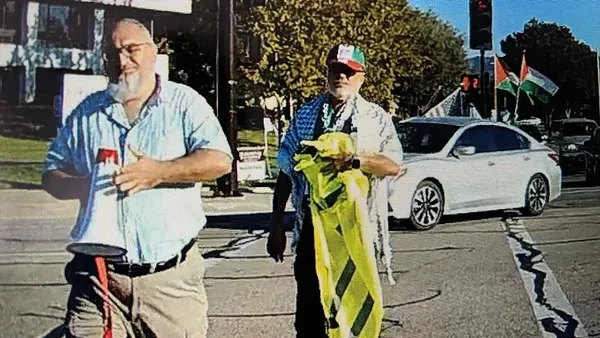 Alnaji with his fatal megaphone.
Why did a judge initiate a probation offer in a fatal assault case?
Why did that offer emerge from private meetings?
Why did the judge view probation as appropriate for a defendant who admitted using a weapon and personally inflicting great bodily injury?
Did the Kessler family get a meaningful hearing before the outcome was fixed?
What did Malan say in those private meetings?
Did he really say, "two old guys had a dispute and an accident happened."
An accident is no one's fault. But Alnaji did not plead to an accident. He pleaded to battery — the willful, unlawful use of force.
He admitted he used a weapon. He admitted he personally inflicted the great bodily injury that killed Kessler. Involuntary manslaughter means he did not intend to kill. It does not mean the blow was an accident.
Why It Looks Like a Plea Bargain
There are indicators the appellate court can use to find to distinguish between an unlawful judicial bargain and a lawful indicated sentence.
The trial would have been an ordeal. It might have ended in acquittal.
A judge could reasonably have wanted to avoid a high-profile trial, where, whatever the outcome, one demographic would have been unhappy.
Wanting a hard case to end is not permission to offer a reduced sentence in return for a plea.
The appellate court may find that the judge became the dealmaker, in private, over the prosecutor's stated objection, and left no record of how he got there.
Whether that crossed the legal line is for a higher court to say — if the District Attorney asks.
Sentencing is June 30.