Did Raniere name his company NXIVM with DOS in mind for the future
 Keith Raniere said at V-Week 2016: "I am very devilish. I think I am probably the worst coach in the world because I am just a demon. You know if I am coaching you I am going to have you do something with your left hand, you're right hand, your left foot, you're right foot, your head, and then I am going to ask you to do the hard thing.
I do this and it is with a twisted sense of pleasure in someways. The extra effort being able to pull effort out of others and Pull effort out of myself. So here we are coming into V week. And the people involved in simply human and other things there. I can't tell you how much they took on this year. The artistic and musical piece that you saw was original. Completely.
Keith Raniere said at V-Week 2016: "I am very devilish. I think I am probably the worst coach in the world because I am just a demon. You know if I am coaching you I am going to have you do something with your left hand, you're right hand, your left foot, you're right foot, your head, and then I am going to ask you to do the hard thing.
I do this and it is with a twisted sense of pleasure in someways. The extra effort being able to pull effort out of others and Pull effort out of myself. So here we are coming into V week. And the people involved in simply human and other things there. I can't tell you how much they took on this year. The artistic and musical piece that you saw was original. Completely.
Keith Raniere
I plan to get into this more later, but I believe that Keith Raniere had his branding and blackmail scheme in mind long before he executed it. I suspect he selected the name NXIVM to correspond with the ancient Roman concept of “Nexum”.
Consider the similarities for now; later, I will draw further proofs that Raniere likely understood the concept well.
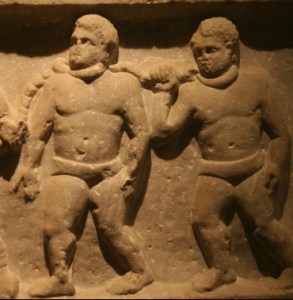
Nexum was a debt contract in the early Roman Republic. The debtor pledged his person as collateral, should he default on a loan. It was, in effect, a mortgage on a person, not on property.
Nexum was accompanied by a symbolic transfer of rights that involved a set of scales, copper weights, and a prescribed vow. Similar to DOS branding, the nexum contract was entered into with a ceremony with five witnesses. There was also a sixth person – a libripens, a person who held a brass balance.
Under the nexum contract, a free man became a nexus [bond slave] until he could pay off his debt to the obaeratus [creditor.] Raniere always taught that nothing can repay his teachings.
There was no single nexum contract that all nexi entered. There were variations of the nexum contract, and the details of nexum contracts were worked out on a case-by-case basis.
Nexi were often beaten and abused by their owners.
According to the ancient historian, Livy, nexum was abolished because of the cruelty and lust of a single usurer, Lucius Papirius. In 326 BC, a young boy named Gaius Publilius, who was a guarantor to his father’s debt, became the nexus of Papirius. The boy was noted for his youth and beauty, and Papirius desired him sexually. He tried to seduce Publilius with “lewd conversation,” but when the boy failed to respond, Papirius grew impatient and reminded the boy of his position as bond slave. When the boy again refused his forceful advances, Papirius had him stripped and lashed. The wounded boy ran into the street, and an outcry among the people led the consuls to convene the Senate, resulting in the Lex Poetelia Papiria, which forbade holding debtors in bondage for their debt and required instead the debtor’s property be used as collateral.
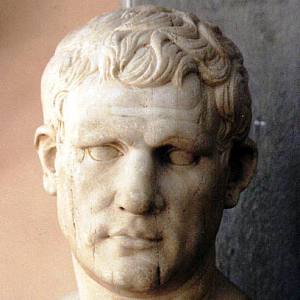 The bond slave Gaius Publilius was desired sexually by the man who held the debt of his father. His cries for help summoned the sympathy of the Roman public and they ended nexum - - the practice of having people, not property- serve as collateral.
All people confined under the nexum contract were released, and nexum as a form of legal contract was forbidden. Varro dates the abolition of nexum to 313 BC. Poetelius and Livy date it as 326 BC.
From the Roman legal point of view, to the lending of money, and an ordinary contract, there seems to have been added a damnatio [damnation] by the lender, similar to the old forms of bequest [LEGATUM]: “a thousand asses” and “the scale of the air” as interest and its measurement.
The debt was termed nexumaes. The making of a contract was known as nexi datio, and the debtor was nexum inire
The peculiarity of this form of contract was that the creditor did not need to bring a lawsuit to prove the existence of the debt: the debtor had already confessed his slavery and the bondage was ‘called from the air’ and became nexus am. [linked to the nexi]
As soon as the day fixed for repayment passed, the creditor could arrest him, take him before the praetor, and have him, along with the children in his power.