THE PARDON COLUMN: The Prosecution That Turned Belief Into Crime

The Indictment
When President Trump returned to office, he entered with a promise to end the weaponization of the Department of Justice. He said federal power would no longer be used against Americans for what they believe, how they worship, or how they choose to live.

To help the President with that objective, the Department of Justice has provided an example of weaponization: United States v. Nicole Daedone and Rachel Cherwitz.
The indictment came on April 3, 2023. The U.S. Attorney for the Eastern District of New York — a Biden appointee named Breon Peace — filed a single-count indictment: conspiracy to commit forced labor, under 18 U.S.C. § 1594, against the two women, Daedone and Cherwitz.
Daedone had founded OneTaste in San Francisco in 2004 as a sexual wellness company. She taught a practice called Orgasmic Meditation. In its standard form, a woman lay naked from the waist down.

A partner, fully clothed, wearing a latex glove and using lubricant, stroked her clitoris for fifteen minutes. The goal, as OneTaste taught it, was not orgasm. It was attention: the woman was to feel, the partner was to sense. Both were to arrive at a kind of focused presence the company described as meditative. Practitioners did it with spouses, friends, and sometimes strangers, paired off in a class.
More than 35,000 participated in classes or events.
The people who valued it described something the practice's strangeness tends to belie. Students said it pulled them out of shame, gave them language for desires they had never felt they could experience. It helped survivors of assault reclaim their own bodies, steadied some marriages (and led some away from each other), and built a community, a very tight community that bonded around this common practice and shared belief.
The Brooklyn prosecutors told it differently. To tell it their way, they relied on 9 women who had once been participants and who were now willing to say they had bad experiences, or worse than bad- they lost their minds.
That is to say, they were brainwashed.
Nine Out of 35,000
Among the more than 35,000 people who participated in OneTaste classes or events, prosecutors found nine willing to testify that they were victims—a rate of 0.026 percent
Nine out of 35,000 is not evidence of a criminal enterprise.
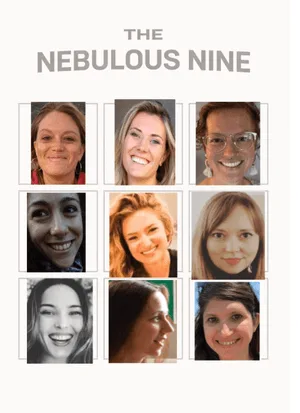
It is evidence that prosecutors searched until they found enough women willing to testify to what they wanted for their novel case.
The prosecutors alleged that OneTaste ran on pressure, that recruits were love-bombed, then pushed past their limits, steered into sexual encounters they would not otherwise have chosen, told their resistance was their "blocks" and discomfort was growth.
They alleged that staff and senior students worked long hours for little or no pay, sustained by the belief that the work was sacred and that leaving meant failure.
They alleged that Daedone grew the business on labor extracted through devotion rather than paid for in money.
The charge was conspiracy, and Daedone alone was not enough.
The Architecture of Conspiracy
Under federal law, forced labor requires proof that the defendant actually forced someone to work.
Conspiracy requires only proof that two people agreed to try. This means prosecutors can convict without proving any victim was actually forced—only that the defendants thought about it together.
Forced labor can be committed by one person. Conspiracy cannot. It requires at least two people who agree to commit the crime.
The government needed a second defendant.
It found Rachel Cherwitz. She had not founded the company. She had not owned it. She had been a salaried employee and had left years before the indictment.
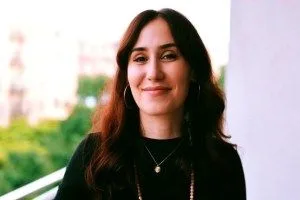 Rachel Cherwitz
None of that mattered.
The charge did not require proof that the alleged plan succeeded. It required proof of a partner. Conspiracy is the crime of agreement, and agreement requires another person.
Cherwitz became necessary.
She had refused to say she was a victim. The prosecution needed a second guilty mind, a second figure standing beside Daedone.
Neither woman was charged with trafficking. Neither was charged with fraud. Neither was charged with any act of physical force. There was no allegation that anyone underage ever attended a single class or event.
The single charge alleged only that Daedone, the founder, and Cherwitz, the head of sales, had agreed, over a twelve-year period, to obtain labor through coercion.
Not that they succeeded, but that they conspired.
The trial opened in the spring of 2025 before U.S. District Judge Diane Gujarati, the longtime former prosecutor. It ran for five weeks.
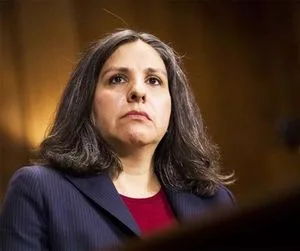 Judge Diane Gujarati
On June 9, 2025, the jury convicted both women on the single conspiracy count.
It was the first time that a forced labor conspiracy charge had ever been the sole charge in a federal prosecution.
At sentencing, Daedone received nine years, and Cherwitz six and a half years. The prosecution was conducted by Assistant U.S. Attorneys Kaitlin Farrell, Nina Gupta, Kayla Bensing, and Sean Fern.
Daedone was represented by Jennifer Bonjean; Cherwitz by Celia Cohen and Michael Robotti.
Why the Pardon Matters
If the President understands what the prosecutors accomplished, he might wish to pardon both women. Not because he endorses their teachings, or out of pity, but because the precedent itself is a threat to the liberty of churches, congregations, voluntary associations, and many American communities built on shared belief.
It was a forced labor conspiracy case.
Two women ran a company. It taught philosophy about female sexuality. It was legal. One need not admire, participate in, or even understand it to see the point.
Roughly 35,000 people took OneTaste courses or attended events. The overwhelming majority took the courses and left, unharmed. Many said it helped them.
The government charged no substantive crime. The charge was conspiracy to commit forced labor, not forced labor, which would have required proof that someone was actually forced to work. There were no chains. No locked doors. Every one of the nine accusers admitted she was free to leave, and left when she chose.
Consider who the government says Daedone and Cherwitz conspired to coerce. Not desperate, trafficked, frightened teenagers, or the immigrant who could not speak English, with nowhere to run. Not the kind of people forced-labor law was written to protect.
The Witnesses
The nine women the government put forward as victims were accomplished, educated women.
Michal Neria. Columbia University, master's in English literature, a teacher. She testified, under oath, that the defendants were witches — and reaffirmed it on cross-examination. She did not think it, she said. She knew it. A hundred percent.
Dr. Margaret Pixley. Medical school at Brown. A physician, trained to make life-and-death judgments under pressure, testified she had been susceptible to brainwashing.
Rebecca Halpern. A licensed clinical social worker, professionally trained to recognize coercion in other people. She testified she had been, in her own words, carefully and gently brainwashed.
Christina Berkley. A degree in microbiology and immunology from McGill. A working life coach.
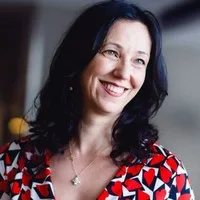 Christina Berkley is a life coach with a degree in microbiology and immunology from McGill University. Yet she, too, was susceptible to brainwashing.
Dana Gill Port. A master's in divinity and ministry. An ordained pastor.
Lianna Lifson. Smith College, master's from NYU. A high school teacher.
Lyndsi Keves. Michigan State. An intuitive-eating and body-image coach — a woman who counsels others on autonomy and self-direction.
 Lyndsi Keves is an Intuitive Eating & Body Image Coach who studied at Michigan state. An easy target for brainwashing.
Michelle Wright. University of Rhode Island. Asked whether she could have left, she answered that she "could have done literally anything I wanted at any moment during any of that time period" — and in the next breath said that did not matter, because she did not feel free to.
Anthia Gillick, also known as Brooke Sheffer. A professional actress, trained at Skidmore.
 Anthia Gillick aka Brooke Sheffer is a professional actress, educated at Skidmore. She said Nicole and Rachel brainwashed her.
Each left OneTaste and resumed her life.
The Crime of the Mind
The prosecutors placed all nine before a jury to swear that a course of teachings absorbed over years of her own free participation had reached inside her mind and switched off the very faculties on which her education was built.
The government succeeded with the perfect weaponization. It charged not the act of forced labor but the agreement to commit it. A conspiracy. A crime of the mind.
The teaching itself was the weapon.
She could say yes, mean yes, repeat yes for years, and the government could later declare that she had never truly chosen.
The nine women who stayed had not chosen. The woman who said yes had not chosen wrongly. She had not chosen at all.
The government had arrived to relieve her of the burden of adulthood.
This is not merely an aggressive theory of criminal law. It is an assault on female agency.
It is a precedent the government will not, in time, confine to OneTaste or the clitoris.
In this case, the government claimed the power to decide which beliefs are so persuasive that holding them is a form of captivity.
It means teachings can be put on trial.
 Nicole Daedone
The meditation practice, repugnant as it may be to some, was still legal.
It was the teachings that the government made illegal.
Not the practice.
If you can make teaching illegal, you have a brand-new precedent.
If you eliminate consent on the basis that even very educated women can be brainwashed, you have just changed the Constitution.
You have moved the boundary of American freedom from what she chooses to what a prosecutor decides she had understood.
It means that the freedom to believe, preach, gather, and persuade can be subordinated to a prosecutor's discretion.
The line between faith and felony is no longer drawn by the Constitution; it is subject to prosecutorial discretion.
A teaching can be indicted. A sermon can be restraint. A community can become a prison if the prosecutor finds its doctrines too persuasive.
The Next Target Won't Be OneTaste
That is McCarthyism with a badge. Its most dangerous feature is that it will be used again, selectively.
The government did not begin with a popular church or a movement with powerful allies. Of course not.
It did not indict a cathedral, a megachurch, or any sect with senators, donors, or powerful friends.
It began with the strange, small, exotic, and erotic, and importantly, the easily mocked. An odd little group no one wishes to defend.
Once the government criminalizes unpopular teachings by calling its followers brainwashed, it can do the same to a tent revival in Tennessee, a Catholic Worker house, a homeschool co-op, a campus ministry. The pastor who tells his flock that the world outside is fallen. The congregation that pools its money and treats leaving as a fall from grace.
The volunteers who labor for nothing but the belief that the work is holy.
Every element that the government called a crime at OneTaste is taught openly, today, in a thousand American churches.

The danger lies in the next case. The government's theory punishes people for leading others to volunteer their labor without being paid in money.
Americans volunteer for love, for faith, for purpose, for the satisfaction of building something that matters.
The OneTaste prosecution reverses that idea. It teaches Americans that to work without cash compensation may be a sign of slavery.
The Liar Went Free
The government did this under a two-tiered system of justice. Its first star witness, Ayries Blanck, fabricated a journal, backdated it, and lied to federal agents. The government admitted in writing that she committed federal crimes. She was not charged.
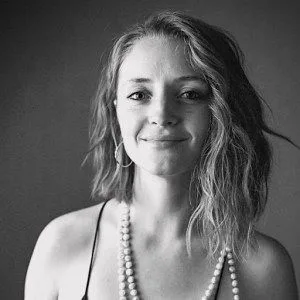 Truth-challenged, Ayries Blanck
Cherwitz, by contrast, was a salesperson earning $35,000 a year. She never owned the company. Prosecutors offered her a path: call herself a victim and cooperate. She refused, saying she had not been a victim.
For that, the government converted her from victim to defendant and sent her to prison for six and a half years. The liar went free. The honest woman went to prison.
One wonders how many of the nine who testified that they were brainwashed might themselves have been charged, had they not accepted the government's theory about their own brainwashed minds.
It raises another question.
If Daedone could brainwash nine women into consenting to OneTaste's teachings, how do we know the government did not brainwash them into saying they were brainwashed by Daedone?
The oldest objection to coerced testimony applies with full force here: if you were not telling the truth then, how do we trust what you say now?
The government has tools of persuasion — the love-bombing of promised restitution. The fear of being charged yourself.
If belief can be manufactured, the government is as capable as any meditation teacher.
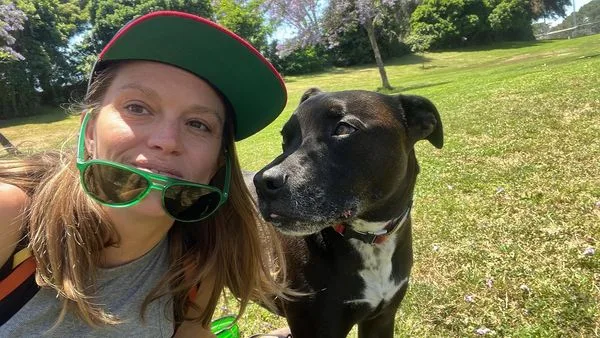 Michelle Wright, who claimed she was brainwashed by Nicole Daedone, received $232,375 for her complaints
The government paid the alleged victims for their testimony. The connection between payment and testimony is not necessarily proof of fabrication, but it is a fact that the jury might have wished to weigh more carefully.
Seven of the nine women got restitution for their roles in the case.
Michelle Wright — $232,375
Michal Neria — $181,049.14
Dana Gill — $167,261
Anthia Gillick — $178,730
Rebecca Halpern — $55,226
Margaret "Max" Pixley — $61,740
Lyndsi Keves — $11,496.50
The Incoherence of the Theory
But paid or not, the truth is that once you have been brainwashed — and the government says these nine were — you ought to be deemed the least reliable witness on earth.
That is the consequence of the theory.
If your mind can be captured so completely that your yes was never really a yes, then what is left of you that anyone can trust?
The brainwashed person does not know she is brainwashed. That is the premise. The capture is invisible to the captured. She believes she is choosing freely at the moment she is most controlled.
 Dr. Margaret Pixley went to Medical School at Brown. But she too, was susceptible to brainwashing at OneTaste.
Follow it forward. If she cannot be trusted to know her own mind in 2014, when she said yes, why is she trustworthy in 2025, when she says she was forced?
The faculty, the government says, was switched off — the capacity to know what is real, to consent, to tell true from implanted — does not switch back on because a prosecutor needs it to.
If her yes was hollow, her later no is just as suspect. You cannot have it both ways. You cannot tell a jury that this woman was so thoroughly stripped of agency that her every contemporaneous choice was an illusion, and then ask that same jury to credit, as gospel, her account of having been stripped of agency.
The witness the government needs to get a conviction is, by the government's theory, the one witness who must never be believed.
But it is the unavoidable logic of brainwashing. Once brainwashed, the theory holds, the mind is no longer the person's own.
A mind that was not the person's own cannot be the source of reliable testimony — not then, not now, not ever.
The government cannot point to a moment when the spell lifted and clear sight returned, because its whole case depends on the spell being undetectable to the one under it.
If she could not see it while it was happening, she cannot, eight years later, certify that it happened.
This is why the theory is not merely dangerous but incoherent.
It demands a witness who is simultaneously a vegetable and an oracle — too captured to have consented, yet clear enough to be believed when she says so.
The Precedent
It asks a jury to discard everything a woman said and did when she was free, and to accept without question everything she says now that the government has named her a victim.
A free, educated adult is recast as a person who never possessed agency at all, on no evidence but her later regret — and her later regret is treated as the one thing her broken mind got right.
An adult is presumed to mean what she says.
That presumption is the foundation of every contract, every marriage, every vote, every guilty plea, every act of consent the law recognizes.
The OneTaste theory removes it — not for the incompetent, not for the coerced in any sense the law has ever known, but for any adult a prosecutor can later persuade a jury was "brainwashed."
And once that word is said over you, nothing you ever said before is safe, and nothing you say after means anything. You are no longer a person who chooses. You are a person things were done to, permanently, retroactively, by decree.
That is the precedent.
Not that these women were harmed. People are harmed in every walk of life. The law does not make felons of their teachers.
The precedent is that an adult's word about her own life can be voided by a stranger who decides, years later, that she never really had a mind to make it up.
And if you have any doubts that this prosecution is moving forward to mind control, as decided by the government and simultaneously going backward in time, calling on old ideas to condemn women, consider what the government asked the jury to believe about the credibility of its own witnesses.
A Witch Hunt, Literally
Michal Neria, a Columbia graduate with a master's in English literature, testified under oath that the defendants were witches.
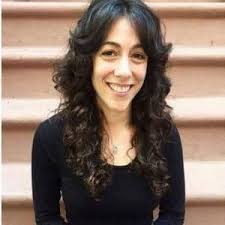 Michal Neria went to Columbia. She believed she was brainwashed by witches.
She reaffirmed it on cross-examination.
She did not think it, she said.
She knew it. A hundred percent.
A federal prosecution in the twenty-first century, built in part on sworn testimony about witchcraft.
If the government's case rests on witnesses who believe in witchcraft, what else did the government ask the jury to accept without question?
They called it a forced-labor case. It was, oddly, a witch hunt in the most literal sense.
The Pardon
With all this to say, which is obvious to thinking people, it must also be said that thinking people are in the minority.
A pardon may not be popular until people who misunderstand what happened.
The easy short-term answer is to leave two strange women from a sex-meditation company in a cell and let the precedent survive.
No one loses friends defending the unpopular. Yet the defense of the unpopular is where most constitutional principles are tested.
Whatever else may be said of President Trump, he is not a man who waits to be told what is safe to believe. He acts on his own judgment, and that quality is precisely what this precedent-busting requires.
A conventional politician waits for safety. The pardon power was not designed for safety. It was designed for the courage to look at a prosecution that convicted two women of conspiring to force labor, where no one was forced to perform, through brainwashing. To say it was wrong, and to undo it with one power the weaponizers cannot block: the pardon.
This does not require the President to approve OneTaste or endorse its teachings. It asks him to recognize that two women were convicted of forcing labor that no one was shown to have been forced to perform, and to say that this is wrong.
This is the kind of prosecution Donald Trump said he would stop.
Read more about this story:
Brooklyn's Thought-Crime Verdict Won't Stop at OneTaste
OneTaste Precedent Provides Government with the Power to Criminalize Teachings


Are you getting paid by the DNC, Frank?