Guest View: The Whole Idea of ‘Brainwashing’ is a Red Herring!


By Abelard
What is Frank Report’s fascination with brainwashing?
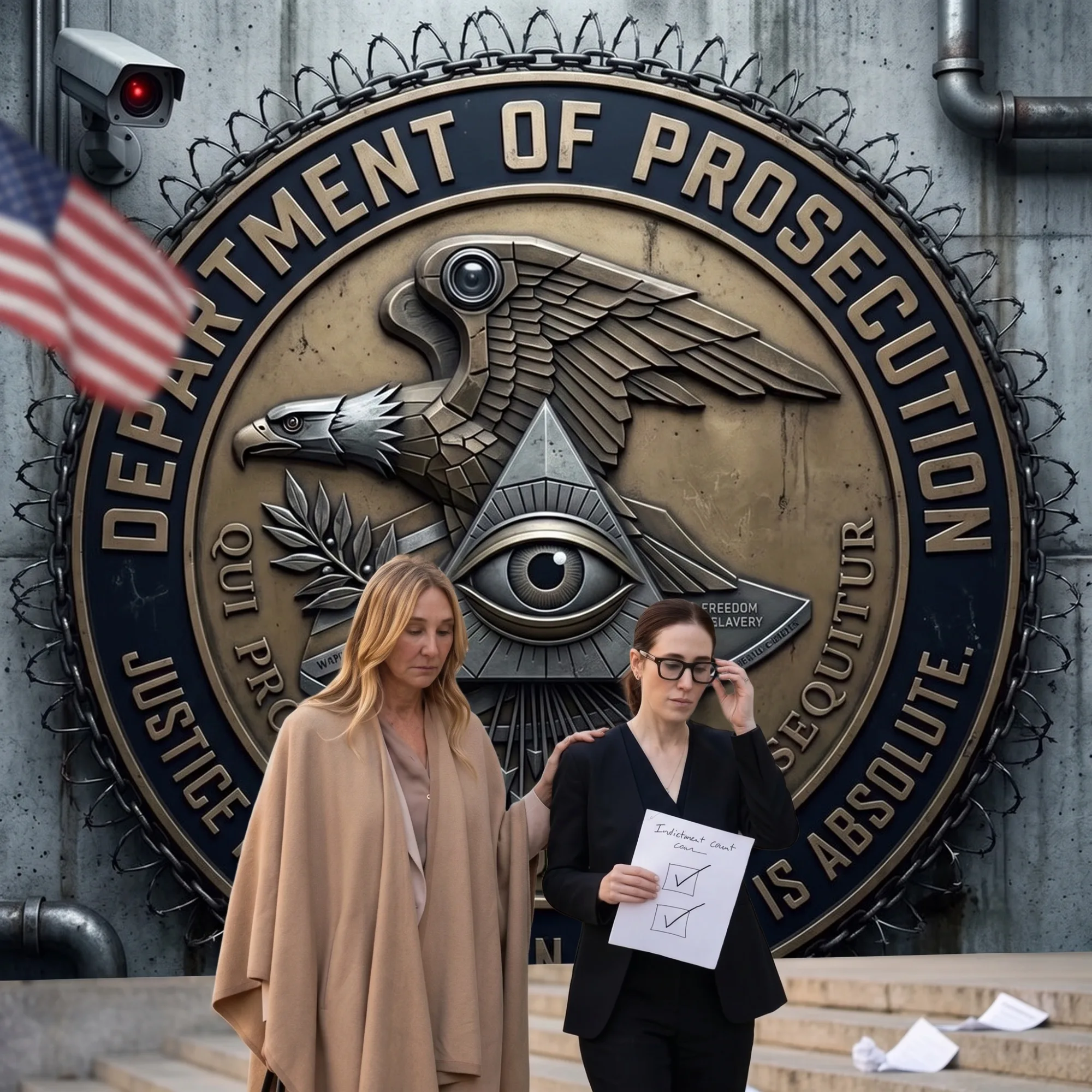
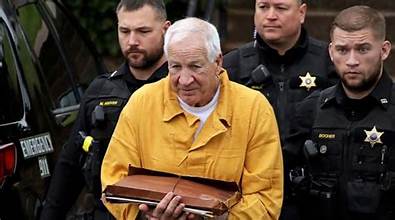
 Brainwashing is very real and very dangerous as this image proves. All it takes is a feeble mind.
Brainwashing is very real and very dangerous as this image proves.
There is no charge in the Keith Raniere case related to “brainwashing.”
I doubt very much that it appears in the Government’s sentencing recommendation, or any submission related to sentencing, or the judge’s order sentencing Allison Mack.
Authors seem to like it because “brainwashing” can be given whatever definition they like, and then “debunked,” thus showing how smart they are.
It’s fun to demolish a straw man.
 Straw men are not hard to bowl over.
What are these modern-day inquisitors trying to say, other than “I’m much smarter and wiser than Judge Garaufis”?
I think their point is that the social pressures, coercive methods and traumas built into the NXIVM system should not count in mitigation. If they just said that, we could have “a sensible discussion of these things and draw meaningful contrasts and comparisons.”
Or we could talk about the Unabomber and how this mentally ill person’s conspiracy theory was not accepted by courts or psychologists.
![Theodore John Kaczynski (/kəˈzɪnski/ kə-ZIN-skee; born May 22, 1942), also known as the Unabomber (/ˈjuːnəbɒmər/), is an American domestic terrorist and former mathematics professor.[3][4] He was a mathematics prodigy, but abandoned his academic career in 1969 to pursue a primitive life.[5] Between 1978 and 1995, he killed three people and injured 23 others in a nationwide bombing campaign against people he believed to be advancing modern technology and the destruction of the environment. He issued a social critique opposing industrialization and advocating a nature-centered form of anarchism.[6] Kaczynski's critiques of civilization bear some similarities to anarcho-primitivism, but Kaczynski rejected and criticized anarcho-primitivist views.[7][8][9]
In 1971, Kaczynski moved to a remote cabin without electricity or running water near Lincoln, Montana, where he lived as a recluse while learning survival skills to become self-sufficient. He witnessed the destruction of the wilderness surrounding his cabin and concluded that living in nature was becoming impossible, resolving to fight industrialization and its destruction of nature. He used terrorism to fight this industrialization, beginning his bombing campaign in 1978. In 1995, he sent a letter to The New York Times and promised to "desist from terrorism" if the Times or The Washington Post published his essay Industrial Society and Its Future, in which he argued that his bombings were extreme but necessary to attract attention to the erosion of human freedom and dignity by modern technologies that require mass organization.[10]
Kaczynski was the subject of the longest and most expensive investigation in the history of the Federal Bureau of Investigation up to that point.[11] The FBI used the case identifier UNABOM (University and Airline Bomber) to refer to his case before his identity was known, which resulted in the media naming him the "Unabomber". The FBI and Attorney General Janet Reno pushed for the publication of Industrial Society and Its Future, which appeared in The Washington Post in September 1995. Upon reading the essay, Kaczynski's brother David recognized the prose style and reported his suspicions to the FBI. After his arrest in 1996, Kaczynski—maintaining that he was sane—tried and failed to dismiss his court-appointed lawyers because they wanted him to plead insanity to avoid the death penalty. In 1998, a plea bargain was reached under which he pleaded guilty to all charges and was sentenced to eight consecutive life terms in prison without the possibility of parole.](/media/89df6c8edf86a8a59dbaa9ac.jpg) Theodore John Kaczynski (/kəˈzɪnski/ kə-ZIN-skee; born May 22, 1942), also known as the Unabomber (/ˈjuːnəbɒmər/), is an American domestic terrorist and former mathematics professor.[3][4] He was a mathematics prodigy, but abandoned his academic career in 1969 to pursue a primitive life.[5] Between 1978 and 1995, he killed three people and injured 23 others in a nationwide bombing campaign against people he believed to be advancing modern technology and the destruction of the environment. He issued a social critique opposing industrialization and advocating a nature-centered form of anarchism.[6] Kaczynski's critiques of civilization bear some similarities to anarcho-primitivism, but Kaczynski rejected and criticized anarcho-primitivist views.[7][8][9]
In 1971, Kaczynski moved to a remote cabin without electricity or running water near Lincoln, Montana, where he lived as a recluse while learning survival skills to become self-sufficient. He witnessed the destruction of the wilderness surrounding his cabin and concluded that living in nature was becoming impossible, resolving to fight industrialization and its destruction of nature. He used terrorism to fight this industrialization, beginning his bombing campaign in 1978. In 1995, he sent a letter to The New York Times and promised to "desist from terrorism" if the Times or The Washington Post published his essay Industrial Society and Its Future, in which he argued that his bombings were extreme but necessary to attract attention to the erosion of human freedom and dignity by modern technologies that require mass organization.[10]
Kaczynski was the subject of the longest and most expensive investigation in the history of the Federal Bureau of Investigation up to that point.[11] The FBI used the case identifier UNABOM (University and Airline Bomber) to refer to his case before his identity was known, which resulted in the media naming him the "Unabomber". The FBI and Attorney General Janet Reno pushed for the publication of Industrial Society and Its Future, which appeared in The Washington Post in September 1995. Upon reading the essay, Kaczynski's brother David recognized the prose style and reported his suspicions to the FBI. After his arrest in 1996, Kaczynski—maintaining that he was sane—tried and failed to dismiss his court-appointed lawyers because they wanted him to plead insanity to avoid the death penalty. In 1998, a plea bargain was reached under which he pleaded guilty to all charges and was sentenced to eight consecutive life terms in prison without the possibility of parole.
Theodore John Kaczynski (/kəˈzɪnski/ kə-ZIN-skee; born May 22, 1942), also known as the Unabomber (/ˈjuːnəbɒmər/), is an American domestic terrorist and former mathematics professor.[3][4] He was a mathematics prodigy, but abandoned his academic career in 1969 to pursue a primitive life.[5] Between 1978 and 1995, he killed three people and injured 23 others in a nationwide bombing campaign against people he believed to be advancing modern technology and the destruction of the environment. He issued a social critique opposing industrialization and advocating a nature-centered form of anarchism.[6] Kaczynski's critiques of civilization bear some similarities to anarcho-primitivism, but Kaczynski rejected and criticized anarcho-primitivist views.[7][8][9]
In 1971, Kaczynski moved to a remote cabin without electricity or running water near Lincoln, Montana, where he lived as a recluse while learning survival skills to become self-sufficient. He witnessed the destruction of the wilderness surrounding his cabin and concluded that living in nature was becoming impossible, resolving to fight industrialization and its destruction of nature. He used terrorism to fight this industrialization, beginning his bombing campaign in 1978. In 1995, he sent a letter to The New York Times and promised to "desist from terrorism" if the Times or The Washington Post published his essay Industrial Society and Its Future, in which he argued that his bombings were extreme but necessary to attract attention to the erosion of human freedom and dignity by modern technologies that require mass organization.[10]
Kaczynski was the subject of the longest and most expensive investigation in the history of the Federal Bureau of Investigation up to that point.[11] The FBI used the case identifier UNABOM (University and Airline Bomber) to refer to his case before his identity was known, which resulted in the media naming him the "Unabomber". The FBI and Attorney General Janet Reno pushed for the publication of Industrial Society and Its Future, which appeared in The Washington Post in September 1995. Upon reading the essay, Kaczynski's brother David recognized the prose style and reported his suspicions to the FBI. After his arrest in 1996, Kaczynski—maintaining that he was sane—tried and failed to dismiss his court-appointed lawyers because they wanted him to plead insanity to avoid the death penalty. In 1998, a plea bargain was reached under which he pleaded guilty to all charges and was sentenced to eight consecutive life terms in prison without the possibility of parole.
Theodore John Kaczynski, also known as the Unabomber.
Take that, Alison Mack. Case closed.
Of course, social pressures, coercive methods and traumas are routinely considered by judges in our system of justice. They typically don’t present to this degree, and when they do, the facts are tremendously complicated, so apples-to-apples comparisons are tricky. Courts sentence a person based on the totality of the circumstances and principles of justice, of which comparisons are only one piece of the puzzle. There is much, much more to this than asking “brainwashed or not?”
 Allison Mack meeting Keith Raniere for the first time; November 2006
Allison Mack met Keith Raniere for the first time in November 2006, Did he proceed to brainwash her? If so, it ended badly for both of them.
It certainly seems like the inquisitors are misunderstanding the importance of knowledge and intent in sentencing. One of the core considerations in crafting a sentence is the intent to harm. This is why a drunk driver can get 10 years for hitting a pedestrian, but someone who intentionally runs a guy over will get 50 years.
Specific intent to harm is critical in sentencing.
The evidence of NXIVM teachings, pressures, and coercions are incredibly relevant here because they go directly to that point. The defendants believed (or, at least, say that they believed) that what they were doing was good. And not just good for Keith or themselves, but for the other members and recruits. They believed their teachings were helpful, not harmful. This renders the argument about “brainwashing” pretty immaterial. What matters for sentencing is their genuine, good faith belief about the harm they were causing. And beyond doubt, beliefs are shaped by things like societal pressures, selective teachings, and the like. Considering these things is necessary to evaluate the genuineness of their beliefs.
There is a ton of evidence on these points, but here is the best evidence in my opinion. Alison, Lauren, and the rest wanted, at bottom, to recruit people into the same life that they had.
 Lauren Salzman and Allison Mack during their DOS days.
They didn’t ask anyone to give what they weren’t giving, or to assume any burden that they hadn’t already assumed. Money on demand, sex on demand, slavish devotion to authority – Alison Mack thought this was a GREAT life because, if she didn’t, she wouldn’t want it for herself. Of course, she didn’t want her recruits to rise higher than she did, but she certainly wanted them to be just like her – a slave to the higher power.
We might compare this to other criminal organizations, like a street gang. The gang sells drugs. Members don’t think that customers will be improved by taking drugs.
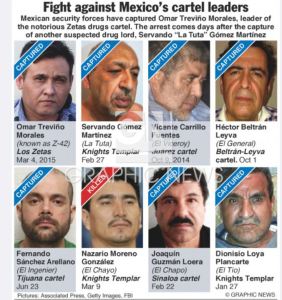 These dudes were not thinking that the buyers of their products were being improved but rather likely harmed but profits were more important.
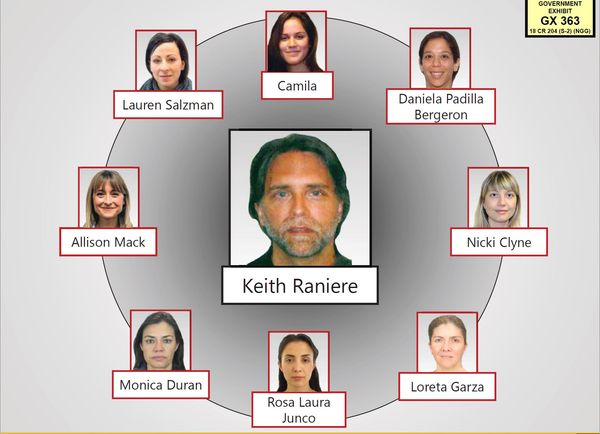 DOS First-Line Slaves with their master in the middle.
DOS First-Line Slaves were thinking, it is believed, that they were not only gaining profit by recruiting other women but that their “customers” would also gain immeasurably.
Or maybe the gang hijacks trucks. They don’t think it helps the truckers. And so we don’t care, particularly, why they are a member of the gang. Many gang members will tell judges that they are in gangs because they need money, or because they grew up in the gang and were taught that gangs are good. These things don’t matter much unless they negate knowledge or intent to harm. But if someone was taught that heroin was medicine, and could prove that to a judge’s satisfaction, this would be evidence in mitigation.
So the whole idea of “brainwashing” is a red herring. It relieves the person of the tiring task of considering all the evidence in light of the statutory and constitutional factors, like the judge had to, and enables an easy judgment purportedly justified by science.