10 Reasons Why CT Family Court Is Most Vile
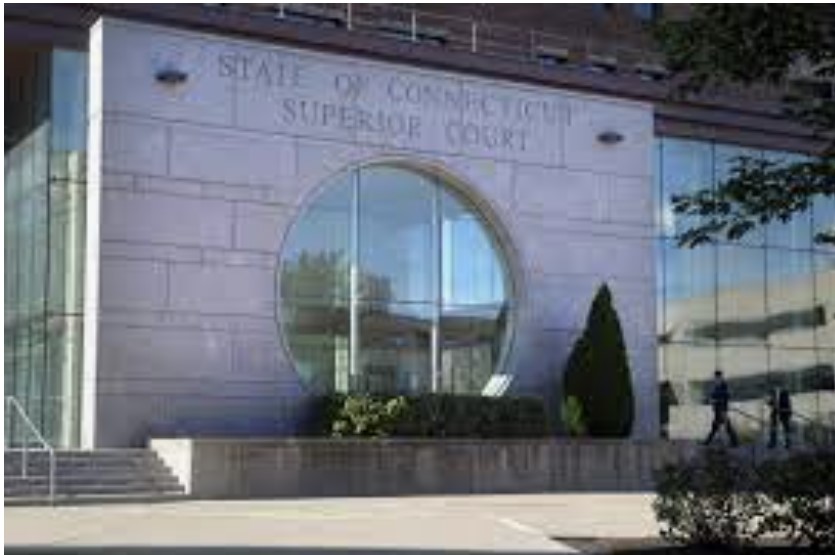
What’s wrong with Family Court in CT?
1.
CT family court is a “brawl for hire.” A racketeering operation. A system of legalized plunder. Craft, not conscience, is the golden rule.
Falsehood, not truth, is a golden means to get money.
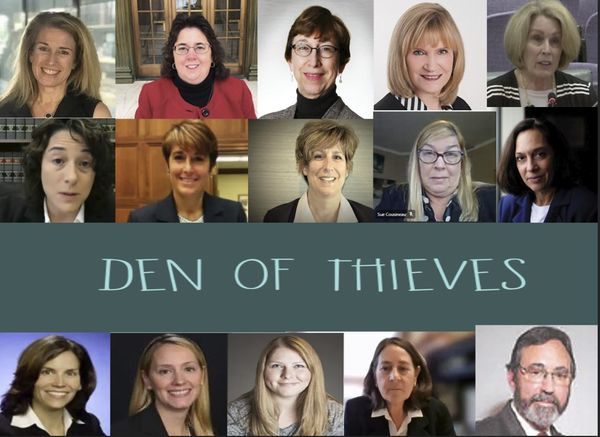
2.
State statute §46b-56(b) requires the ‘active & consistent’ involvement of both parents in the lives of children incidental to no-fault divorce.
Judges ignore the law.
Judges sever parent-child bonds. This increases billings and prolongs fighting, since the deprived parent often continues to fight to be with their children until they spent their last dollar and are homeless.
3.
CT grants blanket immunity to court-appointed, private-pay court actors. This frees sinister actors from the standard of care and duty otherwise required in their profession.
4.
Family court judges rely on the opinions of privately paid psychologists.
 Dr. Robert A. Horwitz, psychologist
Their private pay opinions include character assassination, lack of professional protocol, and no standard of care.
This increases billings and prolongs the fight.
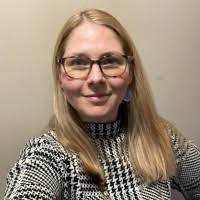 Reliable: Dr. Jessica Biren-Caverly writes her custody reports just as the GAL instructs her.
Custody Evaluator Jessica Biren-Caverly can find out if there is parental alienation. She only needs to know who’s paying.
5.
The court actors promote conflict, prolong litigation, and maximize billable hours.
Often the most successful ways is to generate recommendations for mother-child separation and dissolve parent-child bonds.
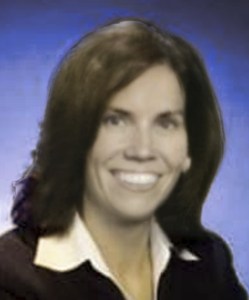 GAL Jocelyn Hurwitz smiles at every recommendation of parental alienation she makes. Why? Because she has expensive teeth.
GAL Jocelyn Hurwitz smiles at every recommendation of parental alienation she makes. Why? Because she has fine teeth.
6.
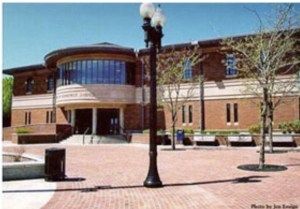
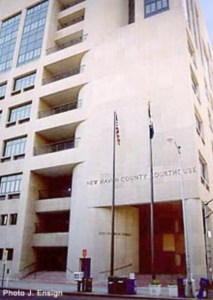
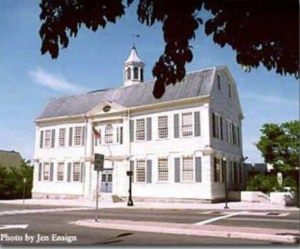
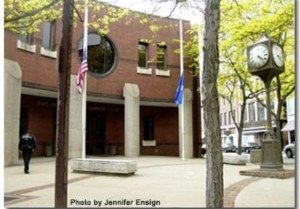
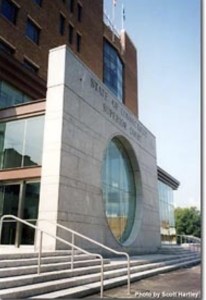
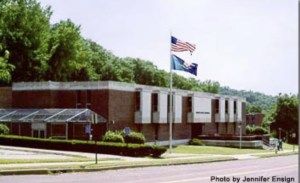
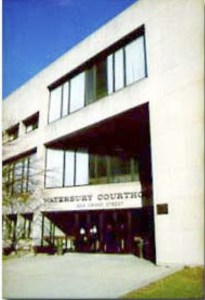
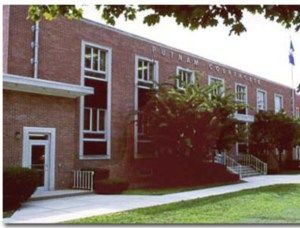
There is no database by which people can scrutinize decisions in family court. No index is available. No master list of family court files is available on the E-file system.
Court personnel direct citizens to visit each courthouse to manually review case listings.
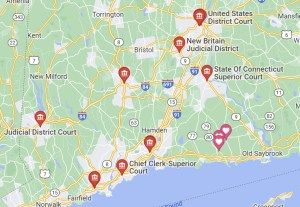
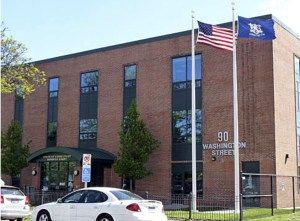
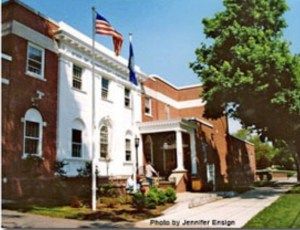
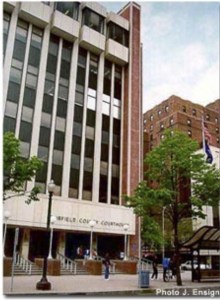
If you want to prove or disprove this, it is easy. Just go to each courthouse in CT and manually look at every case. Once you determine which ones are family court cases, just study the dockets for each one.





7.
Family court judges order family court litigants to use a private company, Our Family Wizard, to communicate.
This allows court actors to monitor their speech. This profits the court actors.
8.
The Regional Family Trial Docket is “a special docket, which handles contested custody and visitation matters, referred to it from any Judicial District in the state.”
CT created it in 1990 to relieve the caseload on regional districts. One judge manages the docket.
The goal is to handle contested cases involving children quickly and without interruption. The presiding family judge is supposed to refer cases to the Regional Docket when they meet the criteria:
Child-focused issue
Ready for trial
Family relations case study completed
Not more than nine months old
The court appointed a GAL for the children.
In reality:
There is no rule for referrals other than judicial discretion.
Cases are not resolved ‘quickly and without interruption’
Litigation is prolonged
It has become a form of judge shopping
Usually, judges refer only families with money
9.
Opposing attorneys appear to collaborate to prolong litigation and seek a particular decision. The collaboration seems to focus on what brings the most billings, not children’s welfare.
10.
It is a racketeering operation. It is not based on race, creed, gender or age.
Greed and a lack of checks and balances is the common denominator.
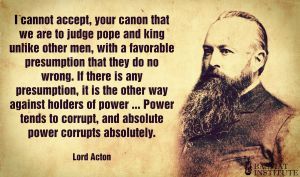
CT operates without understanding Acton’s “Power corrupts, and absolute power corrupts absolutely.”
Judges have absolute power.
They delegate that power to the Guardian Ad Litem.
The GAL is usually an attorney who also practices family law and is part of the racketeering enterprise.
The GAL has absolute power in a given case, but is dependent on referrals from other family lawyers in her enterprise.
Family lawyers have absolute power, since they will not recommend GALS to their clients who don’t support maximizing billings.
The GAL assigns her absolute power to Custody Evaluators, who then decide who gets custody of the children in the case.
The Custody Evaluator depends on the GAL and other family attorneys for referrals.
She must take her cues from the GAL. None of this conspiracy is discussed aloud.
The checks and balances favor the family attorneys and therapists working to ensure high billings.
Parents have no checks and balances.
Wise parents with more money than their spouse can game the system by paying the top dollar to the court actors, and taking it out of the other spouse’s share of the marital support.
Some excellent actors:
 Judge Gerard Adelman
Judge Donna Heller
 Joette Katz is a former CT Supreme Court judge, who left the judiciary to take the helm at the state Department of Children and Families and is now an attorney in private practice.,
Joette Katz
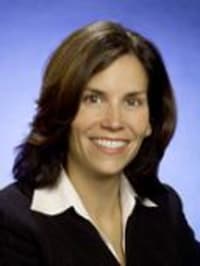 GAL Jocelyn Hurwitz is a strong advocate for PAS and finds it in nearly every case where an affluent father is charged with abuse.
Jocelyn Hurwitz
Sue Cousineau
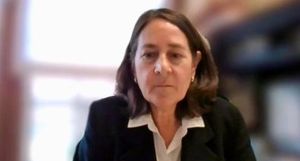 Nancy Aldrich ensured that allegations of sexual abuse were not investigated too thoroughly.
Nancy Aldrich
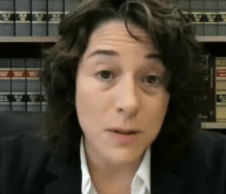 Judge Jane Grossman ordered the children out of their mother's house and not to contact the woman who had raised them since they were infants
Judge Jane Grossman
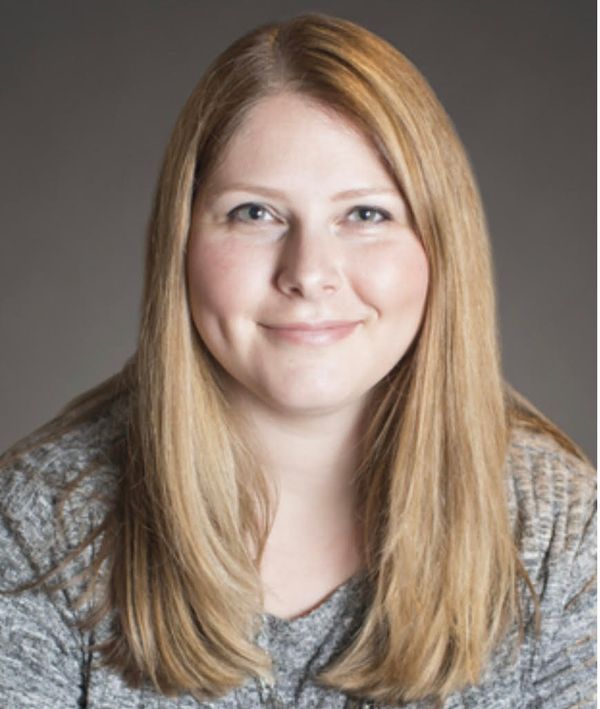 Jessicca Biren-Caverly
Jessic Biren-Caverly
 Candace Fay GAL is not above acts of fraud and barely escaped prison for the theft of money from one of her wards. She is a GAL in high standing with the family law group for she can be depended on the fleece a family till her fleece is dewy and the family's bank account is dry. Watch out for this one,
Candace Fay
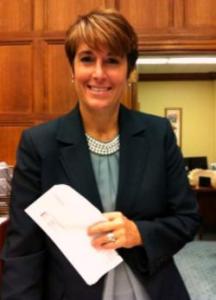 GAL, attorney Mary Piscatelli Brigham. This one takes the cake [and gets to eat it. She will take the children from their mother, even when the father is dead and hand them over to the rich widow of the dad. .
Mary Piscitelli Brigham.
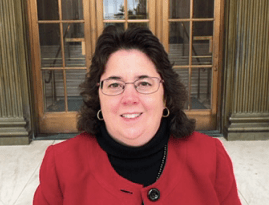 GAL, Attorney Janis Laliberte
Janis Laliberte
Maria McKeon
Judge Elizabeth Stewart
Lisa Knopf
 Jill Plancher is a GAL in CT. She will run up an astonishing bill once foolish parents consent to appoint her.
Jill Plancher

Violations of The Nuremberg Code
Although AFCC is a “non-profit” organization, for-profit Connecticut AFCC Inc. members took millions of dollars from Connecticut children and families — while experimenting on those children and families.
How did it happen?
Most people think highly-trained decent professionals (some are and some aren’t) handle family court cases with exact sciences (some do and some don’t).
Family law’s stated goal of “equity” isn’t an exact science. The definition of “equity” in any given case is anyone’s guess and unfortunately, a few employees and vendors in Connecticut’s family courts are insane.
Here’s what happened. If you don’t believe it, research it:
Alfred Kinsey conducted experiments on children in collaboration with the Nazis in Germany. The Alfred Kinsey Institute then gained consultative status at The United Nations and proceeded to shape “gender studies” and sexual behavior policies in America’s public school systems and family courts.
How did that affect children and families in Connecticut?
Here’s how: AFCC, Inc. members can remove children from families in Connecticut. What’s the data on how many?
DCF can then conduct experiments on those “wards of the state”. Where’s the data on those “wards of the state”?
For those wondering “What data?” …
How many children did CT AFCC, Inc. judges, therapists, attorneys, researchers and court administrators take from families since 1984?
How many children did CT AFCC, Inc. judges, therapists, attorneys, researchers and court administrators place in foster care since 1984?
What data supports AFCC’s mission statements and history regarding research and training since 1984?
What kind of research have AFCC judges, therapists, attorneys, researchers and court administrators conducted since 1984?
Which state and federal regulators provided oversight for state and federal projects?
In 1984, who offered Connecticut’s children and families as test subjects for federally funded research?
“… The mediation samples were drawn from the client population of three courts which offer in-house mediation services. These courts are the Los Angeles Superior Court, Hennepin County Court in Minneapolis and the Connecticut Superior Court. Although all three programs are unique in many respects, they also have many characteristics in common. For example, at all three sites, mediators tend to have an educational background in social work or another helping profession. All three programs are mature and have been in operation for at least five years …”
https://www.ojp.gov/pdffiles1/Digitization/98054-98066NCJRS.pdf
Of all the places that could have been chosen for experiments, who chose Los Angeles, Minnesota and Connecticut and why?
Los Angeles is where AFCC was organized. See Marv Bryer’s research.
Ralph Underwager’s network was in Minnesota. See The “Mr. Bubbles case”.
And someone chose Connecticut because of what, exactly?
What was it about Connecticut?
One experiment in Connecticut studied “The effects of divorce mediation and adjudication procedures on children”. According to the authors of that report: “many of the individuals who belong to the AFCC are not mediators but are judges, therapists, attorneys, researchers and court administrators” (p. 11)
Why did the Department of Justice allow judges, therapists, attorneys, researchers and court administrators to organize and control a state chapter of “AFCC” without registering their businesses?
Why did the DOJ allow CT AFCC, Inc. members to work across state lines in networks across the nation without registering the corporation that was formed in 1984 … until 2013?
How did the Connecticut DOJ conduct a “public corruption” investigation in 2014-2015 and not find out about any of that? How did The Connecticut Law Tribune not know what was happening? Did Hartford Courant reporters miss it or ignore it? How many DOJ employees, state and federal legislators have known about the experiments?
Louis Jolyon West in Los Angeles worked with Ralph Underwager in Minnesota.
Who connected those two dots to Connecticut? Did West and Underwager shape the criminally dysfunctional family court systems in Connecticut? A few years ago, Jennifer Dulos disappeared in Connecticut. Who provided oversight for the judges, therapists, attorneys, researchers and court administrators in that case?
Why were Connecticut family courts designed to serve for-profit lawyers and vendors? Why were family courts designed to be mandatory and purposely adversarial — even the most dangerous cases? Why have no state or federal agencies offered oversight? Why has there been no accountability for the harm done?
Joette Katz was named Commissioner of The Connecticut Department of Children and Families (DCF) 2011-2018.
Was Ms. Katz chosen to fix a DCF left in ruins or was she chosen to be a fixer extraordinaire?
Data would tell us either way. Where’s the data? For example:
How many studies were conducted on children in DCF care before, during and after 2011-2018?
How many pharmaceutical trials were done on DCF “wards of the state” before, during and after 2011-2018?
Who gave companies and sole proprietors the state and federal contracts before, during and after 2011-2018?
Who granted permission for experiments/studies done? Who were the regulators?
Where were the oversight committees and what do records in The Ombudsman’s office show?
Beginning in 1983, in which ways did Connecticut AFCC members, Joette Katz, Philip Rubin and others collaborate?
Why would they collaborate? Here’s an example:
In a DCF case, one state evaluator used The Ink Blot test (a billable but discredited test). The evaluator invented his own system of diagnostics with his own invented diagnostic term. He spoke about his inventions while testifying. On record. Did anyone notice?
Where was the peer review? Which state regulators tracked his experiment?
Which office stores the records of collaboration and oversight in that case?
Who collected and analyzed the data and in how many ways was that data used?
How many Connecticut children and parents consented to be subjects of experimentation?
How many didn’t consent?
From 2011-2018, the DCF Commissioner was Joette Katz. Ms. Katz is married to Philip Rubin.
https://en.wikipedia.org/wiki/Philip_Rubin
“… Philip E. Rubin (born May 22, 1949) is an American cognitive scientist, technologist, and science administrator known for raising the visibility of behavioral and cognitive science, neuroscience, and ethical issues related to science, technology, and medicine, at a national level. … He was also the co-chair of the inter-agency National Science and Technology Council (NSTC) Committee on Science (COS) Human Subjects Research Subcommittee (HSRS) under the auspices of the President's Office of Science and Technology Policy (OSTP) and was also formerly the co-chair of the HSRS Behavioral Research Working Group.”
He was President of the Federation of Associations in Behavioral and Brain Sciences (FABBS)
He was Principal Assistant Director for Science, Office of Science and Technology Policy
He is known for: “ … Cognitive science; Computational modelling; Dynamical Systems; Embodied cognition
Ethics of technology; Human subjects and the Common Rule; Linguistics; Public policy …”
He’s worked with the “…Federation of Associations in Behavioral and Brain Sciences, Office of Science and Technology Policy, National Science Foundation …”
Did Philip Rubin help Louis Jolson West, Ralph Underwager, Richard Gardner and AFCC develop and establish the harmful rules and practices seen in Connecticut family courts today?
Note: In the above mentioned DCF case, the federally funded state evaluator/inventor of his own system of diagnostics is a man and yet, his pronouns aren’t always he/him. Was that new science developed in Connecticut? If there’s no data available to track such exciting developments, who knows?
And, if the data is available, who’s allowed to know?