OneTaste Forced Labor Case Shows How 'Cult' Label Framed Prosecution
Nicole Daedone and Rachel Cherwitz were convicted of forced labor conspiracy after years of media scrutiny that cast OneTaste as an orgasm cult.
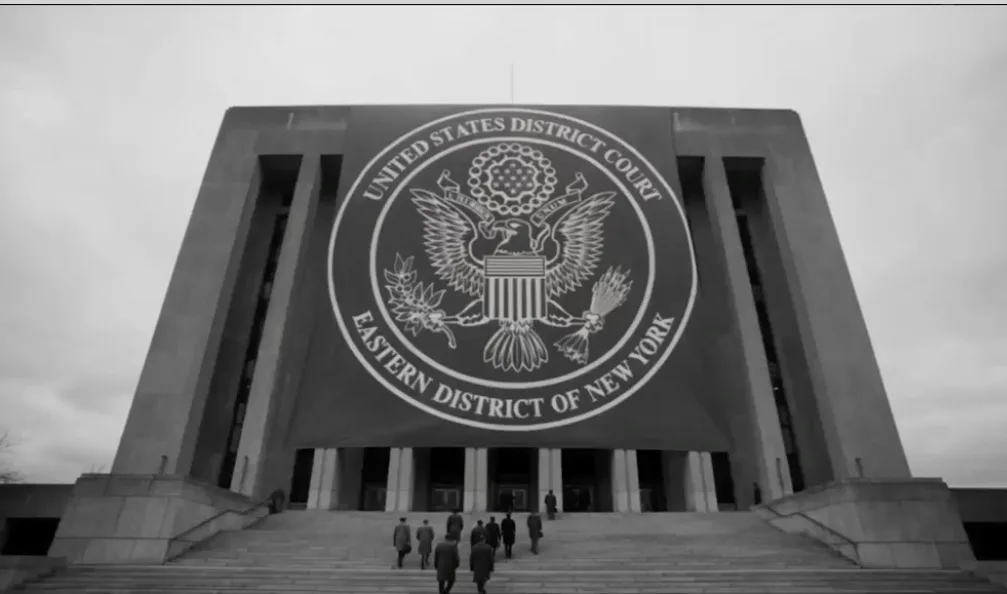
YOU ALREADY HAVE AN OPINION ABOUT THIS
If you have heard of OneTaste at all, you have probably heard it called an orgasm cult. Bloomberg used the words in 2018.
By then, the words had acquired a life of their own.
The label comes first. After that, many people stop asking questions.
For ten minutes, keep the conclusion if you like. Just don't hold it too tightly.
It may be right. That is not the problem.
The problem is that, in the criminal case that followed the media coverage, the label began doing work that evidence is supposed to do. It turned an allegation into a premise.
Nobody had to prove OneTaste was a cult.
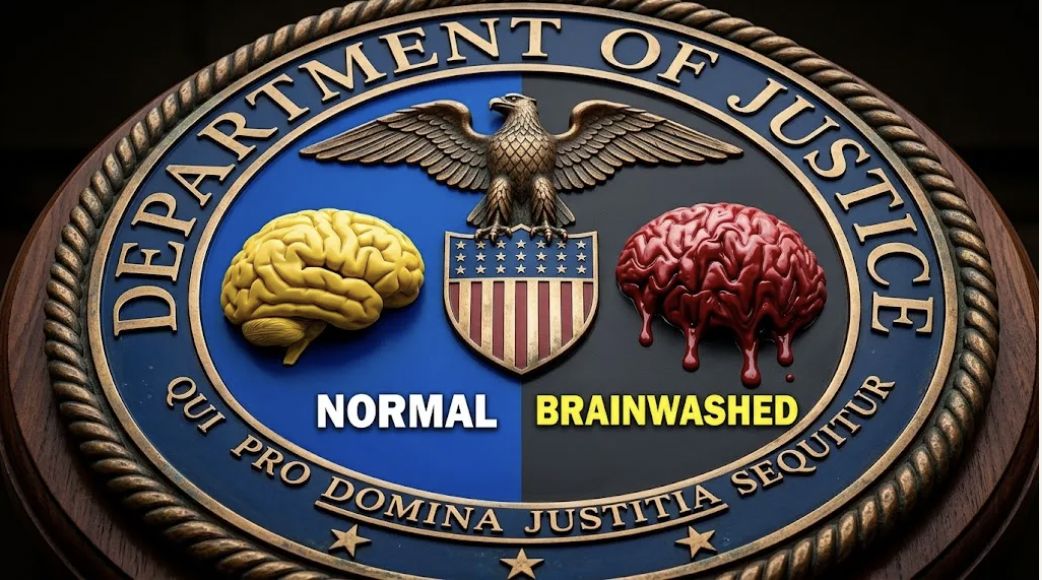
The word was not in the charge. Neither was "brainwashing."
Defense counsel told the jury: "you won't see the word 'cult' in there, and you won't see the word 'brainwashing' in there."
That was useful, in a way.
A thing that is never offered as evidence never has to withstand cross-examination.
It can simply float around the courtroom functioning instead as assumptions. They were the atmosphere in which the evidence was heard.
WHAT ONETASTE WAS
OneTaste did not call itself a cult. It was a company.
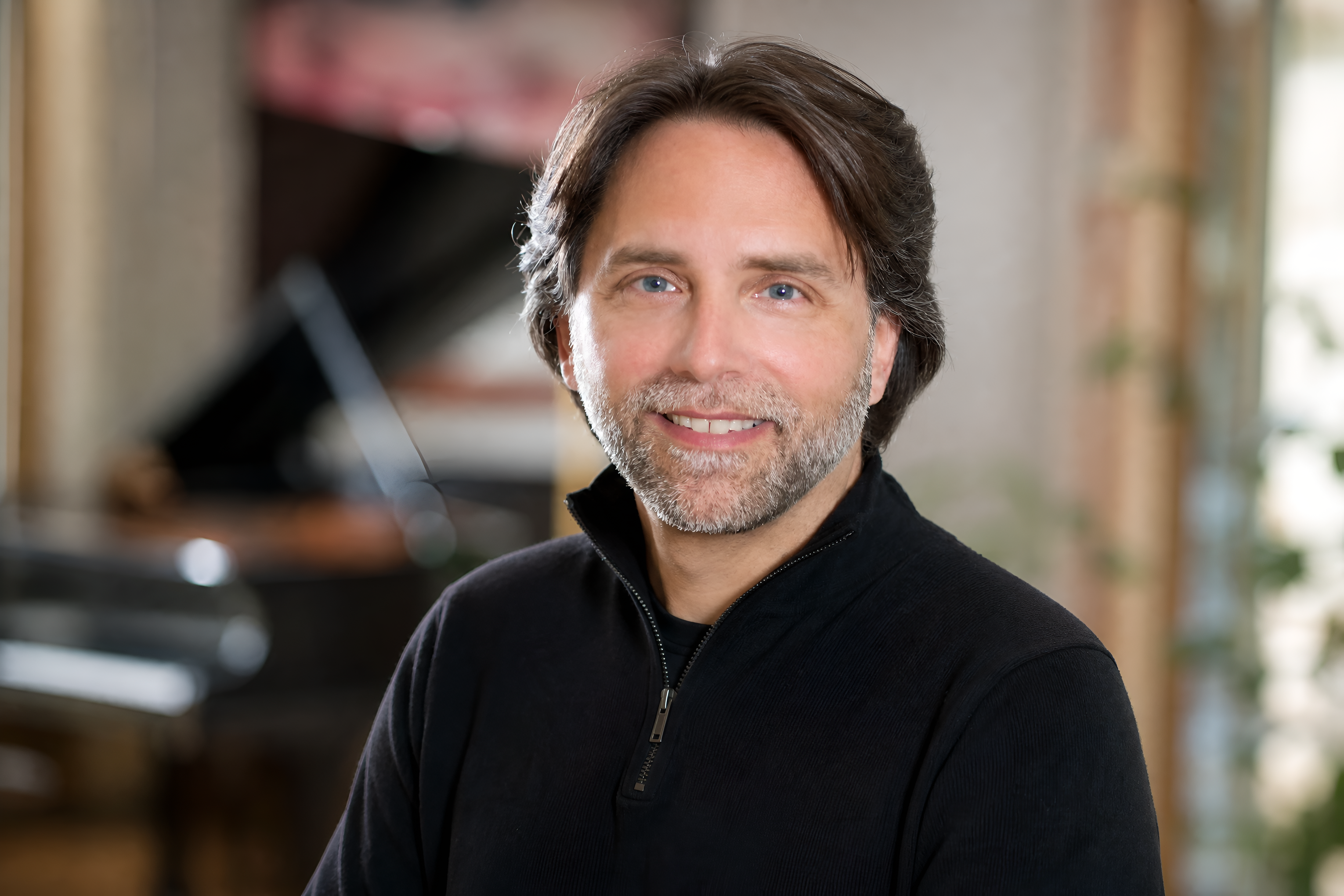
Nicole Daedone founded it in San Francisco in the early 2000s. It sold courses, coaching, and retreats centered on something called orgasmic meditation, or OM.
Yes, that was really what it was called.
The practice was more or less what the name suggested. It involved two people, a timer, partial undress, and a technique OneTaste described as meditation rather than sex.
Around that distinction, Daedone constructed a philosophy of attention and appetite, and of female desire as something to be examined rather than concealed.
You may think this was silly. You may think it was disgusting. About 35,000 people signed up anyway.
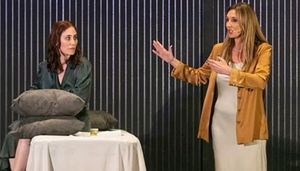
Rachel Cherwitz was Daedone's second-in-command. She was also charged.
At its height, the company had locations in several cities, houses where employees lived together under rules, a sales force, investors, and its own language.
Intense organizations tend to invent languages. The words make perfect sense to the people inside and are nearly meaningless to everyone else.
There were unhappy parts too.
Some people went into debt. Some worked long hours and were paid little. Some who left said they had been pressured into sexual situations they did not want.
Whatever language the organization used for such experiences, those who left sometimes used much plainer words.
These accounts existed alongside the language, the rules, the houses, the sense of belonging. They were part of the same company.
Out of 35,000 people who attended, nine women later testified that what happened to them was bad enough that they considered themselves victims.
HOW A COMPANY BECAME A PROSECUTION
In June 2018, Bloomberg Businessweek published Ellen Huet's anonymous-accuser story, "The Dark Side of OneTaste."
After that, the FBI took an interest.
In December 2020, the BBC World Service aired an episode of The Orgasm Cult called "Is OneTaste a Cult?"

In November 2022, Netflix released Orgasm Inc: The Story of OneTaste.
By then, the public framing of the company had become difficult to separate from the word "cult."
Then the government moved. The US Attorney led a federal grand jury in Brooklyn to indict Daedone and Cherwitz in April 2023 on a single count of forced labor conspiracy.
Two things about that sequence deserve attention.
First, the media came before the evidence. The government acknowledged that.
According to a defense court filing, before the indictment, OneTaste's lawyer asked a prosecutor for the factual basis of the investigation.
The answer was to "look at the media on OneTaste."
Bloomberg and the BBC were mentioned.
There is something peculiar about being told to look at journalism when you ask the government what evidence it has.
The BBC production in question was the episode asking whether OneTaste was a cult. The title had already done some thinking for the listener.
The second detail is stranger.
It concerns journals.
In May 2022, the Netflix production negotiated to pay $25,000 for documents presented as one woman's diary entries from 2015.
The government made those journals the centerpiece of its evidence and built more than a year of its case around them.
The defense later documented something awkward.
The supposedly 2015 journal was created over two weeks in 2022.
Old diaries are not generally written in 2022.
Huet's 2025 book says the woman, Ayries Blanck-Milligan, later acknowledged to the FBI that the journals had been created later than she first told them. She lied to them, in fact.
The government's filings acknowledge she lied, too. But only after the defense discovered the dates — after the government had already taken the journals to a grand jury and made the defense spend more than a year preparing to meet them at trial.
Do not decide what it means yet. Just notice what it does not mean.
This case did not begin when somebody walked into a government office and complained. It began with a media story.
A story about a story.
WHAT THEY WERE ACTUALLY CONVICTED OF
Now comes the part people tend to remember incorrectly.
Daedone and Cherwitz were not convicted of sex trafficking.
They were not convicted of sexual assault.
They were not convicted of wage theft, fraud, or running a criminal enterprise.
This is a fairly long list of things they were not convicted of.
Those distinctions matter because several of those offenses are commonly assumed when the case is described in shorthand.
On June 9, 2025, they were convicted of one thing: conspiracy to commit forced labor under 18 U.S.C. §1589.
A conspiracy is an agreement. There was no separate substantive forced-labor count underneath it. They were not charged with actually forcing anyone to labor. The agreement to do it was the only crime charged.
Defense counsel told the court it was the first such prosecution in U.S. history. There is a first time for everything.
Nine women testified for the government as victims. None of the nine testified that she was locked in a room. No one was chained.
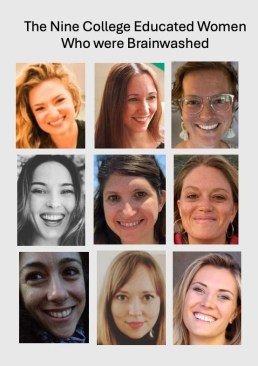
The government agreed they were free to leave OneTaste. They all left exactly when they chose. That is not in dispute. The women themselves testified they decided when to leave, and could have left at any time.
The government said the prison was somewhere else. It was in the mind. It was in what the women had been taught in OneTaste to believe.
The government's theory was psychological coercion: the women were not restrained physically. What held the women was what they believed.
On March 30, 2026, Judge Diane Gujarati sentenced Nicole Daedone to nine years in federal prison. Rachel Cherwitz received seventy-eight months.
WHY I DIDN'T PUT IT DOWN
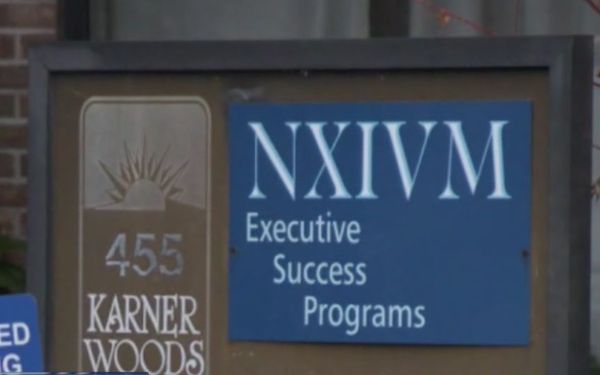
I should tell you my bias. I started on the other side.
I spent years reporting on NXIVM. I was the first journalist to report that women were being branded.
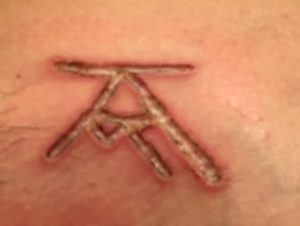
I have heard people inside coercive organizations explain why everything is perfectly normal. They can be convincing.
I'm skeptical of the argument that a group is being persecuted for its beliefs. Sometimes that is a defense used by people who did what they are accused of doing.
However, the OneTaste trial transcript — all twenty-five volumes, about 5,400 pages — is not the story of a bad organization getting what it had coming.
I found a prosecutor telling the jury that whether the women had actually been harmed was "absolutely not the question of this trial."
This seemed an unusual thing to hear in a trial about harm.
I found the government arguing that a witness's degrees and career proved how powerful the coercion must have been.
The more capable she was, the stronger the force must have been.
I also found the word "brainwashing" near the center of the case without an expert defining it, a witness explaining it, or a court testing what exactly it meant.
It was a very important word. Important words usually get definitions. This one appeared everywhere and was defined nowhere.
There was sworn testimony about witches. There were wizards. There was something called Magic School.
This was not a defense stunt. It was the women's own account of what they had been taught and what they believed.
The United States elicited this testimony on direct examination.
Then the defense asked the judge to remind the jury about the First Amendment.
The judge described what her own instructions would tell the jury about the First Amendment in one word.
"Nothing."
WHAT'S COMING
I am going to take you through the record. Mostly, I will let the government do the talking.
It turns out the government is quite good at explaining the problem.
The prosecutors said things in open court that I could not improve on.
If I paraphrased them, you might not believe me.
THE IDEA HAS A NAME
The idea is brainwashing.
The theory is that one person can work so thoroughly on another person's mind that eventually her yes is no longer yes.
This creates certain difficulties with the word yes.
It has had many names: thought reform, coercive persuasion, mind control, undue influence, coercive control, psychological coercion.
The terminology changes. The proposition does not.
Each time it is rejected, it comes back under another name.
In 1988, the Supreme Court rejected that expansion of the federal forced-labor statute.
In Kozminski, the Court said the federal forced-labor law covered physical coercion and legal coercion.
Psychological coercion was another matter.
Go that far, the Court warned, and the law could reach "a religious leader who obtains personal services by means of religious indoctrination."
Two years later, a federal court said no again.
In United States v. Fishman, the court excluded expert testimony on coercive persuasion because the theory had not achieved general acceptance within the relevant scientific community.
The American Psychological Association had already declined to endorse it.
In 2008, Congress amended 18 U.S.C. §1589, the forced labor law, to define "serious harm" to include harm that is psychological, financial, or reputational.
It did not have to be physical.
The Supreme Court had drawn a line. Congress erased it.
Nothing in the statute now distinguished criminal coercion from powerful persuasion.
By 2015, the FBI endorsed the idea.
The Bureau's Law Enforcement Bulletin, a training publication for police, printed something called the BITE Model.
BITE stands for behavior, information, thought and emotional control.
Under the diagram were the words: "Source: Dr. Steven A. Hassan."
The brainwashing idea now had a diagram.
Then came Brooklyn.
In 2025, a jury convicted two women in a case built on the idea.
An idea can have a very interesting career.
CONCERNS
Some of this should bother you even if you dislike everybody involved.
Maybe especially then.
The theory is not limited to Brooklyn.
Versions have already been used in civil litigation involving a century-old Catholic missionary order, a major Hindu organization, the Salvation Army, and a Christian youth camp in Wyoming.
Ideas like to travel too.
On August 30, 2026, ninety-two religious leaders, scholars, and religious-freedom advocates signed a letter to the President about the OneTaste precedent.
Alan Dershowitz went further.
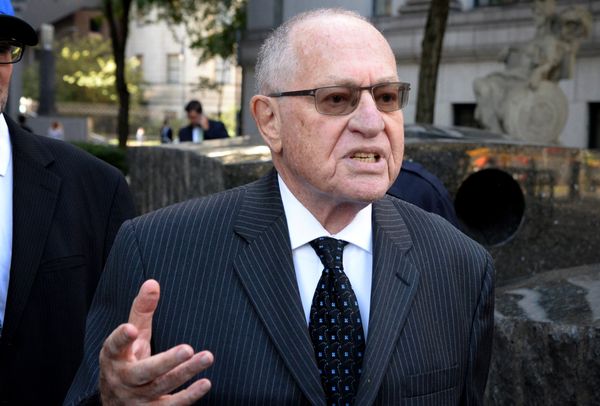
Chloe Melas of NBC News, on March 18, 2026, reported that Dershowitz intends to seek a Trump pardon for Daedone and Cherwitz:
Dershowitz told NBC, "As soon as I saw the indictment, I realized that with a few changes of words, this indictment could have been directed against Mormon groups, against Hasidic groups, against various Protestant or Catholic sects."
His point is not that these groups are equivalent to OneTaste. It is that a legal theory must be judged partly by the range of conduct to which it can be applied.
At some point the subject ceases to be OneTaste.
He said, "There are so many people who join ideological or religious groups, volunteer their time and later become disillusioned. The idea that prosecutors can later say that voluntary participation must have been coercion is extremely dangerous."
You may still think OneTaste was a cult. You may think Nicole Daedone was a fraud. Nothing in the Constitution requires you to admire her.
Neither conclusion settles the legal question. Read the transcript anyway.
Then decide whether you want the government to have this power.
The next defendant may be someone you understand better.