How the DOJ Made Its Own Victims in USA v. Wander

PART ONE — HOW A NEWSPAPER STORY KILLED A TEN-BILLION-DOLLAR COMPANY

Joshua Wander is 44. In 2015, he co-founded 777 Partners in Miami.
777 began by buying structured legal settlements and lottery winnings. A person entitled to monthly payments for, for example, the next 20 years could sell that future income to 777 in exchange for a cash discount paid immediately.
777 would then collect the payments.
Next, 777 started buying businesses.
It bought insurance companies, a payday lender, a motorcycle-leasing company and a British mortgage lender. It acquired two low-cost airlines, Flair in Canada and Bonza in Australia, along with companies that leased aircraft to them.

777 also bought STX Entertainment, the studio behind Molly's Game, and the online music business Beatport. It acquired the London Lions basketball team and a stake in the British Basketball League.


It bought soccer teams. Genoa in Italy. Vasco da Gama in Brazil. Hertha Berlin in Germany. Standard Liege in Belgium. Red Star in Paris, as well as stakes in Sevilla in Spain and Melbourne Victory in Australia.
 Genoa Club
In 2023, 777 agreed to buy Everton, one of England's oldest clubs.

By then, 777 controlled roughly 60 operating businesses through more than 500 legal entities and reported approximately $10 billion in assets.
Almost no one outside the firm could explain what 777 actually was or how it financed its expansion.
In November 2023, the news outlet Semafor began trying to answer those questions.
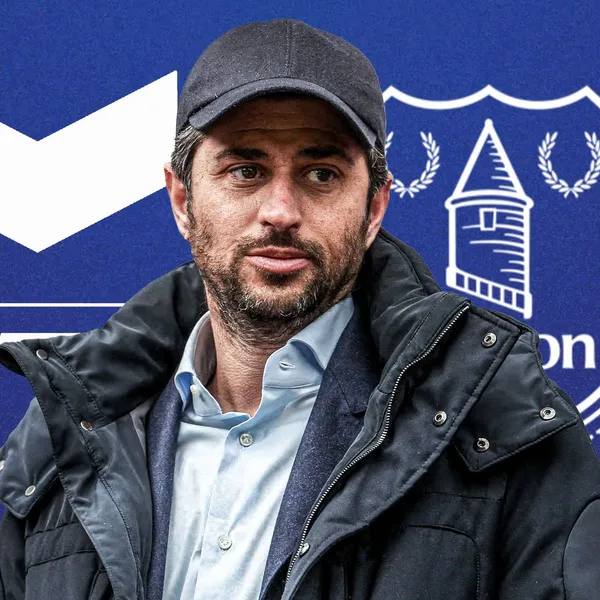
Today the company is bankrupt and its founder, Joshua Wander (below) is indicted.
SIX COUNTS
On October 19, 2026, Wander is scheduled to go on trial in Manhattan federal court before Judge J. Paul Oetken in United States v. Wander, 25 Cr. 473 (JPO).
Unsealed on October 16, 2025, the original indictment charged Wander with four felony counts, arising from an alleged multi-year scheme to defraud 777 Partners' private lenders and investors of nearly $500 million.
The charges were wire fraud, conspiracy to commit wire fraud, securities fraud and conspiracy to commit securities fraud.
Two days before the US Attorney in Manhattan unsealed the indictment, 777's former chief financial officer, Damien Alfalla, pleaded guilty in the same courthouse. He is cooperating with the government and is expected to be the star witness against Wander.
Prosecutors allege Wander, Alfalla and others inflated the numbers. They say they overstated assets, pledged more than $350 million in collateral twice, altered bank statements, made more than 40 false certifications and raised more than $100 million on false representations.
A superseding indictment filed June 30, 2026, added two charges. Prosecutors allege Wander diverted most of a $20 million loan to his brokerage account, directed employees to create false bank statements to conceal it, and separately charge him with witness tampering.
Wander has pleaded not guilty to all six counts. Together they carry statutory maximums of more than 80 years, but few get the consecutive maximum for fraud.
Based on sentences in comparable cases, a conviction would likely bring somewhere between 7 and 20 years.
ANOTHER POSSIBILITY
The natural reaction is obvious.
The allegations sound terrible. The institutional authority of an indictment supplies the next thought almost automatically: prosecutors must know something.
Another possibility exists, and it is a strange one.
The question is whether the government created the victims. Not Wander. The government.
That is the question of this series: whether the alleged victims would have suffered their losses but for what the government did first.
What the government did first was talk or if you prefer "leaked."
On November 30, 2023, the news site Semafor reported that the Justice Department was investigating 777 Partners for money laundering, and named the federal prosecutor handling it. The story was sourced to people familiar with the matter.
The reporter had that prosecutor's name at least three days before the story ran — and one day before the government assigned him the case.
There had been no public announcement of an investigation. No indictment had been filed, nobody had been arrested and no charge had been announced.
The government would not charge Wander for almost two more years.
The reporter's conduct is not the issue. Journalists are supposed to discover information officials have not announced and publish it.
Liz Hoffman did exactly that.
But information has to come from somewhere. If the source was a government official, then an official disclosed the existence of a criminal investigation before the government had charged anyone publicly.
At the time, 777 Partners reported roughly $10 billion in assets and employed more than 2,000 people.
Higher interest rates had put pressure on the business, but it remained in operation. Its largest backer, the insurance holding company A-CAP, had provided an $891 million credit line.
It was also, at the time, trying to buy Everton, the Premier League club in Liverpool, a bid that brought the firm unusual public attention.
WHAT WAS ALREADY PUBLIC
On November 14, Hoffman reported on the source of 777's capital to buy businesses. Much of it came from insurance. The firm owned a Bermuda reinsurer, and premiums and annuity payments helped finance its acquisitions.
The story quoted a 2021 investor presentation in which 777 said it placed 65 percent of policyholder money in higher-risk, potentially higher-return holdings, compared with 12 percent at conventional insurers, and lent insurance funds directly to companies it controlled.
None of this was secret, and none of it had been alleged to be a crime.
It was troubling. It was not criminal.
The next day, November 15, Semafor reported that 777 Re, 777 Partners' subsidiary insurance company, held about $3 billion in customer money, premiums and annuities from Americans who had bought life policies.
Roughly half of it had gone into deals that 777 Partners itself had put together.
Documents reviewed by Semafor showed $112 million going to entities used to acquire soccer clubs in Italy, France and Spain.
Other funds went to a South American soccer-streaming service.
Another investment was a payday lender.
There was also an aircraft-leasing company serving budget airlines controlled by 777, together with another entity used to finance the aircraft purchases.
Another $22 million was invested directly in 777 Partners.
777 disputed Semafor's characterization. Its spokesman said about half the related-party exposure carried no credit risk to 777 or its affiliates. He cited roughly $500 million in third-party structured-settlement deals backed by large annuity providers.
None of these arrangements is illegal. Insurance companies may own business interests. Regulators decide how much of that exposure may support reserves and how related-party transactions must be treated.
Nobody was criminally charged over these reported transactions.
THE SILENT PARTNER
On November 23 came another story. It was about Kenneth King and A-CAP, which owned at least five insurers.
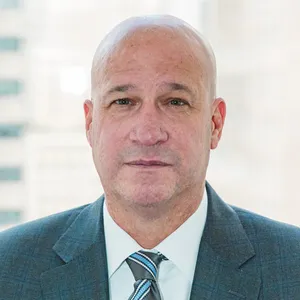 Kenneth King of A-CAP
His insurers had ceded policyholder money to 777's reinsurer — $310 million in 2019 alone, by one state filing.
A-CAP had separately become 777's second-largest lender, with the balance reaching $400 million by 2021.
King's role extended beyond financing. He sat on 777's steering committee, reviewing the plans and cash requirements of portfolio companies.
In November 2022, A-CAP lent 777 about $14 million. Roughly $4 million made payroll. Another $1 million went back to A-CAP.
The next day, 777 lent $9 million to a company that bought a waterfront condo in Miami. According to the mortgage documents, the buyer was King.
No criminal charge has been brought over the condominium transaction. King has not been charged with a crime.
Three hard stories ran in nine days. None alleged a crime. The company kept going.
THE FOURTH STORY
At 2:27 p.m. on November 30, Semafor published the fourth story.
The headline was Feds probe sports investor 777 over money flows.
The kicker across the top read TURF BATTLE.
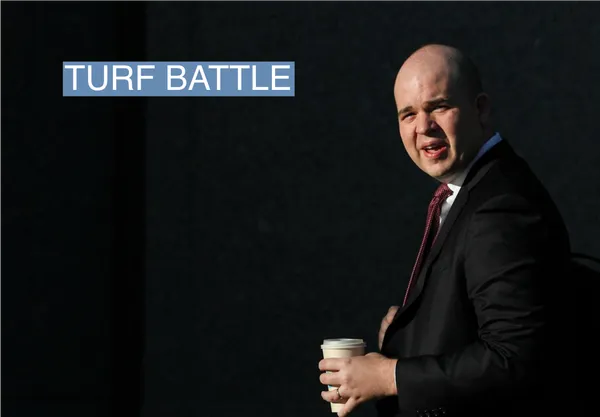 Prosecutor Roos
Beneath it ran a large photograph of a federal prosecutor with a coffee cup, turning toward the camera.
Semafor reported that Nicolas Roos, recently one of the prosecutors in the successful Sam Bankman-Fried case, was part of a Justice Department team examining possible money-laundering violations by 777 Partners.
The source was unnamed "people familiar with the matter."
It also reported that the Southern District was discussing a joint investigation with law enforcement in Miami. Sourced to "some of the people" — a subset of the unnamed "people familiar with the matter."
The information about an investigation was in no filing, press release, or court record, because there were none. There was no case.
That came from inside the government.
An attorney for 777 told Semafor that the firm considered the accusations "scurrilous and damaging" and "deliberately timed to undermine its ongoing commercial activities" — naming in particular the regulatory approval period for the Everton acquisition.
At that moment no lender had yet taken action against 777. The Everton bid was still alive.
Everything else in the piece had been reported before.
What was new on November 30 was the United States Department of Justice. Business controversy had become a possible crime.
WHAT CAME NEXT
The Utah Insurance Department contacted A-CAP that afternoon. The reason for concern was that A-CAP insurers had ceded $1.7 billion in annuity reserves to 777 Re.
On December 1, the two British insurance companies that bought 777's home loans stopped buying them.
A 777 company called TAMI made home loans in Britain and sold them to Scottish Widows and Rothesay. It brought in close to $100 million a year.

Both suspended purchases the day after publication, pending an explanation of the reported money-laundering investigation.
That same day, The Athletic reported that the Premier League was moving to veto 777 Partners' attempt to purchase the Everton soccer team, and linked the development to reports of the Justice Department investigation.
On December 4 and 5, Bill Franke of Indigo Partners, then involved in merger discussions concerning 777's Canadian airline, contacted Citibank to suspend the effort.
Lenders then began issuing default notices, asserting that 777 had breached loan agreements and demanding cure or repayment.
On December 7, a fund called Vida sued, claiming 777 had moved assets out of creditors' reach.
In March, Nakula Management filed suit and named Wander as a defendant.
Astronics, an aerospace supplier, declined to contract with 777 and asked whether another company could be substituted. It wanted the transaction but not 777 as the counterparty.
On January 16, Goldman Sachs sent a request for information. It closed 777's accounts shortly afterward. The company's bank had kicked them out.
The Premier League cited the DOJ coverage in its review of whether Wander could pass the owners' and directors' test, the fitness screening every prospective club owner must clear.
The Everton bid collapsed.

On March 15, 2024, Leadenhall Capital Partners demanded repayment of its loan.
Leadenhall, a London investment firm, had lent 777 more than $350 million on a long-term basis. Now it wanted all $350 million at once.
Every one of these events preceded Wander's indictment. Most of them occurred before a grand jury was even convened.
No charge had been filed. No grand jury had voted. No judge had ruled on anything. A newspaper had printed what someone unnamed had told it.
WHY IT BURNED SO FAST
Did the article, or rather the leak the article reported, kill a healthy company?
Possibly not. The evidence showed serious weaknesses. But a public criminal-investigation report could accelerate those weaknesses, and a highly leveraged company is vulnerable to a sudden loss of confidence.
The speed of the collapse is easier to understand once the source of the capital is understood.
Some of it came from retirees buying annuities.
An annuity begins with an exchange. A retiree gives an insurer a lump sum; the insurer promises future payments.
It must keep reserves to make those payments.
That reserve money is supposed to be safe.
A private lender can decide to abide risk.
A regulator responsible for policyholder reserves cannot. When Utah read that federal prosecutors were investigating the parent of the company holding its residents' money, it had to act. That meant treating the firm as if it were already in trouble.
Whether it was in trouble had not been established. Once the regulators acted, the lenders did also, and once the lenders acted, the trouble was real.
The report of an investigation produced the condition it described.
In February 2024, AM Best downgraded 777 Re's financial-strength rating to C-, describing both its balance sheet and enterprise risk management as weak.
The Bermuda Monetary Authority then placed the reinsurer under administrative control.
On October 8, 2024, the Bermuda Monetary Authority canceled 777 Re's insurance registration.
Utah then pursued regulatory action involving A-CAP insurers. By April 2025, the dispute had gone to mediation involving Sentinel Security Life, Haymarket Insurance and Jazz Reinsurance.
Once the reported federal investigation became public, institutions with regulatory duties had to respond on their own schedules. They could not simply wait for prosecutors to finish.
They could not wait to learn whether the investigation would lead anywhere at all.
THE IRONY
There is an irony here.
If 777 had survived, if the run had not happened, if the dominoes had stayed standing, there would probably have been no indictment.
A fraud case without a loss is a hard case to bring.
The lender is still being paid. The dispute is papered and performing. There is no dollar figure loss, and in federal court the dollar figure loss is the sentence.
You are asking twelve citizens to send a man to prison over a disagreement the parties themselves had already resolved.
Prosecutors can bring that case. They rarely do.
What made this one worth bringing was the losses. The losses directly followed a story about an investigation that, at the time it appeared, had not yet officially begun.
And there were no losses.
It may or may not be that anyone planned that. But that is what happened.
No court has been willing to ask how.
THE SOFT SPOT
A leak was almost guaranteed to exploit that.
A heavily borrowed business does not merely owe money. It needs its lenders to keep lending — to renew, to extend, to let the next draw through.
That is the soft spot. It is not hidden.
Each loan renewal or draw may require certifications that no materially adverse event has occurred and that no significant proceeding is pending or threatened. Some agreements expressly refer to government investigations.
Knowledgeable FBI agents and prosecutors know this.
A borrower whose federal criminal investigation was reported in the press is in trouble with that certification, no matter how it is worded.
The leak almost guarantees the company's demise. The demise guarantees there are losses, which otherwise might not occur.
WHO GAINS
Ask the ordinary question. Who gains by leaking?
Not the lenders. Not the employees; two thousand of them lost their jobs.
Not the retirees whose annuity money sat behind the reinsurer.
Not Everton, which needed a buyer and lost one.
There is one set of people for whom the destruction of 777 Partners was not a catastrophe. It was an improvement.
A prosecutor looking at a company that is paying its bills has a difficult case and no victims.
A prosecutor looking at the same company in bankruptcy has a victim list, a loss figure that drives the sentence, a restructuring officer who hands over the privileged files without a fight, an estate that pays for its own forensic examination and files it on a public docket, a defendant who can no longer afford his lawyers, and two thousand former employees with no job left to protect.
That is not a small improvement. It is the difference between a case you probably do not bring and a case you win.
Anyone who has worked a financial fraud case knows that a leveraged company runs on its lenders' willingness to keep lending, and that lenders stop when they read the words criminal investigation. You do not need a scheme to see it.
You need to have a leak to get the job done.
I am not saying a prosecutor leaked this. I am not saying an FBI agent did. I do not know who talked to Liz Hoffman and neither does Judge Oetken, who declined to find out.
I am saying that when a company is destroyed by information only the government possessed, and the destruction turns out to be worth a great deal to the government's case, somebody ought to have to explain how the information got out.
HOW A DEFAULT SPREADS
The leak caused what became a run on an otherwise operating company.
Here is how one default can spread.
Commercial loan agreements often contain cross-default clauses. Under such provisions, a sufficiently significant default elsewhere can constitute a default under another loan as well.
Before the first default, waiting can make sense. A default is not necessarily non payment.
It could be the news of a federal criminal investigation.
After the first default notice, waiting by other lenders becomes dangerous. The safer route is for other lenders to call their loans and take the available cash first.
The result is a run. Early-moving creditors may secure assets while later creditors discover that the available cash and collateral have already been claimed.
None of this requires a judicial finding. Once creditors begin acting on one another's actions, the process became self-reinforcing.
The story ran and the creditors made a run on the company.
WHAT CANNOT BE COUNTED
Some consequences can be documented precisely. Defaults are dated. Lawsuits are docketed. Account closures leave records.
What cannot be counted is the further damage caused by those who stopped calling.
Call it the "chilling factor" caused by the leak.
777 owned 60 companies, each dependent on relationships with vendors, insurers, financiers and investors.
The deal that would have been offered is not offered. The call that would have been returned is not.
All of it followed a newspaper article quoting an anonymous source saying that the Justice Department was investigating 777 Partners.
An official announcement would have been prohibited. This was not one.
This had all the earmarks of a prohibited leak.
NOT AT HER END OF THE TELEPHONE
 Hoffman
Obviously, Liz Hoffman should not have to name her source. Reporters who can be compelled to give up sources stop being told things, and a press that cannot be told things is not a free press.
She did her job. The problem is not at her end.
The government is a different matter. It has rules about what its employees may say and to whom. It requires that every press contact be written down. It keeps records of who worked a case and when.
None of that breaches a reporter's privilege.
There was a way to find out. The defense asked for the logs, for the case-opening papers, for the notices the criminal rules require, for a sworn word from the DOJ press office that actually took the calls. It asked for a hearing.
Judge Oetken said no, and in the same order refused to unseal the part of the prosecutor's declaration the defense had never been allowed to read.
The company is gone. Two thousand people lost their jobs. A man goes on trial in October. And the one question at the beginning of all of it has never been put to anyone under oath.
Next: Who leaked it.


There are both victims and prior cases filed. I think you need to do better research to see how many cases were filed before 2023. Irrespective of your point - there was plenty of evidence in filings to be something that an investigation at the Federal level was warranted.