THE ART OF THE STEAL: Grynberg Oil Heiress Paints 'Concealment and Revelation.' Ask Her Father.
He gave his children everything. They gave him a job offer, a receiver, a divorce he didn't want, and a funeral his friends weren't allowed to attend.
Subject: Jack Grynberg and his children Rachel, Stephen and Miriam
Companies named: Pricaspian, RSM and Gadeco
1993 transfer: Jack put shares outright in his children’s names without a trust or contractual reservation of control
Kazakhstan interest: Pricaspian held the Kazakhstan interest and is described as paying $100-250 million a year
Alleged actions: The children removed Jack’s authority over accounts, removed him as president and eliminated his board seat
Account mentioned: Jack was locked out of a bank account holding $161 million
Receiver: The children sued and asked a judge to put someone else in charge of the companies
Source cited in body: Gene Webb, described as having run operations for Jack for 15 years
THEY WAITED HIM OUT
How the Grynberg Heirs Starved Their Father, Threw Away His Leases, and Curated His Funeral
Part 6
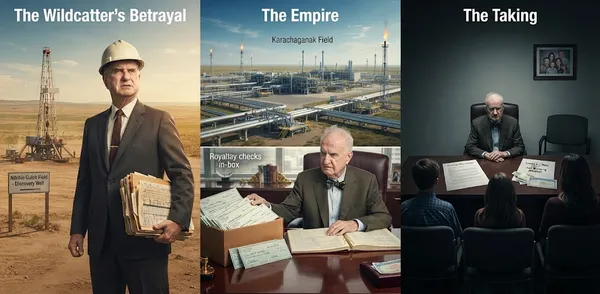
Jack Grynberg came to Denver with $27 and a life behind him that ought to have taught him not to trust fortune. He survived the Holocaust. He found one of the world's great oil fields.
He put the wealth in his children's names because fathers do foolish things when they love their children enough.
Then Rachel, Stephen and Miriam used the gift exactly as the law permitted them to use it. They voted their father off his board.
They locked him out of a bank account holding $161 million.
The old man who had made the fortune lived at the end on Social Security.
In 1993, he put the shares outright in his children's names, without a trust, side agreement, or contractual reservation of control.
He retained only about one-quarter of Pricaspian, which held the Kazakhstan interest, paying $100-250 million a year.
The children received the rest — and all of RSM and Gadeco.
He had not concealed ownership. He had transferred it. For 22 years, the children let their father remain the father. He ran the companies. He signed the checks. He was president.
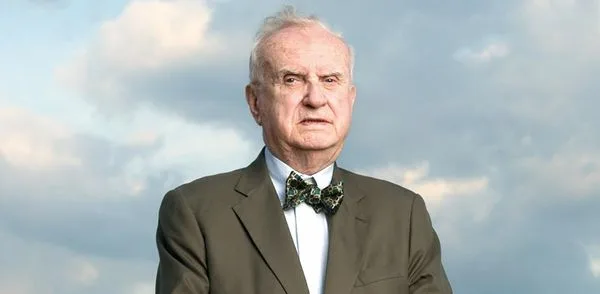
SHAREHOLDERS VOTE
Then one September they remembered that he had made them shareholders. Shareholders vote.
First, they removed his authority over the accounts. Then they removed him as president. Then they reduced the board from five seats to four and eliminated his seat.
They did not need to seize the company. They already owned it.
Jack went to court and discovered that no document promised him lifetime control. The man who had given everything to his children had never imagined that one day he would need protection from them.
He owned nothing because he had arranged it that way. And therefore, the law said, nothing was his to command.
When the family arrangement ended, the legal arrangement remained.
This is the part about how you take everything from a man before he dies. Not by killing him. Not even by defeating him. By making survival itself too expensive.
A man may be dispossessed long before he is dead, and may yet walk through the rooms and know the names of the men and the wells and the leases and the countries, and know that all of it was once held together by the force of his own will, while those who inherited it wait not for his consent but for the simpler thing, which is time.
THE OFFER HE REFUSED
Before the lawyers, the receiver, and the misery of court, the children told Jack, according to Webb, they were tired of living off his allowances.
They made millions per year and did nothing. But that was not enough. They were taking the companies. The wells. The African concessions. The Caribbean concessions.
They had Kazakhstan. That alone would give them roughly 30-50 million per year each. They did not need anything else. No more speculation. No new wells.
They planned to take all the complicated business he had built.
He could keep an office. They would pay him $600,000 a year to run Pricaspian. His children were offering their father a job in his own life.
First he made them owners. Then they offered to make him an employee.
Jack had built something that could take in $250 million in a year. His children offered him $600,000 to stop being Jack Grynberg.
Jack refused.
THE RECEIVER
Then the children sued their father. They asked a judge to put someone else in charge of the companies. They selected the receiver. The court approved their choice.
The stranger arrived with authority over Jack.
The receiver brought people into the building. Engineers. A land woman. An accountant. A geophysicist. The old company had acquired new experts.
Gene Webb, who had run operations for Jack for 15 years, spent his career around people like that.
"They sat around and looked at things," Webb said.
The receiver did not drill. It did not renew concessions. The children wanted Kazakhstan, the big money, and no more risks.
Webb says they did not listen to the men who knew the fields. There were profits out there, though there were risks.
The father was fighting. He had loyal employees.
A psychiatrist (who had never examined Jack) had already said the father had lost his mind.
Then, Webb says, one of the engineers was paid $90,000 to write a report criticizing the employees loyal to Jack.
It became easier to replace everyone once everyone had been declared defective.
Then, oddly, the receiver produced a document that supported Jack.
TEN BILLION DOLLARS OF "POTENTIAL"
Jack always talked in numbers big enough to make sane men nervous. Thirty billion barrels. A trillion dollars beneath the Aegean.
His children and their lawyers offered these numbers as evidence that the old oil man had finally gone too far.
Perhaps he had begun believing in buried treasure. Of course, buried treasure was how he had made them rich.
This was a curious charge to make against a wildcatter who had become enormously rich by believing enormous things before other people did.
Say numbers like that in a boardroom, and men whisper. Say them before you find the field, and they call you a fool. Find the field, and they call you a genius.
Get old, and they call you crazy again.
Jack did not say proven. He said potential. Possible. Probable.
These are the words oil men use when they are talking about what may be beneath rock no drill has yet pierced.
Jack knew the difference. He had spent his life making money from the difference. An estimate becomes madness only after someone removes the word possible.

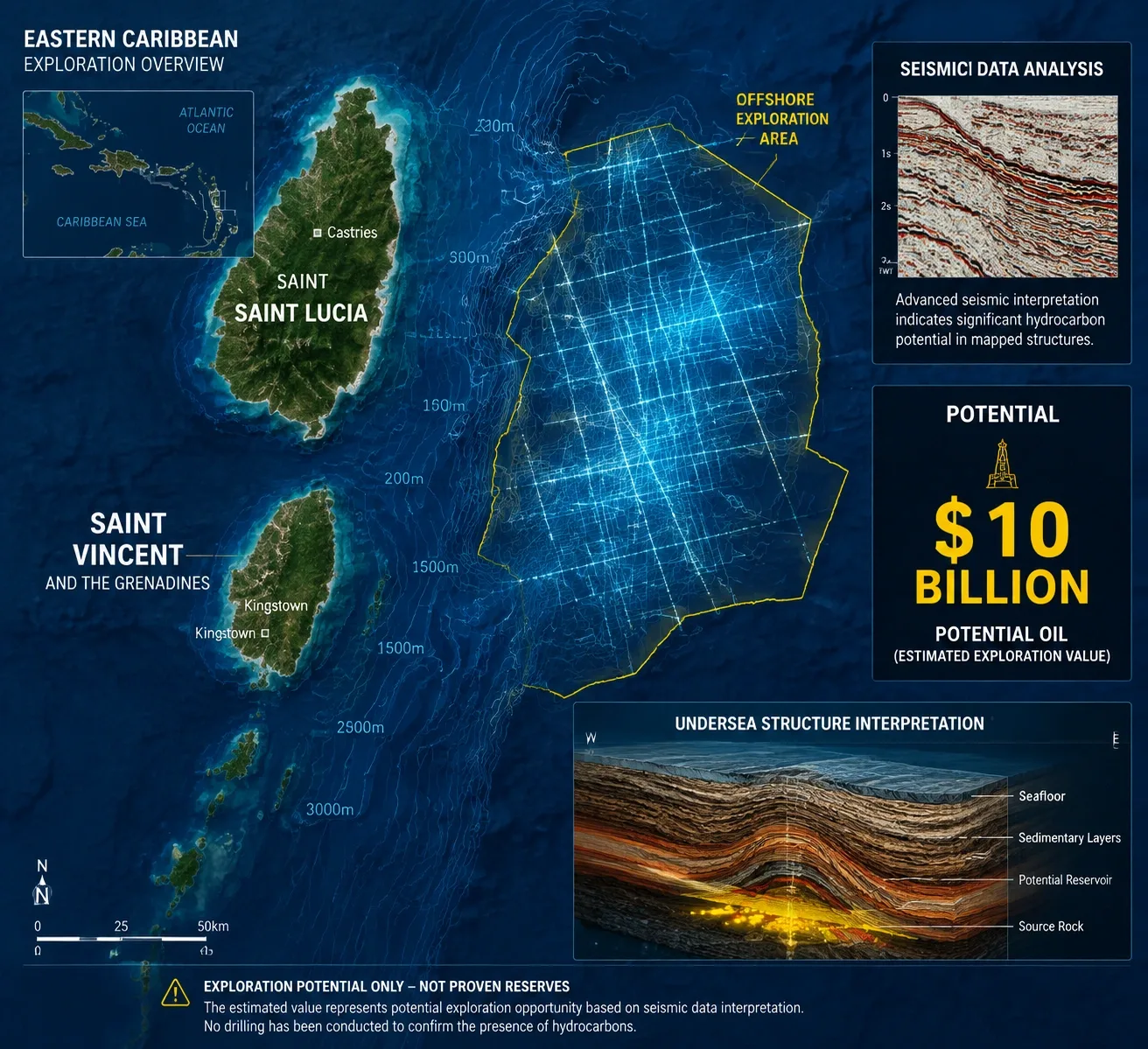
Then the receiver hired a geophysicist. He looked at the seismic data from Jack's Caribbean concessions. St. Lucia. St. Vincent. And he came back with a word. Potential. And a number. Ten billion dollars in potential oil.
Their expert looked at Jack's dream and found ten billion dollars in potential.
Webb knew St. Lucia. He had been there. He said the former prime minister told him what RSM had to do to keep the concession. Webb carried the message back.
He told the receiver.
"They didn't listen to me."
And the concession went away. Ten billion dollars of possible oil remained beneath the sea. It simply belonged to somebody else now. Rock does not care who lost the lease.
THE LEASES THEY THREW AWAY
The children said Jack drilled too much. Oil men do have this defect. They keep drilling for oil. They solved the problem of Jack drilling too much. They stopped drilling.
Gadeco, the family's domestic exploration company, held leases in the Williston Basin, the Bakken country, where a well could come on at 1,500 to 2,000 barrels a day. Gadeco had drilled six wells on one 1,280-acre unit, and Jack had something an oilman likes to have when he wants to drill another well.
A drilling rig.
Six wells in North Dakota. Steel in the ground. A rig waiting. Oil coming up. The seventh well was not an abstraction.
A hole that costs ten million dollars is expensive. A hole that keeps giving you oil is something else. These did, for years.
Under North Dakota's spacing rules, you cannot hold a 1,280-acre unit with a single well. You have to keep drilling, or the mineral owners can come after you. Jack wanted to keep drilling. He had the rig.
The reckless man wished to spend money to preserve the asset. The prudent ones saved the money and lost the asset.
In 2014 and 2015, the children, as Gadeco's owners, would not approve any more wells.
Another company waited. Then it signed top leases behind Gadeco's. The fight went to court. The other company won.
Gadeco kept a producing well and lost much of the land around it. Land never stays unwanted long when oil lies under it.
"Would Jack have wanted to continue to drill?" I asked.
"He had a drilling rig up there," Webb said. "He wanted to continue drilling."
"Do you think if they had done the wells, they would have made a profit?"
"Yes. Some of those wells were very good."
The reckless old man had six producing wells and a rig. The sensible children stopped drilling. Another company took the acreage.
No doctor was summoned. No one examined Rachel's judgment.
STARVED
Once the receiver was in and the lawsuit filed, Jack Grynberg needed lawyers. Lawyers cost money. He had none.
He had none because, in 1993, he had put everything in his wife's and children's names so no creditor could get it. Now the creditors he never imagined were his wife and children.
The Kazakhstan checks kept coming. Tens of millions at a time. Jack still owned part of Pricaspian.
But Webb says he never got the money.
"So even though there were distributions in Pricaspian, they starved him out?" I asked.
"I know they never gave him any money out of it," Webb said. "They all had plenty. Already had a lot of money in the bank, and Jack didn't have anything."
The only money Jack could get was the oil and gas production he had put in his wife Celeste's name — three to five million dollars a year, depending on the price.
To get half of it, he had to divorce her. He did not want the divorce. Celeste had already moved out of the big house to a condominium near Cherry Creek. But it was, Webb said, "the only way he could defend himself."
The old man divorced the woman he did not want to divorce so he could afford lawyers to fight the children he had not wanted to fight.
"So they waited him out till he died," I said.
"That's how I would approach it," Webb said.
By then he was 86. They had time. He did not.
WHAT STEPHEN SAID
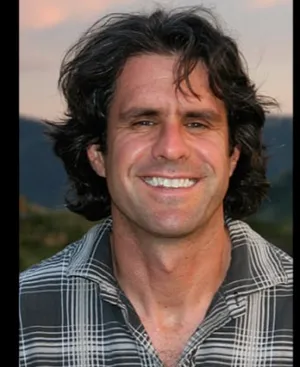
At the funeral, his son, Stephen, spoke about those final years. After Jack was fully defeated.
His father, he said, "sprinted wildly through life, and then suddenly, in a way, it wound down to a near stop — without his empire to run, without his agile mobility, without his sharpest mind."
It is a tender picture if one forgets how the empire left his hands. One might almost imagine weather had taken it.
In that "newfound space," Stephen said, "I found parts of a father that I had been looking for my whole life."
Perhaps he did. Stephen meant it kindly. That is what makes it sadder. He spoke of the space as though life had opened it naturally. But the children had removed the empire. The quiet in which Stephen found his father was the quiet they had forced around him.
THE FUNERAL
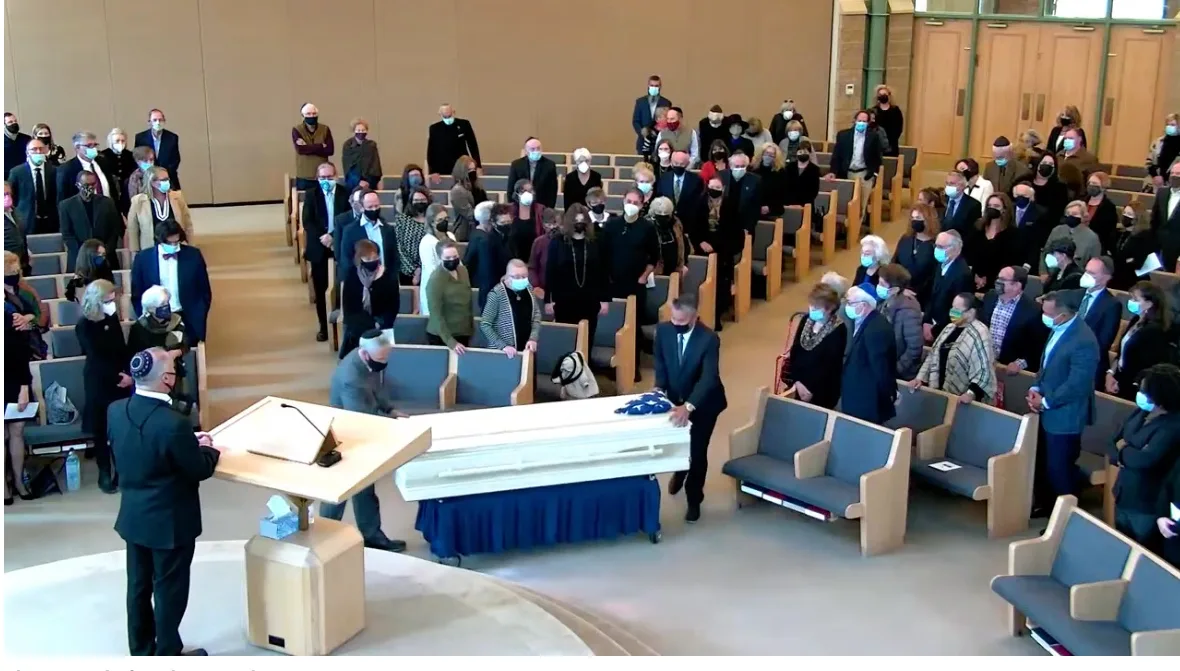
Jack died on Oct. 11, 2021. The funeral was in Denver.
Rachel remembered one of her father's sayings: they can take away your money, but they cannot take away your education.
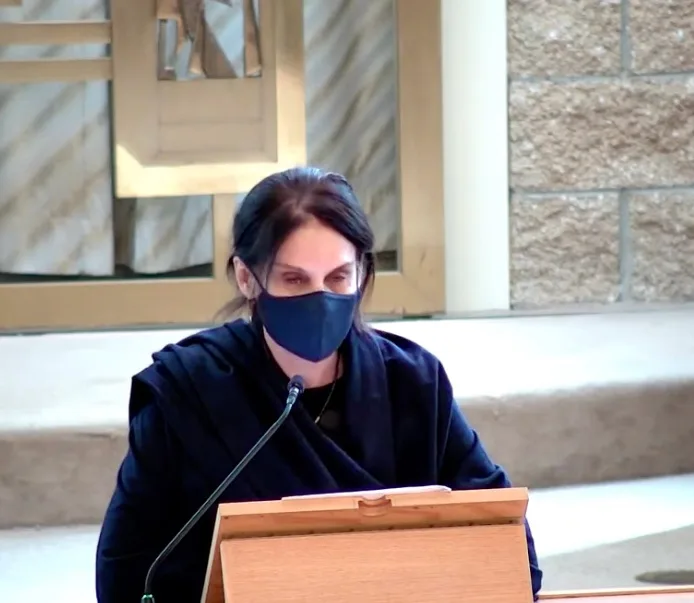
She opened her eulogy this way: "First, I just want to thank all of you for being here to honor my father. I know that he is here and appreciates it, as do we."
"All of you," Rachel said.
As it happens, "all" had been curated.
All of you. But not all of his.
Webb says the conservator's lawyers gave the instruction.
Forbidden from attending the funeral were:
Jack's employees. His former employees. The people who had worked beside the old man were not to come say goodbye.
"You have to tell these people that no employees can come," Webb recalled being told.
Webb was told to tell Jack's people they could not bury Jack.
"Did they say why?"
"He just told me that they said, okay, tell him. I said okay."
Webb told everyone. And everyone stayed away.
"I don't know how to uninvite people from going to show respect for him," he said. "I guess you can." He thought about showing up anyway. He decided against it.
"Let him rest in peace."
The old hands did not come. The men who knew the wells stayed home. The office people stayed home. The man who carried messages to Africa stayed home.
Jack lay in the casket.
Later in the same eulogy, Rachel said that in his last years her father "could no longer distinguish between friend, family and foe."
It is the line the family used in court. She repeated it at his grave.
When family behaves as foe, confusion is not always madness.
THE OTHERS
Gene Webb was not the only one left unpaid. Susan Stone, a landman who kept the company's lease records from the late 1980s until 2018, got no severance. Bob Bollard, who kept Jack's books for thirty years, was offered only $50,000.
They had worked there for decades. Then they were gone. Jack paid what he could himself. Even while fighting his children for access to money, he tried to take care of the people who had worked for him.
The office emptied slowly. Twenty people. Then ten. Then none.
Webb's travel to Kazakhstan and Cameroon in 2018 and 2019 — the $13,000 in expenses the family later called unauthorized — was authorized, he says, by the children's receiver. The one the court approved at their request.
Sometimes permission expires retroactively.
WHAT THEY GOT
Let me be plain about what the children were protecting.
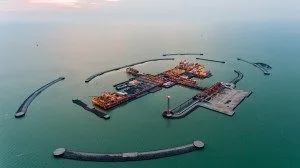
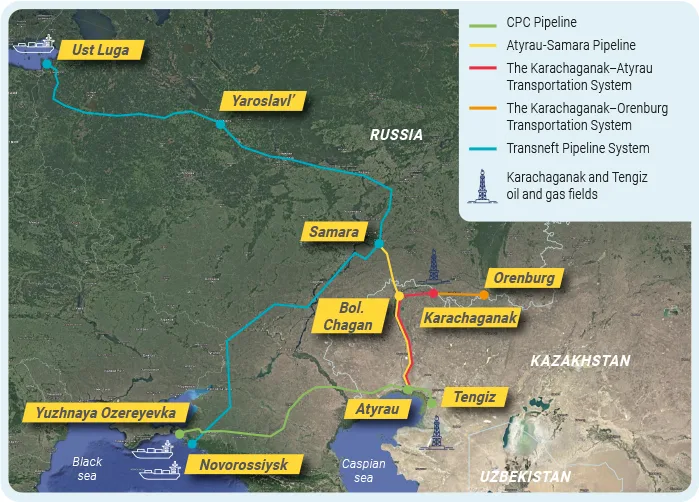
Under every argument sat the field. The Karachaganak agreement runs to 2035. Governments change. Shares change. Jack is dead. The field keeps producing. Every few months, another check for tens of millions.
The father is gone. The field is not. Oil comes up. Checks go out.
The dead man keeps earning money for the living.
Not one of the three children found the field. Not one negotiated with Nazarbayev, or brought in British Gas and BP in 1992, or sued British Gas in Texas in 1993 and won the 15 percent that pays for the ballet tickets.
The children inherited the result.
Jack had done the going. The bargaining. The suing. The risking. The believing.

They did not cross the steppe. They did not bargain for the ground. They did not smell the drilling mud.
They received checks.
"How much did Rachel actually accomplish?" I asked Webb. "What big successes did Rachel produce, or was it all off her dad's brilliance and daring?"
"None of them had anything to do with oil and gas," he said.
THE ARTIST
Rachel tells a different story.
On LinkedIn, she says she is the chief executive of "privately held energy companies with international interests," who "over the past two decades" has overseen "significant corporate assets and investment strategies" in "high-stakes matters involving multinational companies and sovereign governments."
It does not mention the father in the Stetson.
LinkedIn supplies the usual modern transformation. Inheritance becomes leadership.
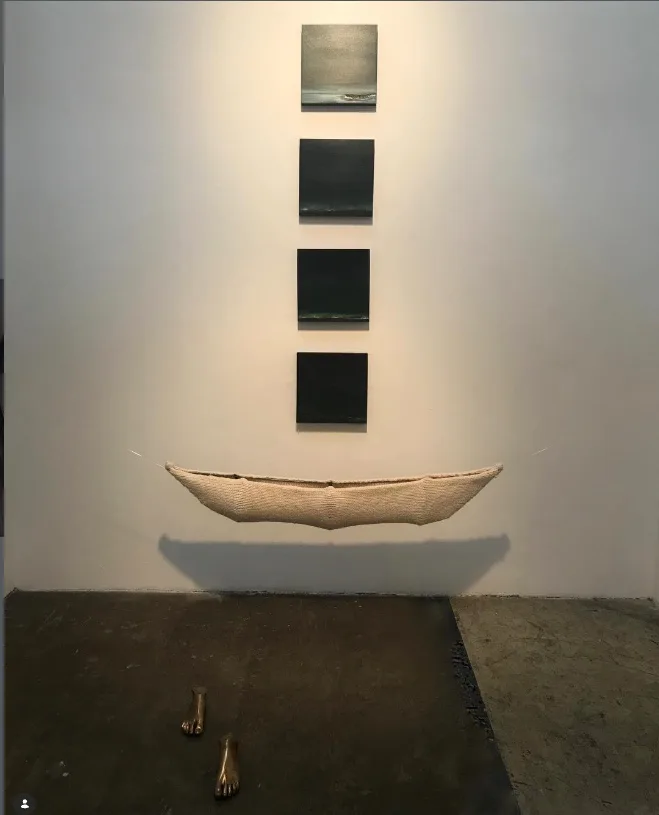
She is also an artist. Her Instagram, Rachel Grynberg Studio, describes her as "a multidisciplinary artist whose work explores history, story, concealment, and revelation."
Concealment and revelation. Those are her words.
She paints the veil. She names the veil. She studies what the veil conceals. And behind the veil stands the father.
The 18th Street Arts Center in Santa Monica, where she has held a residency, lists her as "based in both Los Angeles and Denver," working in painting, sculpture, photography, and installation.
She has exhibited since 1995 — in Italy, at the Rhode Island School of Design, at the Los Angeles Museum of the Holocaust in 2003, and in a Denver gallery in 2000. She took a Wharton MBA in 1991 and, nine years later, an associate's degree in art and architecture from a design college in Los Angeles.
For the two decades Rachel claims she steered an oil empire through high-stakes negotiations with sovereign governments, the Santa Monica Rachel was arranging objects in gallery rooms.
Her father did the negotiations with sovereign governments, in a Stetson and a silk bow tie, and Gene Webb did the audits.
I note only that she led with one when she wanted to be honored by the Colorado Ballet, and the other when she wanted to be a serious artist in Santa Monica.
CONCEALMENT AND REVELATION
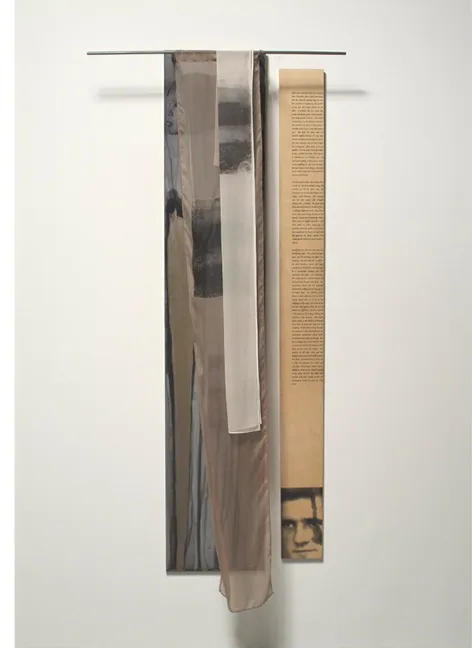
The artist's statement is more interesting.
"Concealment and revelation figure prominently in her work," it reads. "What appears on the surface often veils an inner world not readily apparent, with deeper layers hinting at private aspects of self and the unconscious. She is interested in uncovering stories, peeling away the layers of time and secrecy to catch a glimpse of what lies beneath the surface."
It's a beautiful description of what art can do. Peel away time. Peel away secrecy. Find the story underneath.
Families also have layers. The artist speaks of veils. The daughter lives among sealed rooms. She paints revelation. The father's history waits underneath.
The Cameroon arbitration is confidential. The Texas record that produced the family's fortune is sealed. The probate file that moved her father's $40 million gift to the Colorado School of Mines into the family's hands has never been explained. Cameroon. Texas. Probate.
The funeral was closed to the people who worked for the man in the casket. No member of the family has said one public word about the dozen employees who were not paid, or the old man on Social Security in the Cherry Hills house.
What appears on the surface — the ballet, the Jewish Family Service honor, the artist's residency, the LinkedIn — veils an inner world not readily apparent.
History, story, concealment, and revelation. She wrote that herself.
The history is her father's. The story is his too. The concealment is the family's. The revelation is the part she left to me.
THE FLIGHT TO KAZAKHSTAN
One more name remained in Webb's memory.
And with that name, the story leaves the family house and goes back to where Jack was still Jack.
In 1992, when Jack Grynberg flew to Kazakhstan to look at the Soviet fields, he did not go alone. Beside him was a mining-finance man named Kevin Foo, then working for an Australian company. Jack liked him. Jack gave him stock.
That was how Jack often made partnerships. Not cautiously. Personally. Two men on a plane to Kazakhstan. No ballet. No LinkedIn. No conservator. Just fields, maps and the possibility of oil.
Over the next thirty years, the two men did deals for each other on three continents, and when Jack won a gas concession at Logbaba in Cameroon, Kevin Foo's company, Victoria Oil & Gas, drilled the wells and built the pipeline. RSM Production Corporation kept 40 percent.
They did business for 30 years. Then Jack was gone. The business remained.
Rachel Grynberg has been at war with her father's oldest partner ever since she took her father's company.
Over a 2.14 percent overhead charge. Over operating costs she does not wish to pay under an agreement RSM's own lawyers drafted. Over settlement meetings she books and then does not attend.
And so the old alliances too became part of the inheritance, not as obligations of memory but as territories to be contested after the man who had made them was no longer there to say what they meant.
Why should the old partnership be spared when the old man was not?
That is the question Part 7 will examine.
Rachel Grynberg is invited to respond at any time: [email protected] or 305-783-7083. I hope she does. Every family story improves when everyone willing to speak is heard.
The Grynberg Inheritance (Part 1),
The Grynberg Fortune Stayed in the Family (Part 4),