SOMOZA OUTSMARTED TRANSAMERICA. THE DOJ MADE HIM PAY FOR IT.
How an insurer's refusal to pay became a prosecutor's proof of fraud
THE PROGRAM
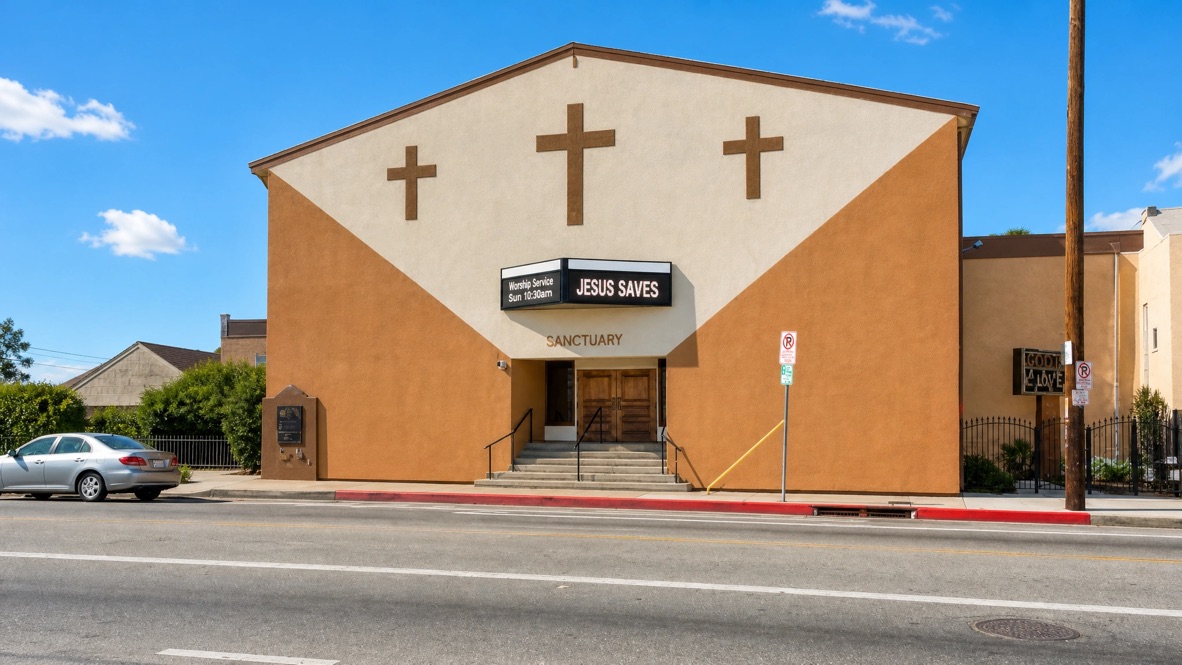
In the early 2000s, Rev. J. Benjamin Hardwick wanted to find a way to provide burial insurance for the poor in his South Los Angeles congregation.
In 2003, he went to financier and tech developer Curtis Somoza in Beverly Hills. Somoza found a way to finance life insurance policies for Hardwick's parishioners in a group of more than a thousand congregants.
His plan was this: outsmart the insurance companies.
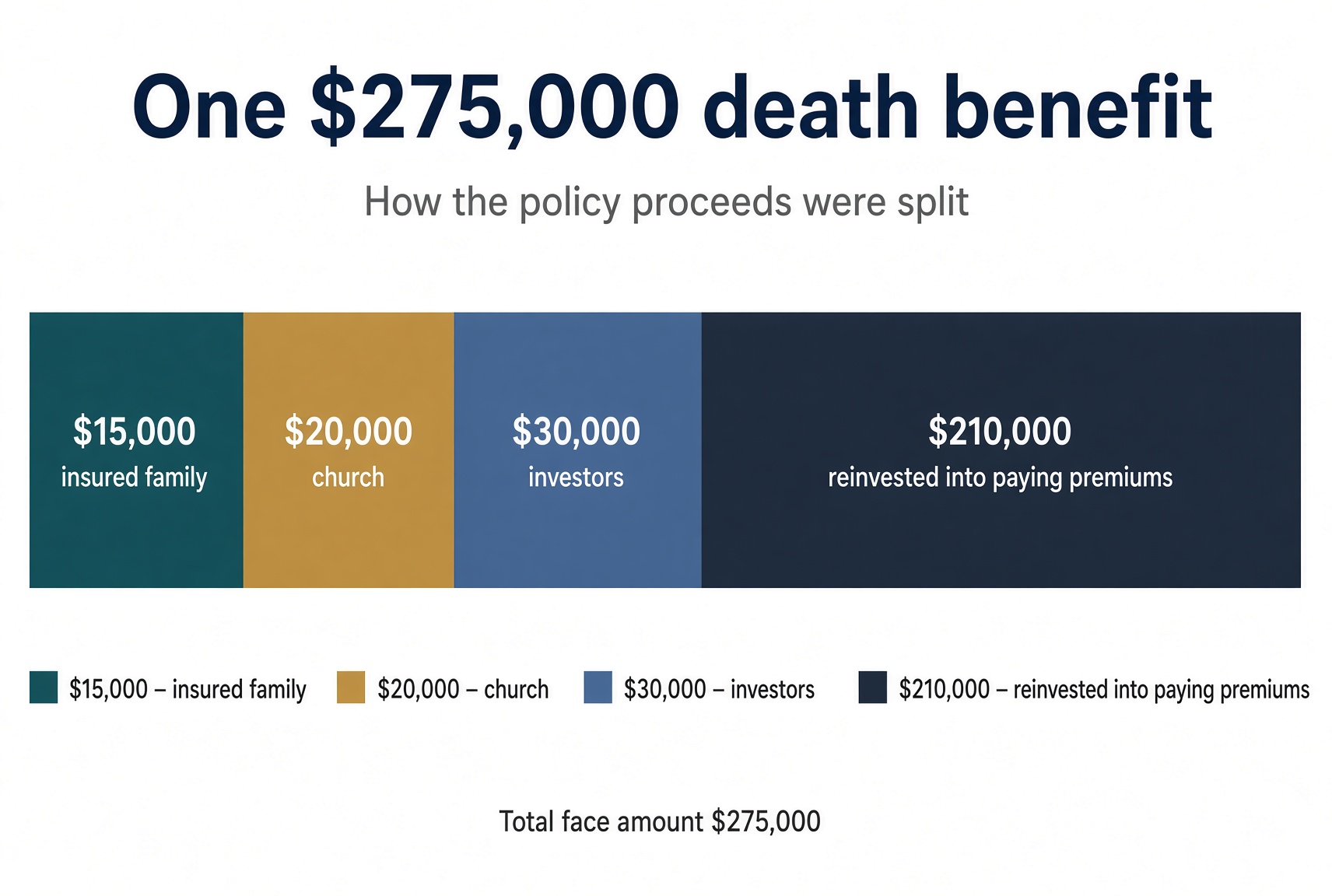
The church would own the policies. The poor who signed up for the pool—and whom Somoza selected—would get free life insurance that paid $15,000 upon their deaths. In addition, the church would get $20,000 for each death.
Investors would pay the premiums. The key was who was selected. Somoza did the selecting.
He also got the investors, more than 50 altogether. The investors weren't doing charity. Somoza promised them a return.
It all depended on Somoza outsmarting the insurance company, in this case Transamerica.
THE MODEL
The trick was to select a group of insureds that would likely die younger over a 30-year period than Transamerica predicted.
Transamerica would base its rates on its actuarial tables.
Insurance companies, including Transamerica, priced their group life insurance on mortality assumptions derived largely from Whites, with a heavy admixture of executives — people expected, statistically, to live longer, more stable lives than Blacks, Hispanics, and poor Whites who lived in high- crime, high-drug areas like South Los Angeles where Hardwick's church was located.
Somoza says he spent 600 hours building his mortality model.
Transamerica predicted 1.6 deaths in the first year for a pool of roughly 1,200 mostly Black insureds.
Somoza predicted 8.3 deaths.
Somoza raised about $33 million from investors for the insurance program.
Upon every death, Transamerica was to pay a $275,000 death benefit. The church got $20,000. The insured's family got $15,000. The investors would get around $30,000, although it varied with the velocity of the deaths and the age of the premiums.
The rest of the $275,000 death benefits - around $210,000 per death - was to go to pay the annual premiums.
DEATH COMES EARLY
By Somoza's account, the first insured died within 48 hours. Five died in five months. None of the five, he says, was over 50.
Some died by violence, some by drugs, some perhaps by poor health conditions that poverty brings, something Transamerica had not considered. Or maybe could not consider.
The Catch-22 for Transamerica was that it could not discriminate by race or zip code, which in banking would be called redlining.
By the time Transamerica's underwriters realized they had been outsmarted, Somoza had insured 2,500 poor people for free.
Transamerica stopped issuing new policies under the program.
But then, when suddenly faced with millions in death benefits within the first two years, Transamerica invoked the contestability period, the two-year window in which an insurer may check whether an applicant told the truth. Every insurer does that. It is typically a file review, and then a check.
Transamerica did not send a check. It went to federal court, deposited the death benefits with the clerk, and let others fight over them.
Had John Smith, a poor Black man in South Los Angeles, held a $275,000 policy on his own, his family would have had their money in weeks. But John Smith held it as one of 2,500 in Somoza's pools. His family waited on a lawsuit.
By the time that case ended, Transamerica had deposited about $3.6 million.
Transamerica's refusal to pay delayed death benefits, keeping investors from getting paid on time.
That became part of the U.S. Attorney for the Central District of California's proof that Somoza's underlying enterprise was fraudulent.
Transamerica held the money. Somoza got the blame.
WHAT BECAME OF THE POLICIES
The policies did not disappear. They remained in force. The death benefits were ultimately paid to the families of those who died, and the church also got paid. And the policies on the living — the majority — remain in force 20 years later.
The investors were another matter. Most of them lost their money. Not because the policies failed. They didn't.
Not because Somoza's model was wrong. But because it was right and Transamerica balked.
First, Transamerica delayed, then the Justice Department stopped the plan before it could pay out.
The Justice Department counted every dollar the investors had not yet been paid as a dollar Somoza had stolen.
The investors did not lose the asset. The Justice Department took it from them, in the name of protecting them. Then it called them Somoza's victims.
Injustices like that happen in America from time to time. The irony lies in the name of the actor: The Department of Justice.