Connecticut Governor Acknowledges Fragile State of American Due Process
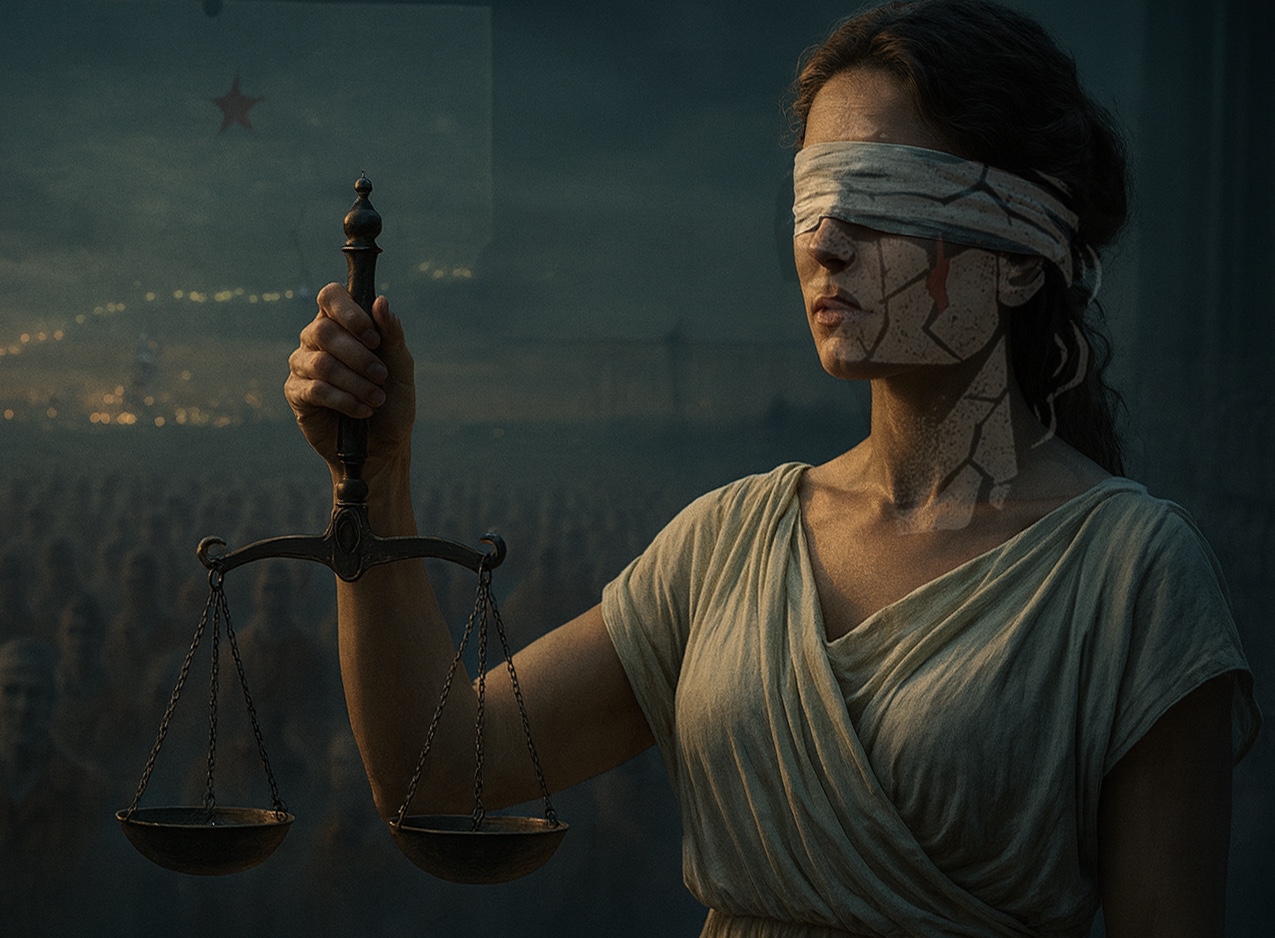
Connecticut Governor Ned Lamont did something rare for a politician: he admitted the system is fallible. He issued a formal proclamation that admits the system is fallible.
Lamont declared September 9, 2025, International Falsely Accused Awareness Day in Connecticut. The statement called on citizens to reflect on “fairness, truth, and justice in the legal system.”
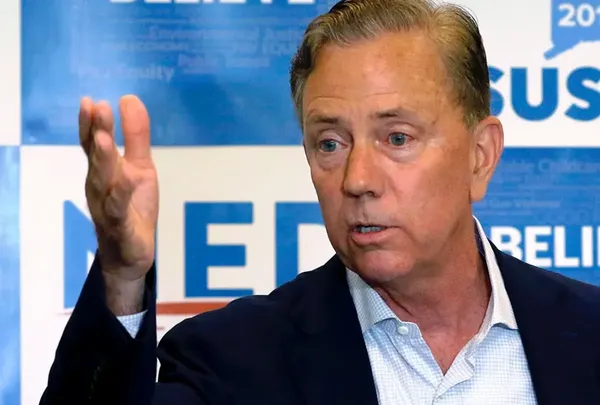 Connecticut Governor Ned Lamont
Connecticut Governor Ned Lamont.
He proclaimed in part:
“WHEREAS, the justice system of the State of Connecticut and the United States is founded on the principles of truth, fairness, and the presumption of innocence until proven guilty…
“WHEREAS, national surveys indicate that a significant portion of Americans have either experienced or know someone who has experienced a false accusation…”
The word that matters is ‘significant’—Lamont’s term for how often false accusations touch Americans. Lamont says “significant,” not “rare.” That’s an admission this problem touches millions.

Lamont went on to proclaim:
“WHEREAS, International Falsely Accused Awareness Day serves to recognize the importance of due process, strengthen protection for the wrongly accused, and promote justice for all.”
THEREFORE, I, …urge all citizens to reflect on the importance of fairness, truth, and justice in our legal system.”
He asks the public to “reflect.” That’s a comfortable verb—no vote, no budget, no change—while others still face false accusations and, too often, false convictions.
Still, what Lamont has done is to admit that America convicts the innocent often enough to justify a state holiday.
So how does this incredible injustice pass in the name of justice, or rather, our criminal justice system?
The Vanishing Trial
It began with the extinction of the American trial—or at best, its endangerment.
In federal court, fewer than 3% of cases ever reach a jury. Ninety percent end in plea bargains—agreements struck under pressure, often with threats of longer sentences if defendants refuse. Prosecutors make you a plea offer: five years if you plead, fifty if you lose at trial.
And people fold—guilty or not.
Careers Built on Convictions
Try to understand the prosecutor’s position. Careers do not advance through dismissed charges of an innocent person or measured restraint. Promotions are won on conviction rates, headlines, and years added to sentences.
The structure of incentives has created a profession where success is not measured by justice, but by body count.
Tilted Stage
Then, the trial itself is slanted in favor of the prosecutor. This, in itself, encourages the innocent to take plea bargains.
Courtrooms tilt toward the state: prosecutors sit closest to the jury, open first, and close last—bookending the defense and shaping first and final impressions.
Juries That Don’t Know Their Power
Then, the last defense—the juries—are woefully uninformed.
Few jurors know they may refuse a judge’s instructions if they think the law is unjust. You want the proof – a judge or the prosecutor cannot punish a jury. If you cannot punish, you cannot compel.
This is designed to allow jurors to vote according to their conscience.
In colonial America, jurors knew that judges were not above them.
Jurors nullified prosecutions under the Crown. In the age of slavery, jurors refused to convict abolitionists under the Fugitive Slave Act.
Today, judges instruct jurors to follow the judge’s directions without question. Many are intimidated by the bench, cowed by prosecutors, or fearful that if they defy the prosecutor’s narratives, they will somehow be punished.
American juries retain the power to acquit as a matter of conscience—often called jury nullification—yet courts generally forbid instructing jurors about it. The power exists; most jurors never hear about it.
Jurors are supposed to be an independent and constitutionally equal body, as much as the judiciary, and to repeat: a judge cannot punish a juror for voting according to their conscience, even if it is in direct defiance of the instructions of the court.
Power and Corruption
Still, the problem lies in the power of the prosecutor. They have way too much.
Lord Acton warned, “Power corrupts, and absolute power corrupts absolutely.”
Prosecutors wield extraordinary power. Rarely are they punished for misconduct. Sanctions for Brady/Giglio violations are rare; bar discipline and reversals seldom reach the individual prosecutor.
The result is the inversion of Blackstone’s principle—the idea that “it is better for ten guilty men to go free than for one innocent to suffer.” In practice, the American system prefers the maxim “better that innocents be destroyed than prosecutors lose.”
Breaking the Silence
By naming the falsely accused, Lamont broke the unwritten lines of solidarity among the police, the judges, and the prosecutors.
A governor recognizes that innocence is not always protected, and due process is being forgotten.
Toward September 9
On September 9th, advocates and families of the falsely accused will gather at the Legislative Office Building in Hartford. They will share stories of wrongful convictions.
There it was, simple as rain: the governor said the state was not infallible. That admission was made. He proclaimed a day for the bruised and broken by-products of a prosecutor’s system of justice.
The result is clear: many who were called guilty were not. Lamont said it. And wasn’t that something?
If we want action instead of “reflection,” start here:
Connecticut could adopt reforms, such as mandatory jury education on nullification, to ensure jurors understand their constitutional right to judge both facts and law. Independent oversight boards could review prosecutorial misconduct, such as withholding exculpatory evidence, with public reports to ensure transparency and accountability. Capping sentencing disparities between plea deals and trial convictions—say, no more than a 20% difference—could reduce the likelihood of coercion. Finally, a clear legal standard for prosecuting malicious false accusations, requiring proof of intent, would deter lies while protecting legitimate claims.
Lamont can do more than reflect. He can take action by proposing laws that punish proven lies with the same enthusiasm it brings to press conferences.
Create criminal liability for knowingly making false allegations and for willfully suppressing exculpatory evidence—paired with safe harbors for timely recantation—to punish lies without chilling good-faith reports.
An 8-point “do-this-now” agenda
Open-file discovery by statute (criminal + juvenile). Automatic, continuous, with enforceable sanctions for late or hidden exculpatory evidence.
Trial-penalty cap: Limit sentencing exposure post-trial to, say, ≤20% above the best good-faith plea offer on the table (with written plea records preserved).
Independent Prosecutorial Oversight: A watchdog outside the AG’s chain with subpoena power, public reports, and authority to refer for discipline or charges.
Jury rights orientation (plain English): Before evidence, instruct that jurors decide the case, cannot be punished for a verdict, and must judge credibility independently. (Courts can keep their law-application instruction; the point is juror independence and anti-intimidation.)
Mandatory video of all custodial interrogations and eyewitness ID reforms (double-blind, confidence statements).
Brady/Giglio tracking: A statewide do-not-call list for witnesses and attorneys with sustained honesty violations; disclosure to defense mandatory.
Parity measures for the defense: Fund investigators and experts at rates comparable to the state; require early access to forensics.
False-accusation deterrent with safe harbors: Create a specific offense for knowingly false criminal allegations (proved by clear evidence of intent), paired with a recantation safe harbor to protect good-faith corrections.
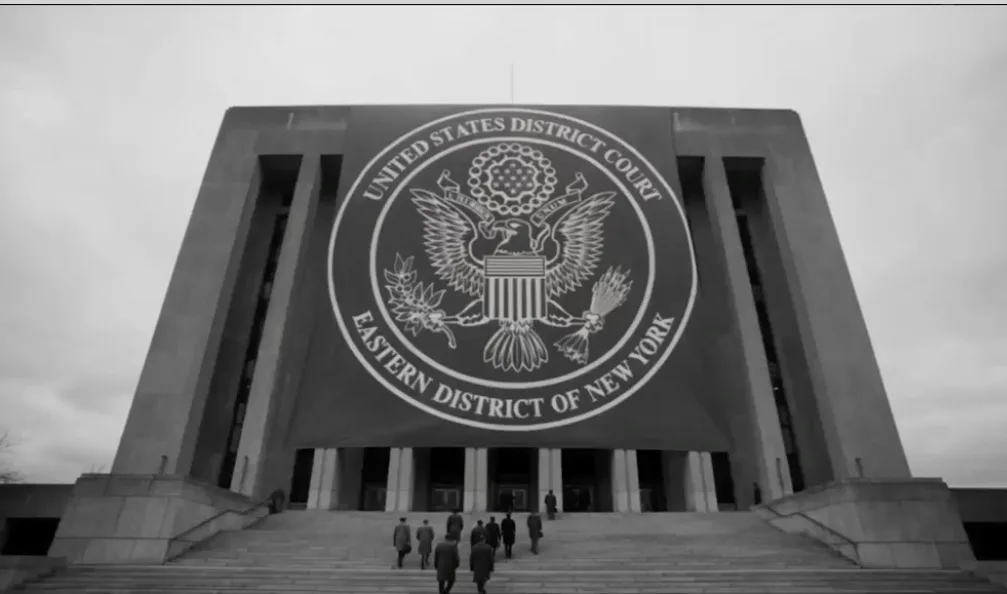
 In this courtroom, I rule. I am the prosecutor. pay not attention to that tiny man in the black robes. he's an automaton. I am in. charge.
In this courtroom, I rule. I am the prosecutor. Pay no attention to that tiny man in the black robes. I am in charge.
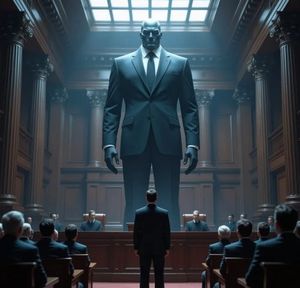 The courtroom has lost its relative proportions. The prosecutoir commands, the judge's obey. Convictions are required.
The courtroom has lost its relative proportions. The prosecutor commands, the judges obey. Convictions are required.

Blackstone can kiss my ass, whoever that asshole is, LOL.
An occasional innocent person going to prison is the price humans must pay to have ANY justice system at all.
Why? Because 'perfect' justice (100% perfect justice) is a fairy tale that could never happen.
Why? Because humans are IMPERFECT.
Frank is an ignoramus for suggesting otherwise, LOL.
Frank's proposed 'justice reforms' are a joke that would not eliminate innocent people getting convicted.
Truth is, Frank honestly believes that it's better to set 100 guilty men free (not just 10) — if it helps to prevent one innocent person from going to prison.
But if 100 guilty men keep going free (in order to protect the 1 innocent person) — then society will be destroyed by rampant and violent crime.
Thus, I fully accept that an occasional innocent person will be convicted and go to jail.
Would I have the same attitude if the innocent person happened to be one of my own family members or friends? Of course not, LOL.
Am I being hypocritical by admitting that? Yes, because ALL HUMAN BEINGS are hypocritical when it comes to their own family and friends.
The main difference between myself and other people is that I freely admit this truth, while most others will deny that they're hypocritical. LOL.
Yes, every person reading this comment is a HYPOCRITE just like me. Including Frank.
Convicting an occasional innocent person is simply the price we must pay for having an imperfect justice system managed by imperfect human beings.
If we can't cure world hunger then we can't have perfect justice either.
People are starving right now — yet every person reading this is likely doing NOTHING to help donate extra money or food to help save a few extra lives. Why?
Oh… And the REAL problem isn't plea deals. Frank is wrong there.
The REAL PROBLEM is that the 'maximum' penalties (set by congress) are way too high for most simple crimes (non-violent crimes) in the United States.
I agree that maximum sentences are too high for many non-violent crimes, especially compared to Europe. We should be reducing the maximum sentences for non-violent crimes rather than altering plea deal percentages.
For example, most non-violent federal crimes (with a 20-year max sentence) should be lowered to a 5-year max sentence.
Then, fairer plea deals could be made (i.e., 12 months if you plead guilty, or 5 years if you go to trial.
But it will not eliminate the occasional innocent person going to prison. That can never happen.
Have a good day. 🙂