Sandusky Prosecutor Joseph McGettigan Dies as Court Reviews Allegations of His Misconduct; Cause of Death Unknown

Joseph E. McGettigan III died on December 31, 2025. He was 76. His family did not disclose the cause of death.
He died three months after an 84-page post-conviction petition was filed in September 2025, alleging serious prosecutorial misconduct in the Sandusky case.
Joe McGettigan
The filing accused him of manipulating witnesses, concealing exculpatory evidence, and participating in a financial arrangement that placed a key witness’s multimillion-dollar trust under prosecutorial control.
McGettigan, as a senior deputy attorney general in Pennsylvania, first gained national attention in 1997 as a prosecutor in the murder trial of chemical heir John du Pont. Fifteen years later, he led the prosecution of former Penn State assistant football coach Jerry Sandusky on charges of sexual abuse.
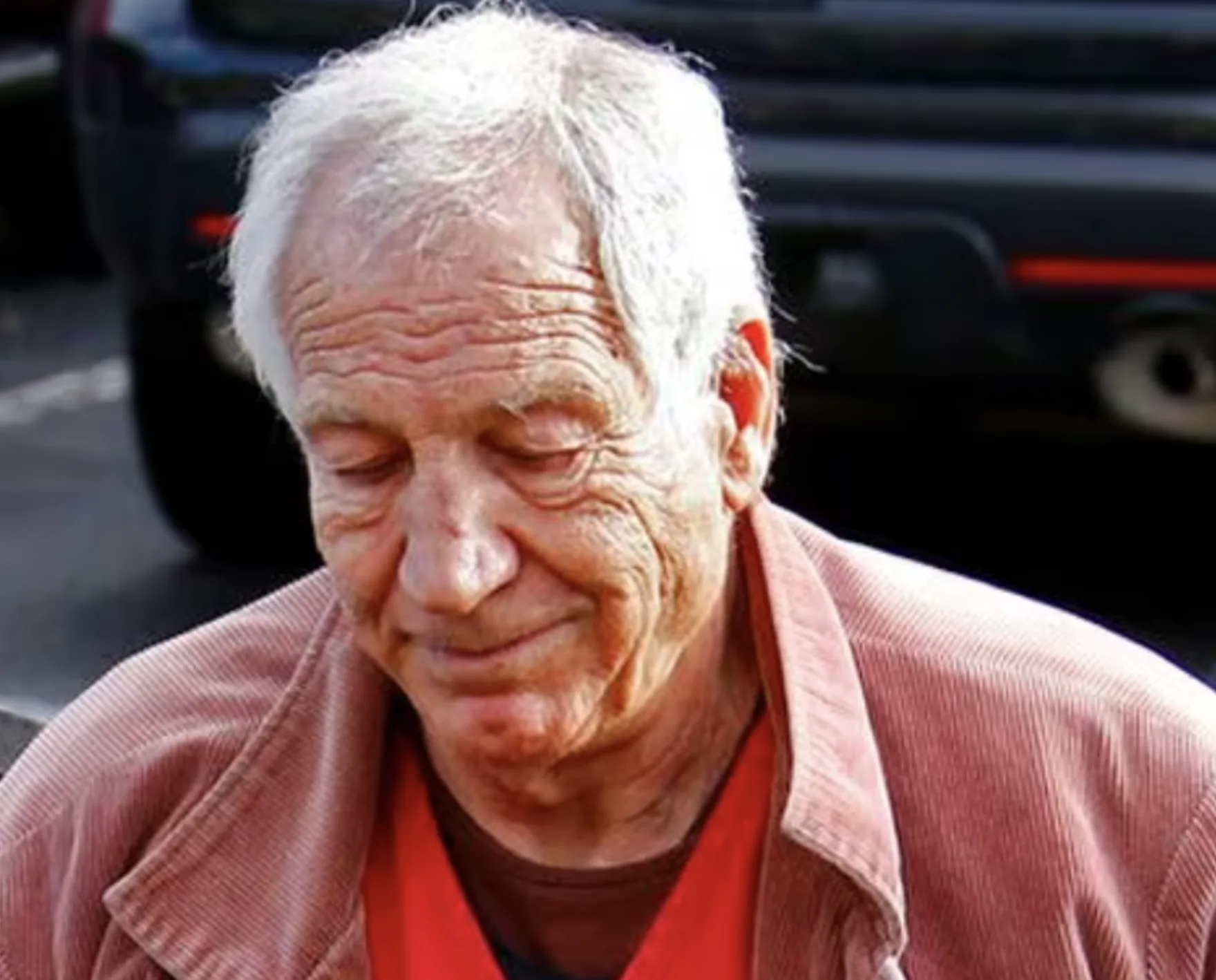
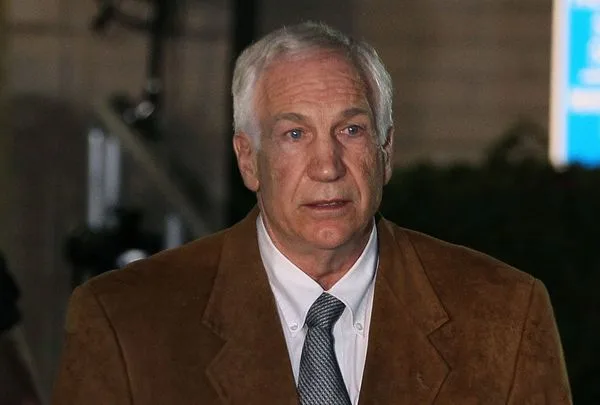 Jerry Sandusky,
Jerry Sandusky
The jury convicted Sandusky on 45 of 48 counts. Obituaries described McGettigan as relentless and devoted to protecting children, without mentioning the financial arrangements now under court scrutiny.
The Trust Raises Questions
On April 16, 2015—three years after the conviction of Sandusky—a trust was established for Sebastian Paden, “Victim 9” in the Sandusky trial. Paden had received a $20 million civil settlement from Pennsylvania State University.
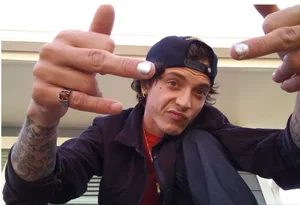 Sabastian Paden
According to the trust document attached to the September 2025 PCRA petition, the trust vested authority in a three-member Trust Protective Committee. Its powers included approval or veto of any distribution exceeding $100,000 and the authority to remove and replace the corporate trustee for any reason. Each committee member was entitled to annual compensation, plus hourly professional fees, to be paid from the trust.
They were:
Frank Fina, prosecutor in the Sandusky case
Gay Warren, McGettigan’s wife
Lauren Cliggitt, Paden’s therapist
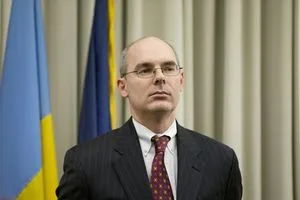 Porn king Frank Fina
Frank Fina
The arrangement placed the prosecution team in control over the financial independence of a witness whose testimony was central to the conviction.
Loans That Came Before the Money
Less than five weeks after Jerry Sandusky was convicted, Sebastian Paden entered into high-interest loans that were routed through lawyers McGettigan had directed him to. It began with Paden taking a $50,000 advance from US Claims at a 27 percent interest rate. By the time Penn State finalized its settlement in April 2015, the debt had grown to more than $104,000. The paperwork shows that the agreement was sent directly to Paden’s civil lawyer, Stephen Raynes, before any settlement was reached.
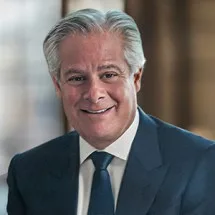 Attorney Stephen Raynes
It is unknown whether, and to what extent, McGettigan received referral fees for arranging the loan.
Paden had approximately $12 million remaining in his trust, yet McGettigan only permitted him to live on $52,000 to $78,000 per year—well under 1% of his own funds. His funds were frozen, and major expenditures required approval from a committee that included two individuals affiliated with the prosecution, who were paid to restrict his access.
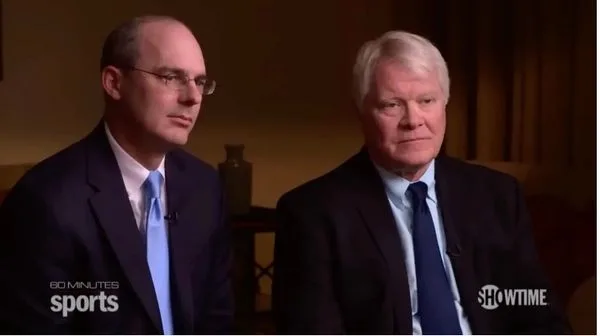 Prosecutors Frank Fina and the late Joseph McGettigan
Prosecutors Frank Fina and Joseph McGettigan
Paden was rich on paper. In practice, the prosecutors whom his mother said helped him fabricate the story decided what he could have and what they could pay themselves.
From Prosecutor to Private Practice: A Revealing Timeline
During the Sandusky case, McGettigan directed Paden to civil lawyer Dennis McAndrews. McAndrews’ firm handled the trust and then sent the case to civil attorney Stephen Raynes. Raynes later secured a $20 million settlement from Penn State. In 2013, McGettigan left the Attorney General’s Office and joined McAndrews Law Offices.
 Attorney Dennis McAndrews
The Mother Who Swears Her Son Was Coached
In a sworn affidavit obtained during my investigation, Paden’s mother attests that her son repeatedly told her that Sandusky never molested him. According to her affidavit, that account changed after lengthy meetings with McGettigan.
Marie swears that McGettigan told her son, “You will never have to work a day in your life,” and that he referred him to civil attorney Dennis McAndrews.
The Contradiction McGettigan Put Before the Jury
Joseph McGettigan personally examined Aaron Fisher and Sebastian Paden. Under oath, each gave the same claim.
Paden testified:
Prosecutor: “How many times did you stay at the defendant’s house over the course of about three years between 2005 and into 2008?”
Paden: “Every weekend from Friday to Saturday.”
Prosecutor: “Do you know how many times that was?”
Paden: “Between 150, maybe 100.”
Fisher testified to the same thing:
Prosecutor: “Did you stay at the defendant’s house a lot of times?”
Fisher: “At first, it was the occasional weekend, then—”
Prosecutor: “Every weekend?”
Fisher: “Yeah.”
Prosecutor: “Between 2005 and 2008… did you stay there 50 times or 100 times or more?”
Fisher: “It was probably close to a hundred, over.”
Both men said they were alone. Both said it was the same basement bedroom. Both said it happened nearly every weekend for the same three years. Three years contain 156 weekends. Two mencould not each be alone on the same bed, in the same room, at the same time, for the same weekends.
McGettigan heard both stories. He put both on the record. He never asked either witness how the other could also have been there. He never told the jury there was a conflict. He never corrected it.
The defense did not cross-examine on this point at trial.
Both witnesses later received multi-million-dollar settlements based on the same impossible timeline.
At trial, Paden said he stayed at Sandusky’s home almost every weekend for three years. His mother swears that is false. She says he went only ten to fifteen times, usually on football weekends and with other boys present.
Another Accuser Recants
In summer 2025, Ryan Rittmeyer—”Victim 10″—submitted a sworn affidavit describing psychological manipulation by McGettigan. Rittmeyer attests that he was told his role was “critical to stopping a predator,” and that McGettigan assured him that “trauma fragments memory,” an explanation that, he says, allowed him to testify to events he did not recall.
He describes a six-hour pretrial meeting in which he was kept in a small office, repeatedly questioned, and felt he could not leave until his answers confirmed “the case narrative.” After testifying, Rittmeyer received a $5.5 million civil settlement from Penn State University.
At trial, Rittmeyer described Sandusky demanding oral sex in a “silver convertible.” The jury was never told Sandusky never owned a convertible.
The Off-the-Record Meeting
 They met in a conference room at a hotel instead of a courtroom. This way they could keep nice and quiet.
On December 12, 2011—the night before Jerry Sandusky’s scheduled preliminary hearing—prosecutors Joseph McGettigan and Frank Fina met privately with defense attorney Joseph Amendola at a Hilton Garden Inn. Judge John Cleland was present. Sandusky was not. There was no court reporter.
Judge John Cleland rushed the trial despite the defense not having sufficient time to study the evidence.
At that meeting, Amendola agreed to waive Sandusky’s right to a preliminary hearing. That decision blocked any early testing of accusers’ claims and any challenge to recovered-memory testimony. In return, the prosecutors agreed not to seek higher bail and set a fast trial schedule. The case went from indictment to conviction in seven months.
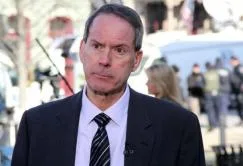 Ethics challenged Joe Amendola
Attorney Joe Amendola
None of this was put on the record. The meeting came to light four years later, after the conviction.
McGettigan helped arrange a deal that stripped the defense of its first chance to test the case—and he did it off the books.
The Suppressed Recording
McGettigan had a recorded interview with Penn State janitor Jim Calhoun. In it, Calhoun said Sandusky did not commit any abuse. In the recording, Calhoun is clear: Sandusky “never did anything at all.”
McGettigan did not disclose that recording to the defense.
Instead, prosecutors told the court that Calhoun suffered from dementia and could not testify. Rather than play the recording or call Calhoun as a witness, McGettigan presented testimony from a different janitor, who told the jury what he claimed Calhoun had said that Sandusky had molested an unnamed boy at Penn State.
The jury never heard Calhoun’s own words.
McGettigan replaced a recorded eyewitness denial with second-hand testimony that pointed the other way—without telling the court or the defense that the recording existed. It required a prosecutor to suppress a recording, declare a witness unfit, and then substitute testimony that contradicted the witness’s actual statements.
McGettigan’s death means certain questions will never be answered under oath:
Why did you refer Paden to the firm you later joined?
Why was your wife placed on a paid trust committee controlling a key witness’s funds?
What happened at the Hilton Garden Inn?
The documents are.
Where The Case Stands
The allegations concerning Joseph McGettigan’s conduct appear in a Post-Conviction Relief Act (PCRA) petition filed in September 2025 on behalf of Jerry Sandusky in Centre County Court of Common Pleas.
Joseph McGettigan died on December 31, 2025, before any evidentiary hearing could take place.
Jerry Sandusky, now 81, is serving his 13th year of a 30-to-60-year sentence at SCI Laurel Highlands. He continues to assert his innocence.
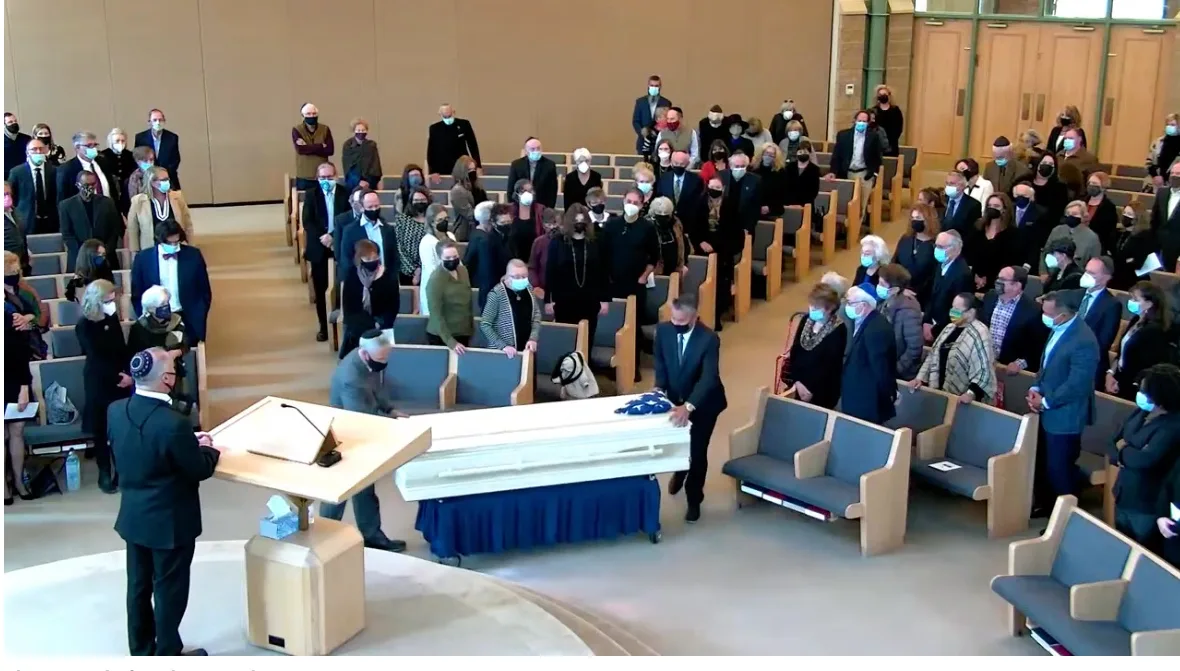

Chris Barden, a qualified forensic psychiatrist, said you look at the first witness statement (no abuse). If a mega law firm hires a therapist who'se going to get a PhD in some little area, who tells the witness 'You weren't abused on the 5'th or the 7'th, but you don't remember going there on the 6'th, implies you were abused that day,' and the cops are right there saying 'We're not going to prosecute you if you tell the truth about it,' then an amgibuous witness statement about the 6'th enough for a judge to direct a jury to consider circumstantial evidence, does not imply abuse.
Amendola applied for a Forensic and the accelerated trial schedule didn't allow it. But even as prosecutor McGettigan was really clear about what the jury should see as a defense case.
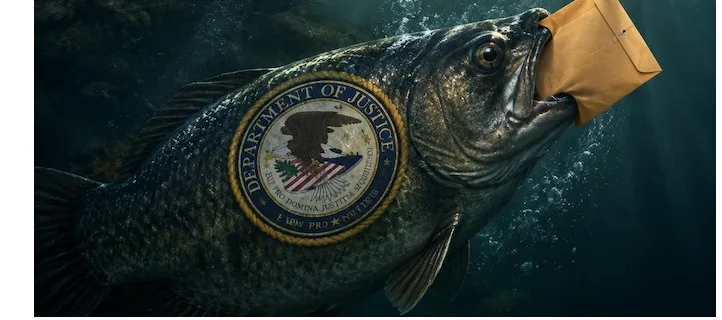
It is like those TV shows about a small island community, where fishing is alloweed and funded, and dolphins are going extinct. The TV documentary shows the fishermen being nice, throwing part of their haul into the water to try to save the dolphins. Does anyone understand what I'm saying here? McGettigan was not cruel to an innocent person.
Also, it is not homophobic of me to say, someone with sexual orientation X might get confused trying to prosecute someone with sexual orientation Y, if they are the skilled lawyer and the only one intelligent enough to see the really valid defense argument the jury needs to know about — and describing it fairly in the summing up.
In other words, even as a good person, the moral and ethical task before the skilled and intelligent lawyer McGettigan was too big for anyone. It was like the people who hoped Greta Thunberg would reinforce that no more carbon can get released. A good person but what was before that person was too much, too much being asked to deny the way the system has worked for decades, centuries.
For the environment, people would just have to understand, nature really is like a David Attenborough documentary. It is that complex, that non-understandable.
But people actually in charge, even at Universities, are on the engineering side, or the practical science side, or even at the highest levels in chemistry, genetics, agriculture, forestry science, they are just like McGettigan, that it is not only massive wealth versus impoverishment, as a personal decision. It is a whole society that has no way to understand anything besides a coherent, funded, intellectual and scientific development taking place.
Someone like Trump (who knew JS is innocent and said so), did have insight and social skills, but he is just a short-term businessman, and had no concept about even the things the founding fathers did, making ideas that would resonate internationally about principles, about a new constitution, and now a world constitution, rather than power plays as well intentioned as they might be.
The last vestiges of meaningful scholarship — which had included people like Chomsky or the producers Attenborough was willing to work with, always were so tentative, always though deep-thinking and modest and shared.
But just as in the example one life was ruined (Sandusky's) and his charity initiative (the Second Mile) ruined, and a few hundred lives ruined, and a few people (Paterno, Sinisi, other drug abuse victims, now maybe McGettigan) not surviving it, the bigger lesson is to see how absolutely useless the role of scholarship, including legal scholarship, had been. How it had allowed a small tragedy, but now much much more surely, in the analogous failure of all the Greta Thunbergs of the world, we are with absolute certainty sailing directly into a much much larger tragedy of environmental collapse and extinction, with people expressing hopes of rescue and protection but all, without exception, acceting the alternative of eco engineering and continued middle class development.