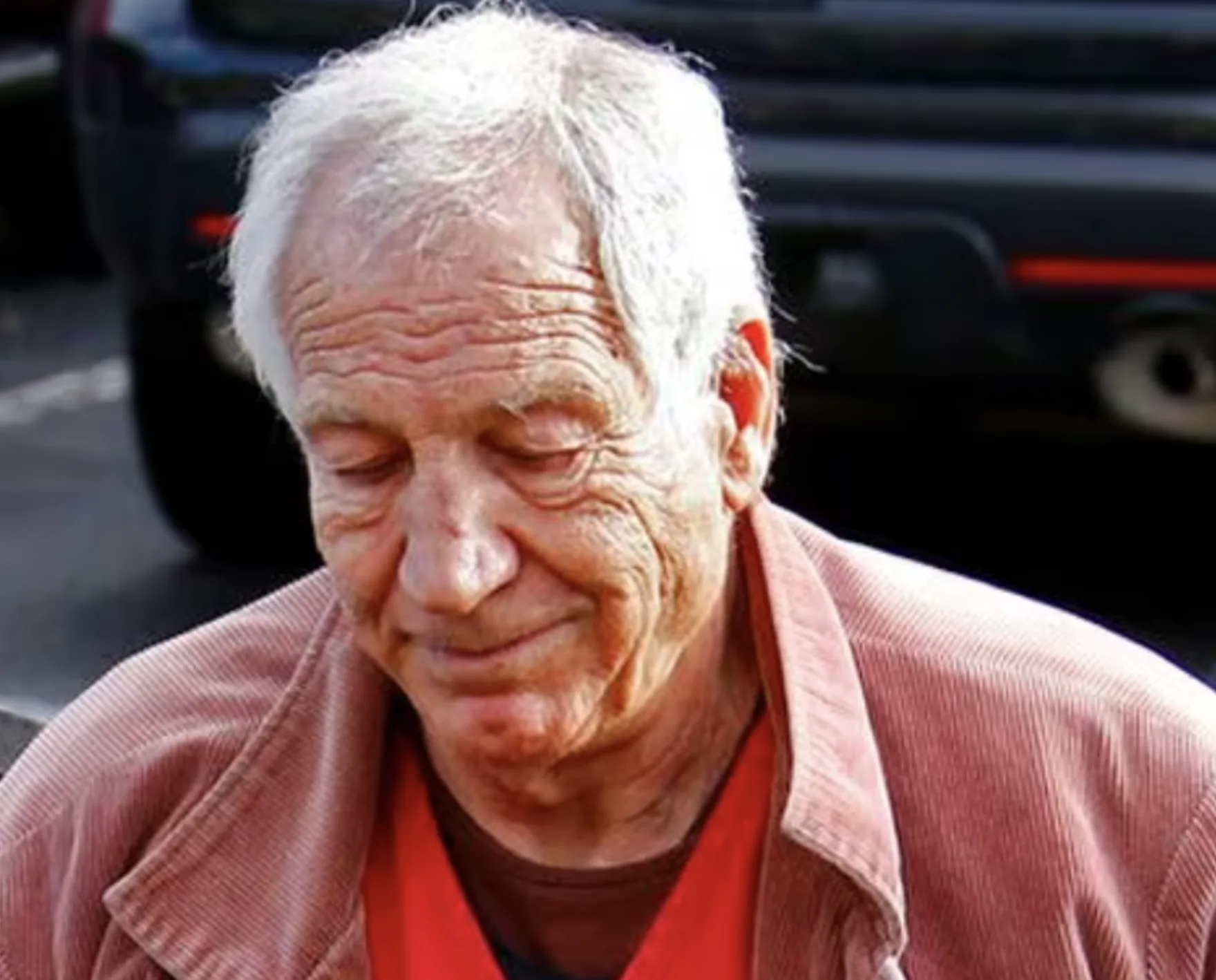
Leo Grillo Saved 1,500 Animals. Now He's the One in a Cage.
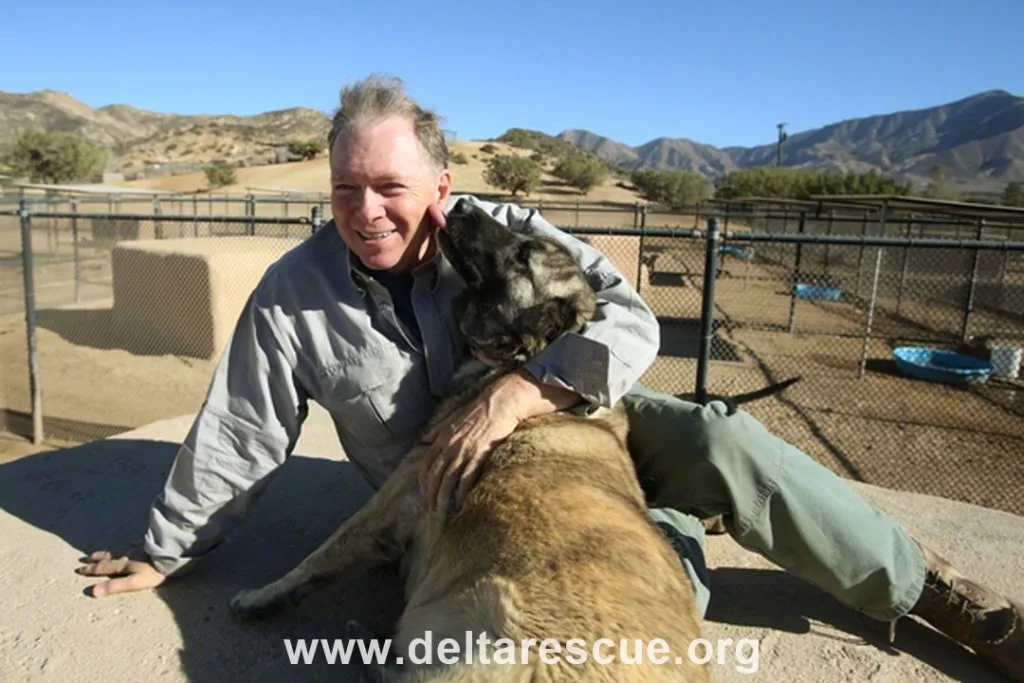
WHY LEO GRILLO IS IN A CELL
Leo Grillo, the 77-year-old founder of DELTA Rescue, a sanctuary for animals nobody else wanted, has been held without bail in Los Angeles since March 3 on an attempted kidnapping charge.
The government's central witness is James D. Clark, a precious-metals dealer who is the target of a separate federal fraud investigation and is cooperating in hopes of receiving favorable treatment.
Forty-five years of animals
Grillo founded Dedication and Everlasting Love to Animals, known as DELTA Rescue, in 1981 and operated it until his arrest. The 120-acre sanctuary in Acton, north of Los Angeles, houses about 1,500 dogs, cats, horses and other livestock, all of them accepted for life.
The organization relies on donations, which Grillo raises.
The sanctuary is still operational with Grillo in custody. The care of the animals continues, but the money for their care is running out.
Before this case, Grillo's criminal record consisted of a 2004 municipal citation involving animal licensing.
The verdict
 Adriana Duarte Valentines
On Nov. 5, 2024, a Los Angeles Superior Court jury awarded former DELTA employee Adriana Duarte Valentines a total of $6,680,950 in a wrongful termination lawsuit — $5,680,950 in compensatory damages and $1 million in punitive damages.
Duarte, who had cared for cats at the sanctuary, alleged she was fired unlawfully.
The compensatory award was not for lost wages. She had been earning $15 an hour. It was not for medical expenses. She had none.
It was for emotional distress for losing her job.
The trial judge cut the total to $3 million.
Three million dollars is less than six million, but to a place that survives by asking ordinary people for help, both are enormous numbers. DELTA filed for Chapter 11 bankruptcy protection on May 9, 2025.
The coin dealer
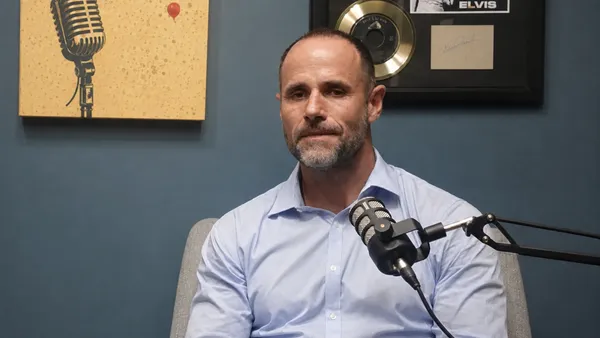 James Clark, an alleged criminal seeking to get out of trouble
After the verdict, when the sanctuary was in trouble, Grillo contacted James D. Clark, a man he already knew.
This is the point at which the civil case became something else.
Clark ran Midas Gold Group, a precious-metals business operating in the Los Angeles area and maintaining a sales office in Phoenix.
Grillo knew Clark because he had been a customer, not because Clark was a kidnapper or an investigator.
Two meetings, no recording
According to an affidavit by FBI Special Agent Robert McElroy, filed with the criminal complaint on March 3, Grillo left Clark voicemails in December 2025 requesting a meeting. They met at a Burbank equestrian center in December and again on Jan. 7.
There is no recording of either meeting. The absence matters because the second meeting is where the government says the crime was spoken into existence.
No agent was present. No microphone was running.
The beginning of the government's story belongs entirely to memory, interest and the word of one man.
The government alleges that during the Jan. 7 meeting, Grillo proposed taking Duarte to Mexico and holding her until she cooperated. Prosecutors say he offered $100,000.
It is a terrible proposal, if it was made. The question on which everything turns is whether it was.
Grillo says he was financing a documentary about the liability insurer he believed had abandoned DELTA. The FBI affidavit states that Grillo discussed a documentary during the first December meeting. After agents advised him of his rights following his arrest, he gave the same explanation.
The government calls this a cover story. A man may lie twice, of course, but he may also tell the truth twice.
The footnote
On January 31, 2026, Clark went to the FBI and told agents what he said Grillo had proposed.
From then on, one man in the room knew there were other men listening.
In a footnote to the affidavit, McElroy disclosed that the cooperating witness was the target of a separate FBI fraud investigation and was assisting law enforcement in hopes of receiving favorable consideration.
His motive is placed below the main text.
He hoped that helping the government would cause the government to help him. This is understandable. It is also important. A witness in that position has a personal interest in persuading investigators that the man he is describing committed a crime.
Clark has not been charged in connection with the fraud investigation. The government therefore retains both possibilities: It may prosecute him later, or reward him for being useful now.
The door is still open, and Clark knows who holds the key.
The three months that followed
On Feb. 13, Grillo and Clark met for approximately 2½ hours inside a camper van Grillo had recently purchased.
The equipment recorded thirty minutes. Agents say they heard the rest live.
The FBI heard the whole conversation. What survives of it is thirty minutes of tape and the recollection of the agents who were listening. For the remaining two hours, there is no recording for anyone, the defense, a jury, or a reviewing court, to play back.
On Feb. 19, Grillo gave Clark a $20,000 check bearing the memo notation "Production."
The government treats the word as camouflage. Grillo treats it as description.
The photograph
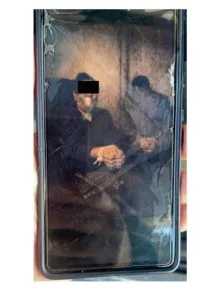 Fake photo Clark used
Above is the fake picture the FBI created to entrap Grillo
On March 3, Clark met Grillo at the equestrian center and showed him an FBI-created photograph depicting Duarte and a man, presumably her husband, restrained with zip ties.
Clark told Grillo the job had been completed.
Grillo then wrote a $10,000 check with "Doc Invest" on the memo line. Agents arrested him after the meeting. The video equipment, which would have shown Clark showing the picture to Grillo, failed, leaving only an audio recording.
The sound survived. The faces did not, not the gestures, not the way one man looked at another when the false picture was placed between them.
In this case, the images that survived were the images the government created.
Federal prosecutors charged Grillo under 18 U.S.C. § 1201(d), which makes attempted kidnapping punishable by up to 20 years in prison. He has pleaded not guilty.
Because the charge is an attempt, the government does not have to prove that anyone was seized or transported. It must prove, beyond a reasonable doubt, that Grillo intended the kidnapping and took a substantial step toward carrying it out.
What did not happen
No person was seized, transported, or physically harmed. Duarte was not placed in physical danger because Clark, the only other participant in the alleged plan, was cooperating with the FBI.
The crime exists not in what happened, but in what the government says Grillo intended to make happen.
The only man who could have carried out the plan was working for the government, and was never going to carry it out.
The motive, retired
In July, the bankruptcy court overseeing DELTA's case approved a settlement arising from the civil judgment. Duarte received $4 million on July 13 — the $3 million judgment plus her attorney fees.
The alleged motive has been extinguished, although the detention it was used to justify continues.
Duarte now has her money. There is nothing left for him to make her do.
If the government's theory is that Grillo wanted the lawsuit resolved, it has been resolved. That does not by itself dispose of the criminal charge.
Sixteen days after the payment, a federal magistrate judge denied Grillo's request for release on bail.
So the woman had her money. The animals had lost the man who raised theirs. The government had its witness. And Leo Grillo, 77 years old, remained in a cell.