$500M Fraud Rap — and a Baby Photo as ‘Witness Tampering’

AS FAR AS I KNOW
Joshua Wander goes on trial October 19 on six felony counts
From the superseding indictment (S1 25 Cr. 473 (JPO), filed 06/30/26):
Count One — Conspiracy to Commit Wire Fraud
Count Two — Wire Fraud
Count Three — Conspiracy to Commit Securities Fraud
Count Four — Securities Fraud
Count Five — Wire Fraud (the additional count involving Lender-4 / Advantage Capital)
Count Six — Witness Tampering
The government's six-count case rests on three principal accusations.
First, prosecutors say Wander’s company, 777 Partners LLC, borrowed more than $350 million from private lenders, including Leadenhall and Advantage Capital Holdings (identified in the indictment as Lender-4).
To secure the loans, 777 pledged rights to future payments from legal settlements. Prosecutors claim the company pledged some of the same payment rights to more than one lender, or pledged rights it did not control.
Overall, the government alleges the scheme defrauded lenders and investors of nearly $500 million.
777 Partners began in Miami with structured settlements and grew outward into a diverse collection of businesses: insurance, litigation finance, aviation and European football clubs.
 Wander's 777 Partners were in the process of purchasing the Everton's when leaks apparently from the Department of Justice killed the deal. More on that in a subsequent story.
Second, prosecutors say Wander instructed employees to alter bank statements electronically so that accounts appeared to contain more money than they actually held.
The third one came after Wander was already charged. Prosecutors added witness tampering in a superseding indictment filed June 30 and made public the following day.
The tampering charge arose from his speaking to a friend and former 777 analyst.
Wander allegedly told the man his livelihood was in Wander's hands. The government says that was witness tampering.
THE BABY PICTURE
Prosecutors further allege that Wander sent the man a photograph of himself with his infant child as part of an effort to discourage testimony, since it might remind the man of their long history as friends.
The defense account is markedly less sinister. People familiar with it say that the two men often spoke on FaceTime and that the baby appeared with Wander because he was holding the child in his arms when they spoke.
One must not automatically assume that the first two accusations are as preposterous as the last may appear, or that the government, having leaked the investigation before actually commencing it, is scrambling to hold it together.
That might very well be the case. The whole case may be nonsense, but we want to keep an open mind in case Wander is guilty, and this is not another case where the asymmetrical power imbalance between the federal government and those it chooses to target has created a crime where none existed.
In other words: is Wander an actual criminal, or is he the target of a weaponized Department of (so-called) Justice, to serve some commercial party's interest, or to serve the ambitions of prosecutors, or just plain bloodsport?
Or is the answer less satisfying: that some of the government's case is true, some exaggerated, and some built afterward to make the rest look worse?
Wander has pleaded not guilty to the charges.
THE PRESUMPTION OF GUILT
In the old days we used to talk about the presumption of innocence needing to be reminded to the public.
In the near future we are gonna need to remind people of the presumption of guilt. That is, an indictment has acquired a strange power of its own: we assume the defendant is guilty before hearing the evidence. The indictment is supposed to be an accusation. In public life it increasingly functions as a verdict.
Happily for the Department of Justice, the gullible public still believes mightily in their Orwellian name. They think if the government charges a person, they must be guilty. They have a lot to learn.
Back in the old days, maybe going back 100 years or more, the people still had the spirit of defiance and juries worked to keep the government prosecutors in check.
However, I want to do what the public does: presume Wander is guilty. After all, he has been charged.
And still, let's see if the evidence holds up. I have some reasonable doubt that it will. But then I have had experience with the DOJ.
WHY THE PRESS MIGHT GET IT WRONG
As for you, the reader, you may wish to assume nothing at all. Neither that Wander is guilty nor innocent. Let us just call it an experiment.
An experiment in journalism or investigation. That the truth is susceptible of revelation if we try a little, something that the mainstream media is loath to do.
The experiment is simple: take the government's allegations seriously enough to test them.
The mainstream press reports an indictment. Prosecutors provide a press release. Reporters summarize the indictment; defense lawyers sometimes deny them. Either way, the story is published before anyone has had time to investigate what actually happened.
It may be too hard on tight budgets and so many indictments to investigate a run-of-the-mill white-collar case with a dose of genuine skepticism.
Besides, if reporters did that too vigorously, they might lose their government sources, the ones who leak inside information about their view of the case and the defendant’s guilt.
A reporter dependent upon prosecutors for leaks has to adopt the voice of guilt.
It’s the business.
THE 99.6 PERCENT SOLUTION
As a reader, you may assume, if you like, that the great and powerful wizard of convictions, with its 99.6 percent conviction rate, with the name”Justice” tagged on its end, is as infallible as those stats would make anyone who knows nothing of how ambition works or how power can corrupt the process believe.
As for me, I will enter this as a neutral. There are true criminals out there, and just because the Department of Justice charged him doesn't mean he is innocent.
Some are guilty. Maybe a lot of them. Maybe most. Though I know for a fact that it ain't 99.6 percent of them.
Administrative Office data, DOJ fiscal 2022: 65,763 convicted; 290 acquitted.
The overwhelming majority of federal convictions came without a trial.
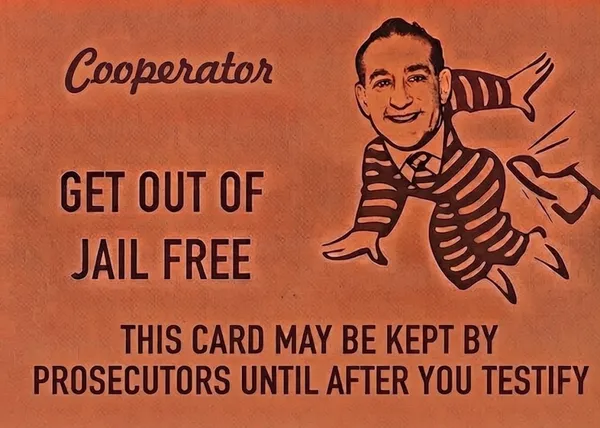
Oh, I almost forgot one thing. A guy named Damien Alfalla. The former CFO of 777 Partners pleaded guilty before Wander was charged and is cooperating.
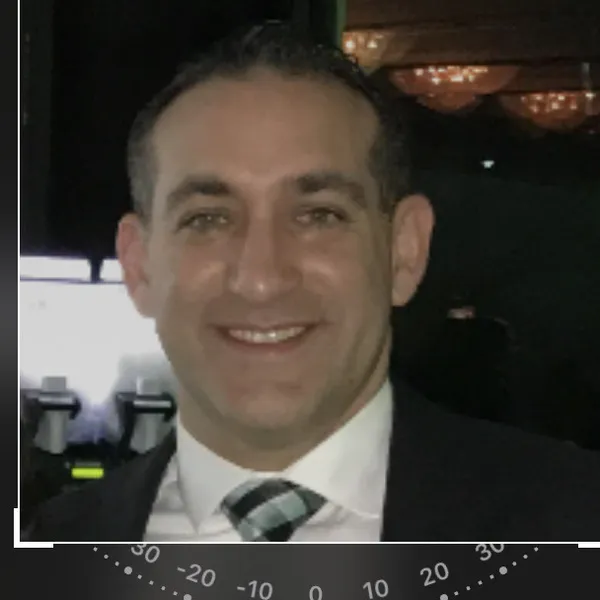 777 CFO and government cooperator Damien Alfalla admitted to the crimes. Now he has the task of persuading a jury that Josh Wander made him do it. Alfalla has been listed in some news reports as a co-founder of the company at the center of this prosecution.
A reader who knows the cooperator's incentive structure already knows the documentary evidence will be explained by the guy who admitted committing crimes himself and whose best chance at leniency now depends substantially on the value prosecutors place on his cooperation.
A guilty cooperator is not necessarily a liar. But neither is he a disinterested historian.
In this case, he is the star witness.